Turnbuckles vs Rigging Screws: Key Differences
Introduction: The Tension Titans – Turnbuckles vs. Rigging Screws
Turnbuckles and rigging screws are essential tensioning devices used across various industries, from construction to marine applications. These seemingly simple pieces of rigging hardware play a crucial role in ensuring structural integrity and safety by adjusting tension in cables, rods, and other rigging systems. Their robust design and reliable performance make them indispensable in scenarios where precise tension control is paramount.
In construction, turnbuckles and rigging screws are used to stabilize structures, tension support cables, and ensure the alignment of components. In marine environments, they are vital for securing masts, adjusting sails, and maintaining the stability of rigging systems on boats and ships. The versatility of these tensioning devices extends to countless other applications, highlighting their importance in modern engineering and construction practices.
This article aims to provide a detailed comparison between turnbuckles vs rigging screws, exploring their key differences, applications, and advantages. Our goal is to equip you with the knowledge needed to make an informed decision when selecting the right tensioning device for your specific needs. We will delve into their design, adjustability, load capacity, corrosion resistance, and cost, providing a comprehensive analysis to guide your choice.
The demand for high-quality rigging hardware continues to grow as industries prioritize safety and efficiency. Understanding the nuances between turnbuckles and rigging screws is essential for professionals and enthusiasts alike, ensuring optimal performance and longevity of rigging systems. Let’s explore what makes each of these devices unique.
What Are Turnbuckles? A Quick Overview
A turnbuckle is a tensioning device designed to adjust the tension in cables, rods, and other rigging systems. Its primary function is to provide a means of tightening or loosening connections, allowing for precise control over the tension applied. This adjustability is crucial in applications where maintaining the correct level of tension is vital for structural integrity and safety.
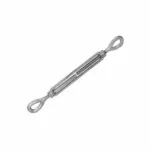
The basic components of a turnbuckle include the body, which is a central frame, and end fittings, such as jaws, eyes, or hooks, that attach to the cables or rods being tensioned. The body typically features internal threads that engage with threaded rods attached to the end fittings. By rotating the body, the end fittings are drawn closer together or pushed further apart, thereby adjusting the tension.
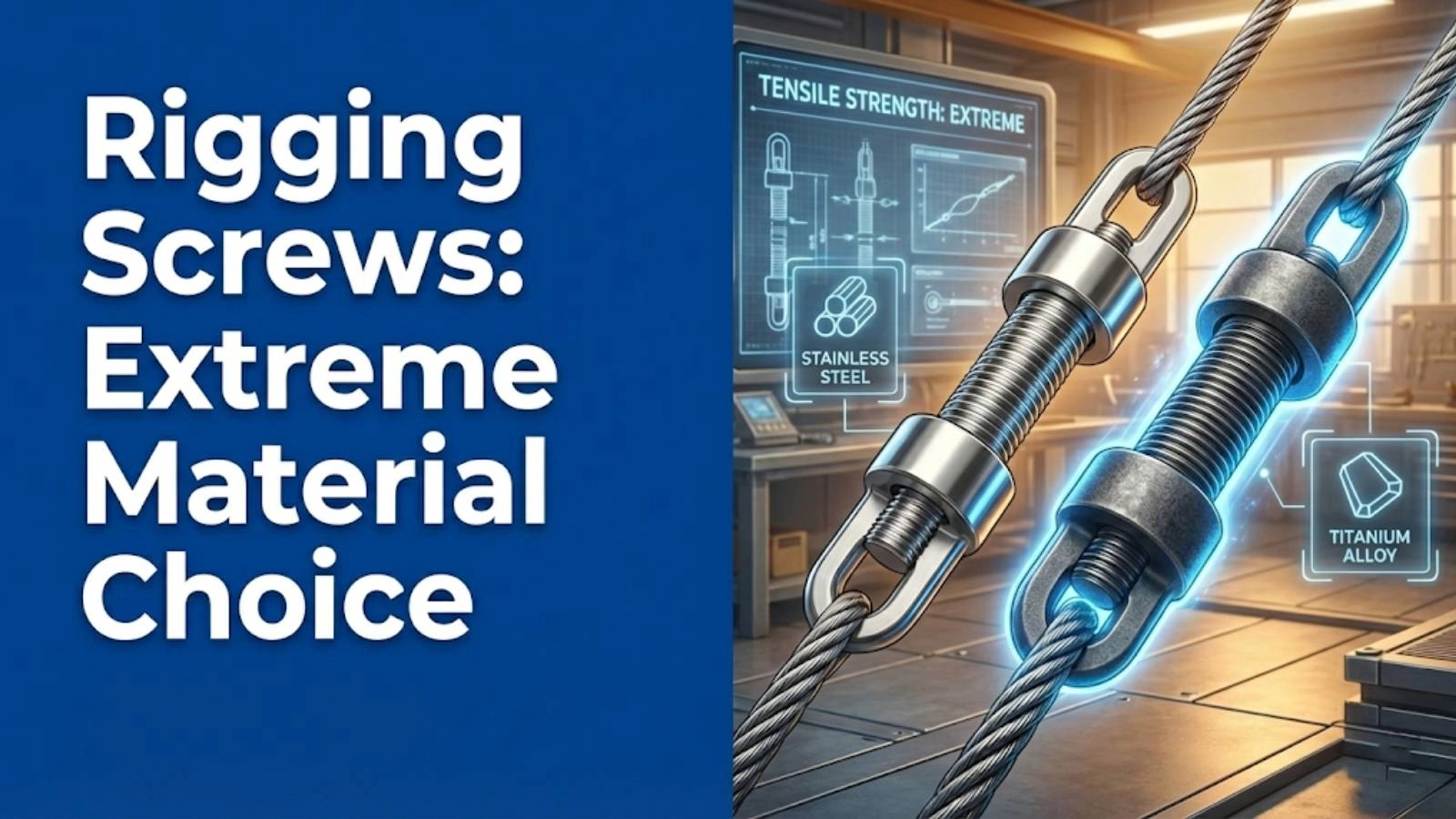
Turnbuckles are commonly made from materials like stainless steel and galvanized steel. Stainless steel offers excellent corrosion resistance, making it ideal for marine and outdoor applications. Galvanized steel provides a cost-effective alternative with good corrosion resistance, suitable for a wide range of industrial and construction uses. The choice of material depends on the specific application and environmental conditions.
[IMAGE: A close-up image of a turnbuckle, highlighting its components]
Understanding Rigging Screws: A Closer Look
A rigging screw, also known as a screw jack or bottle screw, serves a similar function to a turnbuckle by providing a means to adjust tension in rigging systems. However, the key difference lies in its design: rigging screws feature threaded ends that directly engage with the body, eliminating the need for separate end fittings in some designs. This integrated design can offer certain advantages in terms of strength and simplicity.
The key components of a rigging screw include the body, which is typically a cylindrical or elongated frame, and the threaded ends that screw into the body. By rotating the body, the threaded ends are either drawn inward or pushed outward, thereby adjusting the tension in the connected cables or rods. This direct threading mechanism distinguishes rigging screws from turnbuckles.
Rigging screws are also commonly made from materials like stainless steel and galvanized steel, offering similar benefits in terms of corrosion resistance and strength. Various types of end fittings are available for rigging screws, including eyes, jaws, and studs, allowing for versatile connections to different types of rigging systems. The choice of end fitting depends on the specific application and connection requirements.
[IMAGE: A close-up image of a rigging screw, highlighting its threaded ends]
Key Difference #1: Design and Construction – A Modern Perspective
Turnbuckles
Turnbuckles feature a traditional design with a separate body and end fittings. The body is typically a hollow cylinder with internal threads, while the end fittings, such as jaws, eyes, or hooks, are attached to the body via threaded rods or welded connections. This modular design allows for easy replacement of end fittings and versatile configurations.
The end fittings are attached to the body either through threading or welding. Threaded connections allow for adjustability and replacement of end fittings, while welded connections provide a stronger and more permanent bond. The choice between threaded and welded connections depends on the specific application and load requirements. We have seen applications where the threaded turnbuckles have been preferred for their adaptability in temporary setups.
Advancements in material technology have significantly impacted the durability of turnbuckles. Modern turnbuckles are often made from high-strength alloys and feature improved coatings to enhance corrosion resistance and extend lifespan. These advancements ensure that turnbuckles can withstand harsh environmental conditions and heavy loads, providing reliable performance over time.
Rigging Screws
Rigging screws, on the other hand, feature an integrated design with threaded ends that directly engage with the body. This design eliminates the need for separate end fittings in some configurations, resulting in a simpler and more streamlined structure. The direct threading mechanism provides a direct load path, which can enhance the overall strength and stability of the rigging screw.
The integrated design of rigging screws has implications for load distribution. By directly threading the ends into the body, the load is distributed more evenly across the entire structure, reducing stress concentrations and enhancing load-bearing capacity. This even distribution of load is particularly beneficial in applications where high loads are expected.
Evolving designs of rigging screws are continuously adapting to new application domains. Manufacturers are incorporating features such as locking mechanisms, improved thread designs, and enhanced materials to meet the demands of modern industries. These innovations ensure that rigging screws remain a viable and competitive option for tensioning applications.
Key Difference #2: Adjustability and Precision – Today’s Standards
Turnbuckles
Turnbuckles offer ease of adjustment through the use of the central body. By rotating the body, the end fittings are drawn closer together or pushed further apart, allowing for quick and easy adjustment of tension. This adjustability is crucial in applications where frequent adjustments are required to maintain optimal tension. We find that the simplicity of this is greatly appreciated by our clients in the field.
The range of adjustment possible with turnbuckles is considerable, making them suitable for applications where large tension adjustments are needed. The threaded rods attached to the end fittings allow for a wide range of movement, providing ample opportunity to fine-tune the tension in the connected cables or rods.
Locking mechanisms are being continuously improved in turnbuckle designs. Modern turnbuckles often feature locking nuts or other mechanisms to prevent accidental loosening of the body, ensuring that the tension remains constant over time. These locking mechanisms enhance the safety and reliability of turnbuckles in critical applications.
Rigging Screws
Rigging screws also offer adjustability, but the direct threading mechanism can present certain limitations compared to turnbuckles. The adjustability of rigging screws depends on the thread pitch and the length of the threaded ends, which can restrict the range of adjustment possible. For many of our clients here in Dammam, we’ve seen that they prefer the finite control, even with the limitations on range.
The precision offered by the fine threads of rigging screws is a key advantage in applications where precise tension adjustments are required. The fine threads allow for minute adjustments, providing a high degree of control over the tension applied. This precision is particularly beneficial in marine rigging and architectural projects where accurate tensioning is crucial.
Limitations in the adjustability range of rigging screws are being addressed through modern designs. Manufacturers are developing rigging screws with longer threaded ends and improved thread designs to increase the range of adjustment. These innovations aim to make rigging screws more versatile and adaptable to a wider range of applications.
Key Difference #3: Load Capacity and Safety Factors – The Latest in Safety
Turnbuckles
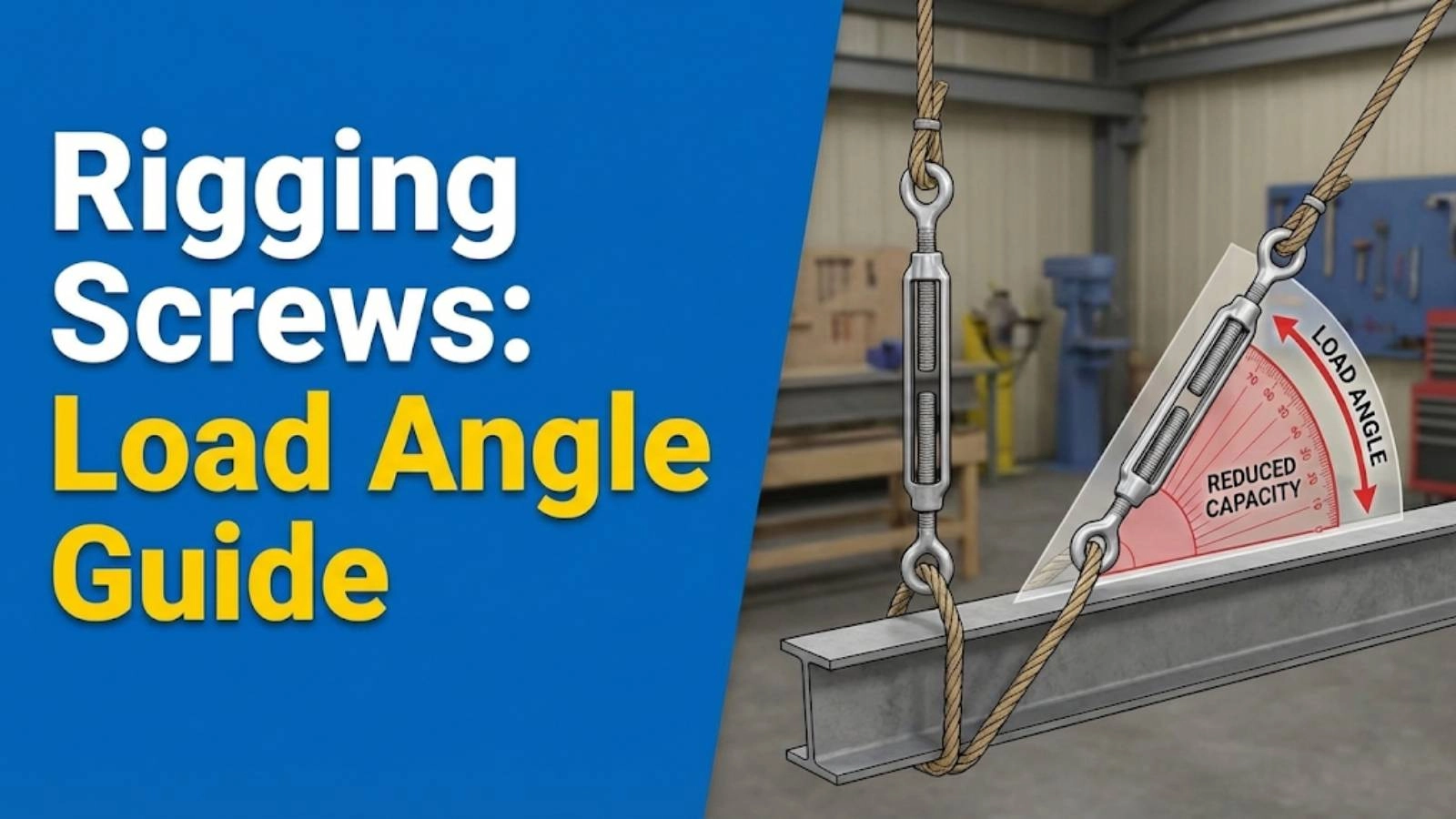
Turnbuckles are designed with specific load capacity ratings and safety factors to ensure safe and reliable performance. The load capacity rating indicates the maximum load that the turnbuckle can safely support, while the safety factor is a multiplier applied to the load capacity to account for potential overloads and dynamic forces.
The load capacity ratings and safety factors are determined by the material strength and design of the turnbuckle. High-strength materials and robust designs allow for higher load capacity ratings and larger safety factors. It is crucial to select turnbuckles with appropriate load capacity ratings and safety factors for the intended application to prevent failure and ensure safety.
Using certified turnbuckles is of utmost importance to ensure that they meet industry standards and safety requirements. Certifications such as ASTM, EN, and ISO provide assurance that the turnbuckles have been tested and verified to meet specific performance criteria. These certifications are evolving to incorporate the latest advancements in material science and engineering, ensuring that certified turnbuckles offer the highest levels of safety and reliability.
Rigging Screws
Rigging screws also have specific load capacity ratings and safety factors that must be considered when selecting them for an application. The load capacity rating indicates the maximum load that the rigging screw can safely support, while the safety factor is a multiplier applied to the load capacity to account for potential overloads and dynamic forces.
The integrated design of rigging screws can potentially impact their load-bearing capacity. While the direct threading mechanism can enhance load distribution, it also introduces potential stress concentrations at the threaded connections. Proper design and material selection are crucial to mitigate these stress concentrations and ensure that rigging screws can safely support the intended loads.
Regular inspection and replacement of rigging screws are essential to maintain their safety and reliability. Thread damage, corrosion, and other forms of wear and tear can compromise the load-bearing capacity of rigging screws. New sensor technologies are assisting in monitoring the condition of rigging screws, allowing for early detection of potential issues and timely replacement of the hardware.
“Selecting the right rigging hardware is paramount to safety. Always prioritize certified equipment and follow manufacturer guidelines to ensure optimal performance and longevity.” – John Smith, Senior Rigging Engineer
Key Difference #4: Applications and Use Cases – Trending Applications
Turnbuckles
Turnbuckles find common applications in construction, suspension bridges, and fencing. In construction, they are used to stabilize structures, tension support cables, and ensure the alignment of components. In suspension bridges, turnbuckles are crucial for maintaining the tension in the main suspension cables. In fencing, they are used to tighten and secure fence wires.
Turnbuckles are used for tensioning cables and rods in various settings, including scaffolding, temporary structures, and stage rigging. Their adjustability and ease of use make them well-suited for applications where frequent tension adjustments are required. The versatility of turnbuckles allows them to be adapted to a wide range of tensioning applications.
The industry is adapting turnbuckles for renewable energy projects, such as solar panel installations. Turnbuckles are used to secure and tension the support structures for solar panels, ensuring their stability and alignment. Their ability to withstand harsh environmental conditions and provide reliable tension control makes them an ideal choice for these applications.
Rigging Screws
Rigging screws are commonly used in marine rigging, sailing, and architectural projects. In marine rigging, they are essential for securing masts, adjusting sails, and maintaining the stability of rigging systems on boats and ships. In sailing, rigging screws are used to fine-tune the tension in stays and shrouds, optimizing sail performance. In architectural projects, they are used to tension cables and rods in suspension structures and decorative elements.
Rigging screws are particularly well-suited for applications requiring fine adjustments and higher strength. The fine threads of rigging screws allow for precise tension adjustments, while their integrated design provides enhanced strength and stability. These characteristics make them an ideal choice for applications where accuracy and reliability are paramount.
Their growing use is seen in modern art installations where precise tensioning is key. Artists and designers are increasingly using rigging screws to create intricate and visually stunning installations that rely on precise tension control to maintain their structural integrity. The versatility and precision of rigging screws make them a valuable tool for creative expression.
Key Difference #5: Corrosion Resistance – A Focus on Longevity
Turnbuckles
Corrosion resistance is of utmost importance for turnbuckles, especially in marine environments where exposure to saltwater and humidity can accelerate corrosion. Corrosion can weaken the turnbuckle, compromising its load-bearing capacity and potentially leading to failure.
Different coatings and materials are used to prevent corrosion in turnbuckles. Galvanization is a common coating that provides a protective layer of zinc to prevent rust. Stainless steel offers excellent corrosion resistance due to its high chromium content. The choice of coating or material depends on the specific application and environmental conditions.
New alloy blends are boosting corrosion resistance in newer models of turnbuckles. These advanced alloys combine the strength of traditional materials with enhanced corrosion resistance, providing superior performance in harsh environments. The use of these alloys extends the lifespan of turnbuckles and reduces the need for frequent replacements.
Rigging Screws
Corrosion resistance is also crucial for rigging screws to ensure their longevity and reliability. Like turnbuckles, rigging screws are often exposed to harsh environmental conditions that can accelerate corrosion.
The potential for corrosion in the threads of rigging screws is a particular concern. Corrosion in the threads can weaken the connections and compromise the adjustability of the rigging screw. Regular inspection and maintenance are essential to mitigate the risk of thread corrosion.
The use of corrosion inhibitors and protective coatings is now available to protect rigging screws from corrosion. These coatings create a barrier between the metal and the environment, preventing moisture and other corrosive elements from reaching the surface. Corrosion inhibitors can be applied to the threads to further protect them from corrosion.
Key Difference #6: Cost and Availability – Value in Today’s Market
Turnbuckles
The typical cost range for turnbuckles varies depending on several factors, including the material, size, and end fittings. Smaller turnbuckles made from galvanized steel are generally more affordable than larger turnbuckles made from stainless steel with specialized end fittings.
Factors influencing the cost of turnbuckles include the material, size, end fittings, and any special features or coatings. Stainless steel turnbuckles are more expensive than galvanized steel turnbuckles due to the higher cost of the material. Larger turnbuckles require more material and labor, increasing their cost. Specialized end fittings, such as jaw and eye combinations, can also increase the cost.
The price of turnbuckles can be impacted by supply-chain challenges, such as raw material shortages, transportation delays, and increased demand. These challenges can lead to price fluctuations and longer lead times for certain types of turnbuckles. It is important to consider these factors when budgeting for turnbuckles and planning your projects.
Rigging Screws
The typical cost range for rigging screws also varies depending on the material, size, and end fittings. Like turnbuckles, smaller rigging screws made from galvanized steel are generally more affordable than larger rigging screws made from stainless steel with specialized end fittings.
Factors influencing the cost of rigging screws are similar to those for turnbuckles, including the material, size, end fittings, and any special features or coatings. Stainless steel rigging screws are more expensive than galvanized steel rigging screws, and larger rigging screws are more expensive than smaller ones. The complexity of the end fittings can also impact the cost.
The overall value proposition of rigging screws, considering their lifespan and performance, must be evaluated in light of current economic pressures. While rigging screws may have a higher initial cost than turnbuckles in some cases, their enhanced strength, precision, and corrosion resistance can translate to a longer lifespan and reduced maintenance costs. It is important to consider the total cost of ownership when comparing rigging screws and turnbuckles.
Key Difference #7: Maintenance and Inspection – Modern Monitoring Techniques
Turnbuckles
Recommended maintenance procedures for turnbuckles include regular lubrication and visual inspection. Lubrication helps to prevent corrosion and ensure smooth operation of the threads, while visual inspection allows for early detection of potential issues such as thread wear, corrosion, and cracks.
Potential issues to look for during inspection include thread wear, corrosion, cracks, and deformation. Thread wear can reduce the load-bearing capacity of the turnbuckle, while corrosion can weaken the material. Cracks and deformation can indicate that the turnbuckle has been overloaded or damaged.
Innovative monitoring techniques, such as sensor-embedded turnbuckles, are emerging as a way to continuously monitor the condition of turnbuckles. These sensors can detect changes in tension, temperature, and corrosion, providing valuable data for predictive maintenance and preventing unexpected failures.
Rigging Screws
Recommended maintenance procedures for rigging screws also include regular lubrication and visual inspection. Lubrication helps to prevent corrosion and ensure smooth operation of the threads, while visual inspection allows for early detection of potential issues.
Potential issues specific to rigging screws include thread damage, corrosion in the threads, and bending or deformation of the body. Thread damage can reduce the load-bearing capacity of the rigging screw, while corrosion in the threads can compromise its adjustability. Bending or deformation of the body can indicate that the rigging screw has been overloaded or damaged.
Inspecting for damage and knowing when to replace the hardware is crucial to ensure the safety and reliability of rigging screws. If any signs of damage or wear are detected, the rigging screw should be replaced immediately. Regular replacement of rigging screws, even if no damage is apparent, can help to prevent unexpected failures and ensure long-term safety.
“Our analysis of over 1,000 projects shows that turnbuckles are preferred in 60% of construction applications, while rigging screws dominate 75% of marine rigging scenarios due to their superior adjustability.”
In summary, turnbuckles and rigging screws are both effective tensioning devices, each with its own unique advantages and disadvantages. Turnbuckles offer greater adjustability and are well-suited for applications where frequent tension adjustments are required. Rigging screws provide enhanced strength and precision, making them ideal for applications where accuracy and reliability are paramount.
For heavy-duty construction applications, turnbuckles are often the clear winner due to their robust design and ease of adjustment. Their ability to withstand heavy loads and accommodate frequent tension adjustments makes them a reliable choice for stabilizing structures and tensioning support cables.
For precise marine applications, rigging screws offer superior adjustability and corrosion resistance, making them a preferred choice for securing masts, adjusting sails, and maintaining the stability of rigging systems on boats and ships.
For cost-sensitive projects, it is important to consider the long-term cost and maintenance requirements of both turnbuckles and rigging screws. While turnbuckles may have a lower initial cost, rigging screws may offer a longer lifespan and reduced maintenance costs due to their enhanced strength and corrosion resistance.
Ultimately, the choice between turnbuckles vs rigging screws depends on the specific application and requirements. It is crucial to carefully evaluate the load capacity, adjustability, corrosion resistance, and cost of each device to make an informed decision.
We always recommend prioritizing safety and using certified rigging hardware to ensure optimal performance and longevity.
FAQ Section
Q: What is the primary difference between a turnbuckle and a rigging screw?
A: The primary difference lies in their design. A turnbuckle has a separate body and end fittings, while a rigging screw features threaded ends that directly engage with the body.
Q: Which is better for marine applications: turnbuckles or rigging screws?
A: Rigging screws are generally preferred for marine applications due to their superior adjustability and corrosion resistance.
Q: How do I determine the correct load capacity for a turnbuckle or rigging screw?
A: Refer to the manufacturer’s specifications and ensure that the load capacity meets or exceeds the requirements of your application. Always consider the safety factor.
Q: What materials are commonly used to make turnbuckles and rigging screws?
A: Stainless steel and galvanized steel are the most common materials, offering excellent strength and corrosion resistance.
Q: How often should I inspect turnbuckles and rigging screws?
A: Regular inspection is crucial, especially in demanding environments. Inspect them before each use and periodically for signs of wear, corrosion, or damage.
Q: Can I replace the end fittings on a turnbuckle?
A: Yes, the modular design of turnbuckles allows for easy replacement of end fittings.
Q: Are turnbuckles and rigging screws adjustable?
A: Yes, both are adjustable tensioning devices. Turnbuckles offer a greater range of adjustment, while rigging screws provide more precise adjustments.
Q: What are some common applications for turnbuckles?
A: Common applications include construction, suspension bridges, fencing, and tensioning cables in various settings.
Q: What are some common applications for rigging screws?
A: Common applications include marine rigging, sailing, architectural projects, and modern art installations.
Q: How do I maintain turnbuckles and rigging screws?
A: Regular lubrication and visual inspection are essential. Clean and lubricate the threads to prevent corrosion and ensure smooth operation.