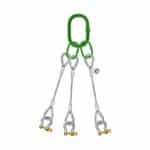
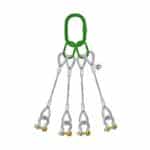
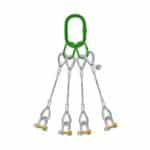
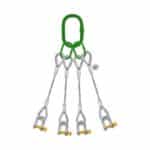
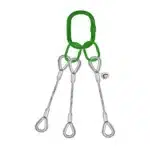
The lifespan of wire rope is a crucial consideration in various industries, impacting safety, efficiency, and operational costs. Understanding the factors that influence wire rope lifespan and implementing proactive measures can significantly extend its service life, preventing unexpected failures and ensuring a safer working environment. However, several factors can contribute to a shorter wire rope lifespan than expected. Let’s explore some of the most common culprits.
1. Introduction: Understanding Wire Rope Lifespan
1.1. Defining Wire Rope Lifespan: Service Life vs. Design Life
The wire rope lifespan can be defined in two ways: service life and design life. The design life refers to the expected life of the wire rope sling under ideal conditions, based on engineering calculations and material properties. The service life, on the other hand, represents the actual duration the wire rope remains safe and functional in a real-world application, considering various operational and environmental factors. The service life is typically shorter than the design life due to the influence of these external factors. Understanding the difference between these two concepts is essential for effective sling maintenance and safety management.
1.2. Importance of Lifespan Considerations for Safety and Efficiency
Considering the wire rope lifespan is paramount for both safety and efficiency. A wire rope that fails prematurely can lead to catastrophic accidents, causing injuries, fatalities, and significant property damage. By understanding the factors affecting cable lifespan, companies can implement proactive maintenance and inspection programs to detect and address potential issues before they escalate into failures. This, in turn, enhances safety, reduces downtime, and improves overall operational efficiency. We see this firsthand with our clients, especially in sectors like construction and marine operations.
1.3. Scope of the Article: Focusing on Factors Leading to Premature Shortening
This article focuses on the key factors that commonly lead to a premature shortening of wire rope lifespan. We will delve into the details of abrasion, corrosion, overloading, fatigue, and improper storage and handling practices. For each factor, we will explain the mechanisms involved, the consequences of neglecting them, and the recommended preventive measures. Our goal is to provide practical guidance and insights that empower readers to optimize wire rope performance and extend its service life.
2. Factor 1: Abrasion and Wear
✅ Abrasion and wear are among the most prevalent causes of reduced wire rope lifespan. These processes involve the gradual removal of material from the wire rope surface due to friction and contact with other objects. Both external and internal abrasion can significantly compromise the structural integrity of the wire rope, leading to premature failure. Therefore, understanding the different types of abrasion and implementing appropriate mitigation strategies is crucial.
2.1. External Abrasion: Causes and Impact on Wire Integrity
External abrasion occurs when the outer wires of the wire rope come into contact with abrasive surfaces, such as sheaves, drums, or other components of the lifting system. This constant friction gradually wears away the outer wires, reducing their cross-sectional area and load-carrying capacity. The severity of external abrasion depends on several factors, including the type of abrasive material, the contact pressure, the relative speed of movement, and the presence of lubrication. We’ve observed that environments with high levels of dust or grit accelerate external abrasion, particularly in locations like quarries and construction sites.
2.1.1. Contact with Abrasive Surfaces: Examples in Industrial Settings
In industrial settings, examples of contact with abrasive surfaces are abundant. A wire rope running over a sheave with a rough or damaged groove can experience significant external abrasion. Similarly, dragging a wire rope sling across a concrete floor or a metal surface can quickly wear away the outer wires. In crane operations, the wire rope may rub against the crane structure or other equipment, leading to abrasion. These examples highlight the importance of maintaining smooth and clean contact surfaces to minimize external abrasion.
2.1.2. Effects on Outer Wires: Flattening, Loss of Metallic Area
The primary effect of external abrasion is the flattening of the outer wires. As the wires wear away, they lose their original round shape and become flattened, reducing their cross-sectional area. This loss of metallic area directly reduces the wire rope’s strength and ability to withstand loads. Furthermore, flattened wires are more susceptible to cracking and fatigue, accelerating the overall degradation process. Regular wire rope inspection is vital to identify these signs early on.
2.2. Internal Abrasion: Wire-on-Wire Contact and Its Consequences
Internal abrasion, also known as wire-on-wire contact, occurs within the wire rope itself. It results from the relative movement and friction between individual wires as the wire rope bends and straightens during operation. This internal friction can be exacerbated by factors such as lack of lubrication, improper rope construction, and excessive bending stresses. Unlike external abrasion, internal abrasion is often hidden from view, making it more challenging to detect during routine inspections.
2.2.1. Lack of Lubrication: Increasing Friction and Wear
Lack of lubrication is a major contributor to internal abrasion. Lubricant reduces the friction between the wires, allowing them to move more smoothly and reducing wear. When lubrication is inadequate, the wires rub against each other with increased force, leading to accelerated wear and the generation of heat. Over time, this can cause significant damage to the internal structure of the wire rope. We advise our clients to implement regular lubrication programs to maintain optimal performance and extend the cable lifespan.
2.2.2. Rope Construction and Its Influence on Internal Wear
The construction of the wire rope itself can influence the extent of internal wear. Some rope designs, such as those with fewer outer wires or larger wire diameters, may be more prone to internal abrasion. The lay length, which is the distance it takes for one strand to make a complete spiral around the core, also affects internal wear. A shorter lay length can increase the contact pressure between the wires, leading to more abrasion. Careful consideration of rope construction is essential when selecting a wire rope for a specific application.
2.3. Mitigation Strategies: Proper Sheave Groove Design, Lubrication, and Material Selection
Several strategies can be employed to mitigate abrasion and wear. Proper sheave groove design is critical to ensure that the wire rope fits correctly and does not experience excessive contact pressure. Regular lubrication with appropriate lubricants can significantly reduce friction and wear. Material selection also plays a role. Using wire ropes made of more wear-resistant materials, such as those with special coatings or surface treatments, can extend their service life in abrasive environments.
3. Factor 2: Corrosion
💡 Corrosion is another significant factor that can drastically reduce the wire rope lifespan. It is the deterioration of the wire rope material due to chemical reactions with its environment. Corrosion can weaken the wire rope, making it more susceptible to failure under load. Understanding the different types of corrosion, the environmental factors that contribute to it, and the available preventive measures is essential for maintaining the integrity of wire ropes.
3.1. Types of Corrosion Affecting Wire Rope
Different types of corrosion can affect wire ropes, each with its own characteristics and mechanisms. The most common types include uniform corrosion, pitting corrosion, and crevice corrosion. Each type presents unique challenges and requires specific mitigation strategies. Recognizing the type of corrosion affecting a wire rope is crucial for effective wire rope inspection and maintenance.
3.1.1. Uniform Corrosion: Overall Loss of Metallic Area
Uniform corrosion involves the gradual and even removal of material from the entire surface of the wire rope. This type of corrosion is often caused by exposure to corrosive atmospheres, such as those containing acids or alkalis. While uniform corrosion may not be as visually striking as other types, it can still significantly reduce the wire rope’s strength over time by decreasing its cross-sectional area. It’s often observed in marine environments or industrial settings where chemical exposure is prevalent.
3.1.2. Pitting Corrosion: Localized Attack and Stress Concentration
Pitting corrosion is a localized form of corrosion that results in the formation of small, deep pits on the wire rope surface. These pits act as stress concentrators, making the wire rope more vulnerable to fatigue and fracture. Pitting corrosion is often caused by the presence of chlorides or other aggressive chemicals in the environment. Even a small number of pits can significantly reduce the wire rope’s load-carrying capacity.
3.1.3. Crevice Corrosion: Corrosion in Confined Spaces
Crevice corrosion occurs in confined spaces, such as between individual wires in the wire rope or under debris and deposits on the surface. These crevices create stagnant areas where corrosive agents can accumulate, leading to accelerated corrosion. Crevice corrosion is particularly insidious because it can be difficult to detect during visual inspections. Proper cleaning and lubrication are essential to prevent crevice corrosion.
3.2. Environmental Factors Contributing to Corrosion
Environmental factors play a significant role in the rate and severity of corrosion. Exposure to moisture, salts, and chemicals can accelerate the corrosion process. Temperature and humidity also affect the corrosion rate. Understanding the specific environmental conditions to which a wire rope is exposed is crucial for selecting appropriate corrosion prevention measures.
3.2.1. Exposure to Moisture, Salts, and Chemicals
Exposure to moisture, especially saltwater, is a major contributor to corrosion. Saltwater contains chloride ions, which are highly corrosive to steel. Chemical exposure, such as to acids, alkalis, or other industrial chemicals, can also accelerate corrosion. Wire ropes used in marine environments or chemical processing plants are particularly susceptible to corrosion.
3.2.2. Temperature and Humidity Effects
Temperature and humidity can also influence the corrosion rate. Higher temperatures generally accelerate chemical reactions, including corrosion. High humidity increases the amount of moisture in the air, making the wire rope more susceptible to corrosion. Fluctuations in temperature and humidity can also create condensation, which can promote corrosion.
3.3. Preventive Measures: Protective Coatings, Lubricants, and Material Choice (e.g., Galvanized vs. Stainless Steel)
Several preventive measures can be taken to minimize corrosion. Protective coatings, such as galvanization or epoxy coatings, can provide a barrier between the wire rope and the environment. Lubricants can also help to prevent corrosion by displacing moisture and providing a protective film. Material choice is another important consideration. Using wire ropes made of corrosion-resistant materials, such as stainless steel, can significantly extend their service life in corrosive environments. We often recommend stainless steel wire rope slings for clients operating in harsh marine conditions.
4. Factor 3: Overloading
➡️ Overloading, whether static or dynamic, is a critical factor that can lead to immediate or premature wire rope failure analysis. Exceeding the rated capacity of the wire rope puts excessive stress on the wires, potentially causing permanent deformation or fracture. Understanding the different types of overloading, the consequences of exceeding the safe working load, and the importance of load monitoring systems is essential for preventing overloading incidents.
4.1. Static Overload: Exceeding the Rated Capacity
Static overload occurs when the load applied to the wire rope exceeds its rated capacity, also known as the safe working load (SWL). This can happen due to miscalculations, inaccurate load estimations, or simply neglecting the SWL limits. Static overload can lead to immediate failure or permanent deformation of the wire rope, compromising its structural integrity. Ensuring all personnel are trained on the importance of adhering to the SWL is paramount.
4.1.1. Consequences of Static Overload: Immediate Failure or Permanent Deformation
The consequences of static overload can be severe. In some cases, the wire rope may fail immediately, resulting in a catastrophic accident. In other cases, the wire rope may undergo permanent deformation, stretching or yielding under the excessive load. Even if the wire rope does not fail immediately, it will be weakened and more susceptible to future failures.
4.1.2. Calculating Safe Working Load (SWL) and Design Factor
The safe working load (SWL) is the maximum load that a wire rope is designed to carry safely. It is calculated by dividing the wire rope’s minimum breaking strength (MBS) by a design factor, also known as the safety factor. The design factor is a multiplier that accounts for uncertainties in the load, environmental conditions, and wire rope condition. It’s crucial to understand that exceeding the SWL, even temporarily, can significantly increase the risk of failure. We emphasize the importance of accurate load calculations and adherence to SWL limits in our safety training programs.
4.2. Dynamic Overload: Shock Loading and Its Effects
Dynamic overload, also known as shock loading, occurs when a sudden or rapidly applied load is imposed on the wire rope. This can happen due to sudden starts, stops, or impacts. Dynamic loads can generate forces that are significantly higher than the static load, potentially exceeding the wire rope’s capacity and causing failure.
4.2.1. Sudden Starts, Stops, and Impacts
Sudden starts, stops, and impacts can create significant dynamic forces on the wire rope. For example, if a load is suddenly dropped or jerked, the wire rope will experience a shock load that is much higher than the weight of the load itself. These dynamic forces can quickly exceed the wire rope’s capacity and cause failure.
4.2.2. Amplification of Forces in Dynamic Situations
In dynamic situations, the forces acting on the wire rope can be amplified due to inertia and momentum. This means that even a relatively small dynamic load can generate forces that are significantly higher than the static load. Understanding the principles of dynamics and how they affect wire rope performance is essential for preventing dynamic overload incidents.
4.3. Load Monitoring Systems and Proper Load Handling Procedures
Load monitoring systems can help to prevent overloading by providing real-time information about the load being applied to the wire rope. These systems typically consist of load cells or strain gauges that measure the tension in the wire rope and display the load on a monitor. Proper load handling procedures, such as using soft starts and stops and avoiding sudden impacts, can also help to minimize the risk of dynamic overload.
5. Factor 4: Fatigue
💡 Fatigue is a progressive and localized structural damage that occurs when a wire rope is subjected to cyclic loading. Even if the stresses are below the wire rope’s yield strength, repeated loading and unloading can lead to crack initiation and propagation, eventually resulting in failure. Understanding the fatigue failure mechanisms, the factors that influence fatigue life, and the strategies for minimizing fatigue is crucial for extending the wire rope lifespan.
5.1. Understanding Fatigue Failure Mechanisms
Fatigue failure occurs in three stages: crack initiation, crack propagation, and final fracture. During crack initiation, small cracks form at the surface of the wire rope due to stress concentrations. These cracks then propagate slowly over time as the wire rope is subjected to repeated loading cycles. Eventually, the cracks reach a critical size, leading to final fracture and failure of the wire rope.
5.1.1. Cyclic Loading and Crack Initiation
Cyclic loading is the primary driver of fatigue failure. Each time the wire rope is loaded and unloaded, it experiences stress variations that can lead to crack initiation. The higher the stress range and the greater the number of load cycles, the faster the cracks will initiate and propagate. Even seemingly small stress variations can contribute to fatigue failure over time.
5.1.2. Crack Propagation and Final Fracture
Once a crack has initiated, it will gradually propagate through the wire rope material with each loading cycle. The rate of crack propagation depends on several factors, including the stress range, the material properties, and the presence of corrosive environments. Eventually, the crack will reach a critical size, leading to final fracture and complete failure of the wire rope.
5.2. Factors Influencing Fatigue Life
Several factors can influence the fatigue life of a wire rope. These include the stress range, the number of load cycles, the rope construction, and the bending stresses. Understanding these factors is essential for predicting and preventing fatigue failures.
5.2.1. Stress Range and Number of Load Cycles
The stress range, which is the difference between the maximum and minimum stress in each loading cycle, is a critical factor influencing fatigue life. Higher stress ranges lead to faster crack initiation and propagation. The number of load cycles also plays a significant role. The more load cycles a wire rope experiences, the greater the likelihood of fatigue failure.
5.2.2. Rope Construction and Bending Stresses
The construction of the wire rope can also influence its fatigue life. Some rope designs, such as those with more flexible strands or smoother wire surfaces, may be more resistant to fatigue. Bending stresses, which occur when the wire rope is bent around sheaves or drums, can also contribute to fatigue failure. Smaller sheave diameters increase bending stresses, reducing fatigue life.
5.3. Minimizing Fatigue: Proper Sheave Diameter, Rope Selection, and Load Spectrum Analysis
Several strategies can be employed to minimize fatigue. Proper sheave diameter is crucial to reduce bending stresses. Using wire ropes made of fatigue-resistant materials or with special surface treatments can also extend their fatigue life. Load spectrum analysis, which involves analyzing the range and frequency of loads experienced by the wire rope, can help to predict fatigue life and identify potential fatigue issues.
6. Factor 5: Improper Storage and Handling
✅ Improper storage and handling practices can significantly impact the wire rope lifespan, leading to premature degradation and failure. Exposure to adverse environmental conditions, physical damage, and improper coiling techniques can all contribute to reduced performance. Implementing proper storage and handling procedures is essential for preserving the integrity of wire ropes.
6.1. Storage Environment: Effects of Temperature, Humidity, and Exposure to Contaminants
The storage environment plays a crucial role in maintaining the condition of wire ropes. Extreme temperatures, high humidity, and exposure to contaminants can accelerate corrosion and degradation. Proper storage facilities should be designed to protect wire ropes from these harmful elements.
6.1.1. Preventing Corrosion During Storage
Preventing corrosion during storage is essential for maintaining the integrity of wire ropes. Storing wire ropes in a dry, well-ventilated environment can help to minimize corrosion. Applying a protective coating or lubricant can also provide a barrier against moisture and contaminants. Regularly inspecting stored wire ropes for signs of corrosion is also recommended.
6.1.2. Protecting from Physical Damage
Protecting wire ropes from physical damage during storage is also important. Storing wire ropes on pallets or racks can prevent them from being damaged by contact with the ground. Avoiding stacking heavy objects on top of wire ropes can also prevent deformation or crushing. Proper labeling and identification of stored wire ropes can also help to prevent accidental damage.
6.2. Handling Practices: Avoiding Kinks, Bends, and Mechanical Damage
Improper handling practices can cause kinks, bends, and other forms of mechanical damage to wire ropes, compromising their structural integrity. Avoiding these harmful practices is essential for preserving the wire rope’s performance and lifespan.
6.2.1. Proper Coiling and Uncoiling Techniques
Proper coiling and uncoiling techniques are essential for preventing kinks and bends in wire ropes. When coiling a wire rope, it should be done in a clockwise direction to avoid twisting the wires. When uncoiling a wire rope, it should be rolled out straight to avoid creating kinks. Using a reel or spool for coiling and uncoiling can also help to prevent damage.
6.2.2. Using Appropriate Lifting and Moving Equipment
Using appropriate lifting and moving equipment is important for preventing mechanical damage to wire ropes. When lifting a wire rope, use a crane or hoist with a properly sized sling or spreader bar. Avoid dragging the wire rope across the ground or over sharp edges. Use padding or protection to prevent the wire rope from rubbing against abrasive surfaces.
6.3. Impact of Poor Storage and Handling on Subsequent Lifespan
Poor storage and handling practices can have a significant impact on the subsequent wire rope lifespan. Kinks, bends, and other forms of mechanical damage can weaken the wire rope and make it more susceptible to failure. Corrosion and degradation can also reduce the wire rope’s strength and load-carrying capacity. Implementing proper storage and handling procedures is essential for maximizing the wire rope lifespan and ensuring safe operation.
7. Inspection and Maintenance Best Practices
Regular inspection and maintenance are crucial for maximizing the wire rope lifespan and ensuring safe operation. These practices help identify potential problems early on, allowing for timely repairs or replacements before failures occur. Implementing a comprehensive inspection and maintenance program is essential for maintaining the integrity of wire ropes.
7.1. Regular Visual Inspections: Identifying Visible Damage and Wear
Regular visual inspections are the first line of defense in identifying visible damage and wear on wire ropes. These inspections should be conducted frequently, based on the usage and environment of the wire rope. Inspectors should look for signs of abrasion, corrosion, broken wires, kinks, bends, and other forms of damage.
7.1.1. Frequency of Inspections Based on Usage and Environment
The frequency of inspections should be based on the usage and environment of the wire rope. Wire ropes used in heavy-duty applications or exposed to harsh environments should be inspected more frequently than those used in light-duty applications or protected environments. The frequency of inspections should also be adjusted based on the findings of previous inspections.
7.1.2. Documenting Inspection Findings
Documenting inspection findings is essential for tracking the condition of wire ropes over time. Inspection reports should include the date of the inspection, the location of the wire rope, the findings of the inspection, and any recommendations for repair or replacement. Maintaining a detailed inspection history can help to identify trends and predict potential failures.
7.2. Non-Destructive Testing (NDT) Methods
Non-destructive testing (NDT) methods can be used to detect internal flaws and damage in wire ropes that are not visible during visual inspections. These methods include magnetic particle inspection (MPI) and ultrasonic testing (UT). NDT methods can provide valuable information about the internal condition of wire ropes and help to predict potential failures.
7.2.1. Magnetic Particle Inspection (MPI)
Magnetic particle inspection (MPI) is a NDT method that uses magnetic fields to detect surface and subsurface cracks in wire ropes. The wire rope is magnetized, and then magnetic particles are applied to the surface. If there are any cracks or flaws, the magnetic particles will be attracted to them, making them visible.
7.2.2. Ultrasonic Testing (UT)
Ultrasonic testing (UT) is a NDT method that uses sound waves to detect internal flaws and damage in wire ropes. Sound waves are transmitted into the wire rope, and the reflections are analyzed to identify any discontinuities or flaws. UT can be used to detect cracks, corrosion, and other types of damage that are not visible during visual inspections.
7.3. Lubrication Programs: Selecting and Applying Appropriate Lubricants
Lubrication is essential for reducing friction and wear in wire ropes. Proper lubrication can significantly extend the wire rope lifespan and improve its performance. Selecting and applying appropriate lubricants is crucial for effective lubrication. We provide detailed guidance on lubricant selection as part of our comprehensive service packages.
7.4. Replacement Criteria: When to Retire a Wire Rope Sling
Establishing clear replacement criteria is essential for ensuring the safe and timely retirement of wire ropes. Replacement criteria should be based on factors such as the number of broken wires, the amount of wear, the presence of corrosion, and the results of NDT inspections. Adhering to these criteria ensures that wire ropes are replaced before they become a safety hazard.
8. Standards and Regulations
Adhering to relevant standards and regulations is crucial for ensuring the safe and compliant operation of wire ropes. Organizations like OSHA, ASME, and ISO have established standards for the inspection, maintenance, and replacement of wire ropes. Compliance with these standards is essential for minimizing the risk of accidents and ensuring worker safety.
8.1. Overview of Relevant Standards (e.g., OSHA, ASME, ISO)
Several organizations have established standards for the inspection, maintenance, and replacement of wire ropes. OSHA (Occupational Safety and Health Administration) has regulations for the safe use of wire ropes in various industries. ASME (American Society of Mechanical Engineers) has standards for the design, construction, and inspection of lifting equipment, including wire ropes. ISO (International Organization for Standardization) has international standards for wire ropes and related equipment.
8.2. Compliance Requirements for Inspection, Maintenance, and Replacement
Compliance with relevant standards and regulations requires implementing a comprehensive inspection, maintenance, and replacement program. This program should include regular visual inspections, NDT inspections, lubrication programs, and adherence to established replacement criteria. Documenting all inspection and maintenance activities is also essential for demonstrating compliance.
8.3. The Role of Competent Persons in Ensuring Safety
Competent persons play a critical role in ensuring the safe operation of wire ropes. A competent person is an individual who has the knowledge, training, and experience to identify hazards and implement corrective actions. Competent persons should be responsible for conducting inspections, evaluating the condition of wire ropes, and making recommendations for repair or replacement. They are crucial for upholding lifting equipment safety standards.
9. Case Studies: Analyzing Real-World Failures
Analyzing real-world wire rope failures can provide valuable insights into the causes of premature failure and the importance of proper inspection, maintenance, and handling practices. Examining case studies can help to identify common failure modes and develop strategies for preventing similar incidents in the future. These studies are invaluable for informing best practices and enhancing safety protocols.
9.1. Examples of Wire Rope Failures Due to Specific Factors (Abrasion, Corrosion, Overloading, Fatigue, Improper Storage)
Numerous case studies document wire rope failures due to specific factors such as abrasion, corrosion, overloading, fatigue, and improper storage. These case studies highlight the consequences of neglecting proper inspection, maintenance, and handling practices. For example, a wire rope failure due to abrasion may be caused by running the wire rope over a sheave with a rough or damaged groove. A wire rope failure due to corrosion may be caused by exposure to saltwater or other corrosive environments.
9.2. Lessons Learned from Failure Analysis
Analyzing wire rope failures can provide valuable lessons learned. These lessons can be used to improve inspection, maintenance, and handling practices and prevent similar incidents in the future. For example, a failure analysis may reveal that the frequency of inspections should be increased or that a different type of lubricant should be used.
9.3. Preventive Measures Based on Case Study Findings
Based on the findings of case studies, specific preventive measures can be implemented to reduce the risk of wire rope failures. These measures may include improving sheave groove design, implementing a more rigorous lubrication program, using corrosion-resistant materials, or providing additional training for personnel. Implementing these preventive measures can significantly improve the safety and reliability of wire rope operations.
10. Advanced Wire Rope Technologies
Advancements in wire rope technology are continuously improving the performance, safety, and lifespan of these critical components. High-performance wire ropes, monitoring systems, and innovations in lubrication and corrosion protection are helping to extend the cable lifespan and reduce the risk of failures. Staying abreast of these technological advancements is essential for optimizing wire rope operations.
10.1. High-Performance Wire Ropes: Materials and Construction
High-performance wire ropes are made of advanced materials and constructed using innovative designs. These wire ropes offer increased strength, fatigue resistance, and corrosion resistance compared to conventional wire ropes. Examples of high-performance wire ropes include those made of compacted strands, plastic-filled strands, or high-strength steel alloys.
10.2. Monitoring Systems: Sensors and Data Analysis
Monitoring systems use sensors and data analysis to track the condition of wire ropes in real-time. These systems can detect signs of wear, corrosion, and damage, providing early warning of potential failures. The data collected by these systems can be used to optimize maintenance schedules and extend the wire rope lifespan.
10.3. Innovations in Lubrication and Corrosion Protection
Innovations in lubrication and corrosion protection are also contributing to extended wire rope lifespan. New lubricants are being developed that offer improved penetration, adhesion, and corrosion resistance. Advanced coatings and surface treatments are also being used to protect wire ropes from corrosion.
11. Extending Wire Rope Lifespan: A Summary of Key Recommendations
To extend the wire rope lifespan and ensure safe operation, several key recommendations should be followed. These include implementing a proactive maintenance and inspection program, investing in high-quality wire ropes and accessories, and training personnel on proper handling and safety procedures. These measures are essential for maximizing the value and safety of wire rope operations.
11.1. Emphasizing the Importance of Proactive Maintenance and Inspection
Proactive maintenance and inspection are crucial for identifying potential problems early on and preventing failures. Regular visual inspections and NDT inspections can help to detect signs of wear, corrosion, and damage. Implementing a lubrication program can also help to extend the wire rope lifespan.
11.2. Investing in High-Quality Wire Ropes and Accessories
Investing in high-quality wire ropes and accessories is essential for ensuring safe and reliable operation. High-quality wire ropes are made of durable materials and constructed to withstand the rigors of demanding applications. Using properly sized and maintained sheaves and drums can also help to extend the wire rope lifespan.
11.3. Training Personnel on Proper Handling and Safety Procedures
Training personnel on proper handling and safety procedures is critical for preventing accidents and extending the wire rope lifespan. Personnel should be trained on how to properly inspect wire ropes, how to handle loads safely, and how to identify and report potential hazards. Providing ongoing training and refresher courses can help to ensure that personnel are up-to-date on the latest safety procedures.
12. Conclusion: Ensuring Safety and Maximizing Value
Understanding the factors affecting wire rope lifespan is paramount for ensuring safety and maximizing value. By implementing proactive inspection, maintenance, and handling practices, we can significantly extend the service life of wire ropes and reduce the risk of failures. We are dedicated to helping our clients achieve these goals through comprehensive solutions.
FAQ Section
Q: How often should I inspect my wire rope?
A: The frequency of wire rope inspection depends on its usage and environment. Heavily used ropes in harsh conditions require more frequent inspections. Refer to relevant standards (OSHA, ASME) for guidance.
Q: What are the key signs of wear and tear to look for during a wire rope inspection?
A: Look for broken wires, abrasion, corrosion, kinks, bends, and any visible damage. Document all findings in an inspection report.
Q: How can I prevent corrosion on my wire rope?
A: Use protective coatings, apply appropriate lubricants regularly, and store the wire rope in a dry, well-ventilated environment. Consider using corrosion-resistant materials like stainless steel.
Q: What is the safe working load (SWL) and how do I calculate it?
A: The SWL is the maximum load a wire rope is designed to carry safely. Calculate it by dividing the minimum breaking strength (MBS) by a design factor (safety factor). Never exceed the SWL.
Q: What is dynamic overloading and how can I prevent it?
A: Dynamic overloading (shock loading) occurs when a sudden or rapidly applied load is imposed on the wire rope. Prevent it by using soft starts and stops and avoiding sudden impacts.
Q: How does fatigue affect wire rope lifespan and how can I minimize it?
A: Fatigue is progressive damage from cyclic loading, leading to crack initiation and failure. Minimize it by using proper sheave diameters, selecting fatigue-resistant ropes, and conducting load spectrum analysis.
Q: What are the best practices for storing wire rope?
A: Store wire ropes in a dry, well-ventilated environment, protected from extreme temperatures and contaminants. Use protective coatings or lubricants.
Q: When should I replace a wire rope?
A: Replace a wire rope sling when it reaches established replacement criteria, such as exceeding the allowable number of broken wires, significant wear or corrosion, or failure during NDT inspection.
Q: What is the role of a competent person in wire rope safety?
A: A competent person has the knowledge, training, and experience to identify hazards and implement corrective actions. They are responsible for conducting inspections and ensuring safe rigging equipment practices.
Q: How can advanced wire rope technologies extend lifespan?
A: High-performance ropes, monitoring systems, and advanced lubrication/corrosion protection can significantly extend cable lifespan and improve safety through enhanced materials and real-time condition tracking.