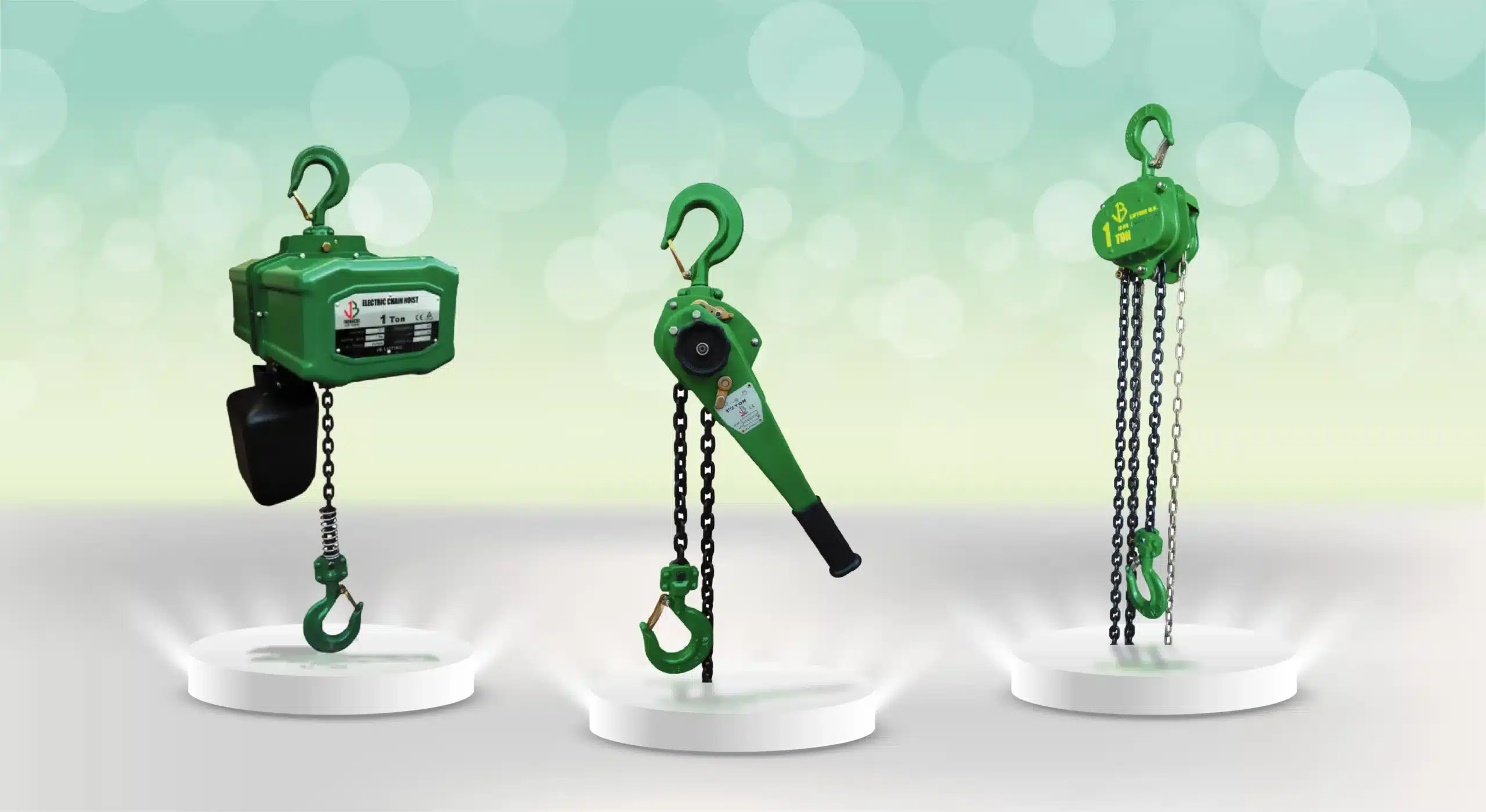
Chain hoists are indispensable tools in numerous industries, providing the lifting power necessary for a wide range of tasks. From manufacturing plants to construction sites, these devices play a crucial role in material handling and workflow efficiency. However, the reliance on chain hoists also introduces potential risks if they are not properly maintained.
Neglecting chain hoist maintenance can lead to a cascade of problems, including equipment failure, workplace accidents, and costly downtime. A seemingly minor issue, such as insufficient lubrication, can gradually escalate into a major malfunction, jeopardizing the safety of personnel and the integrity of operations. Therefore, understanding and avoiding common maintenance mistakes is essential for ensuring the longevity and reliability of chain hoists.
This article serves as a comprehensive guide to help you navigate the intricacies of chain hoist maintenance, focusing on avoiding costly errors that can compromise performance and safety. By addressing common pitfalls and providing actionable solutions, we aim to empower you with the knowledge and tools necessary to keep your chain hoists operating at peak efficiency.
Mistake #1: Ignoring the Manufacturer’s Manual
One of the most common mistakes in chain hoist maintenance is assuming that all hoists are the same and skipping the manufacturer’s manual. This oversight can lead to improper maintenance practices and potential damage to the equipment. Each chain hoist model has specific design features, operational parameters, and maintenance requirements that are detailed in the manual. Ignoring these guidelines can result in ineffective maintenance, premature wear, and even catastrophic failure.
Understanding the specific guidelines for your model is paramount. Different manufacturers may use different materials, designs, or lubrication systems, all of which necessitate tailored maintenance approaches. The manufacturer’s manual provides critical information about the recommended lubricants, inspection intervals, and replacement parts. This information is vital for maintaining the hoist’s performance and extending its lifespan.
To avoid this mistake, always read and follow the manufacturer’s instructions for maintenance, inspection, and operation. Before performing any maintenance task, take the time to thoroughly review the manual and understand the specific requirements for your hoist model. We once had a client in our Dubai office who used the wrong lubricant, causing significant wear on the gears. Taking the time to read the manual could have avoided this.
Here’s a checklist of key information to extract from the manual:
- Model-specific maintenance schedules
- Recommended lubricants and their application methods
- Inspection procedures and intervals
- Replacement part numbers and specifications
- Operational safety guidelines
- Troubleshooting tips and error codes
By adhering to the manufacturer’s manual, you can ensure that your chain hoist maintenance practices are aligned with the equipment’s design and operational requirements, ultimately minimizing the risk of costly errors and maximizing the hoist’s service life.
Mistake #2: Infrequent or Inadequate Inspections
Another significant error in chain hoist maintenance is only inspecting hoists when problems are obvious. While addressing visible issues is important, it’s insufficient for preventing more significant problems from developing. Regular, thorough inspections are essential for identifying potential issues early, allowing for timely maintenance and preventing costly breakdowns. Waiting until a problem becomes obvious often means that the damage is already extensive, leading to more expensive repairs and increased downtime.
Regular inspections help detect wear, damage, deformation, and lubrication issues before they escalate into major problems. These inspections provide an opportunity to assess the condition of critical components, such as the chain, hooks, gears, and brakes. Early detection of these issues allows for proactive maintenance, which can significantly extend the lifespan of the hoist and reduce the risk of accidents. Our team in Shanghai always emphasizes the importance of preventive inspections.
To avoid this mistake, establish a routine inspection schedule that includes daily, monthly, and annual inspections. Daily inspections should focus on visual checks for obvious damage, such as bent hooks or frayed chains. Monthly inspections should involve a more detailed examination of the hoist’s components, including lubrication checks and functional tests. Annual inspections should be comprehensive, involving a thorough assessment of all critical components and a load test to verify the hoist’s capacity.
Here’s what to look for during inspections:
- Wear on the chain, hooks, and gears
- Damage to the hoist body or other structural components
- Deformation of hooks or other load-bearing parts
- Proper lubrication of all moving parts
- Correct operation of limit switches and brakes
- Integrity of wiring and electrical connections
| Inspection Type |
Frequency |
Key Checkpoints |
| Daily |
Every day of use |
Visual check for obvious damage, hook condition, chain integrity. |
| Monthly |
Once a month |
Detailed component examination, lubrication checks, functional tests. |
| Annual |
Once a year |
Comprehensive assessment, load test, thorough component inspection. |
A well-documented hoist inspection checklist is an essential tool for ensuring thorough and consistent inspections. This checklist should include all critical inspection points and provide a space for recording observations and corrective actions. By following a standardized checklist, you can ensure that no critical area is overlooked and that all inspections are performed to the same high standard.
Mistake #3: Improper Lubrication Practices
Improper lubrication practices, such as using the wrong lubricant or neglecting lubrication altogether, can significantly reduce the lifespan and performance of a chain hoist. Lubrication plays a crucial role in reducing friction and wear between moving parts, preventing corrosion, and dissipating heat. Without proper lubrication, these components can quickly degrade, leading to premature failure and costly repairs.
The crucial role of lubrication is often underestimated. Adequate lubrication reduces friction, which in turn reduces the energy required to operate the hoist and minimizes wear on critical components. It also helps to prevent corrosion by creating a protective barrier against moisture and contaminants. Additionally, lubrication assists in dissipating heat generated by friction, preventing overheating and potential damage to the hoist’s internal components.
To avoid this mistake, always use the manufacturer-recommended lubricant and adhere to the recommended lubrication schedule. The manufacturer’s manual will specify the type of lubricant that is best suited for your hoist model, taking into account factors such as operating temperature, load capacity, and environmental conditions. Using the wrong lubricant can be as detrimental as not lubricating at all, as it may not provide adequate protection or may even damage the hoist’s components. Our experience shows that synthetic lubricants often provide better protection and longer service life compared to conventional lubricants.
Here are the key lubrication points on a chain hoist:
- Chain: Lubricate the chain regularly to reduce friction and prevent corrosion.
- Gears: Keep the gears well-lubricated to ensure smooth and efficient operation.
- Bearings: Lubricate the bearings to reduce friction and prevent overheating.
- Load Sheave: Lubricate the load sheave to minimize wear and ensure smooth chain movement.
The frequency of lubrication should be based on the hoist’s usage and the environmental conditions in which it operates. Hoists that are used frequently or operate in harsh environments may require more frequent lubrication than those that are used less often or operate in cleaner environments. As a general rule, inspect lubrication points monthly and lubricate as needed, following the manufacturer’s recommendations.
> “Regular lubrication is the single most effective way to extend the life of your chain hoist. Don’t skip it!” – Mark Johnson, Lead Maintenance Technician
Mistake #4: Overloading the Hoist
Overloading the hoist, or exceeding its rated capacity, is a dangerous practice that can lead to equipment failure, accidents, and injuries. Every chain hoist is designed with a specific load capacity, which is the maximum weight it can safely lift. Exceeding this limit puts excessive stress on the hoist’s components, increasing the risk of mechanical failure and potentially causing the load to drop.
The dangers of overloading cannot be overstated. Overloading can cause the chain to stretch or break, the hooks to bend or snap, and the gears to strip. These failures can result in the load falling unexpectedly, posing a significant risk to personnel and property. In addition to the immediate safety hazards, overloading can also cause hidden damage to the hoist, leading to premature wear and reduced service life.
To avoid this mistake, always know the weight of the load before lifting it and ensure that it does not exceed the hoist’s rated capacity. Use a load cell or other measuring device to accurately determine the weight of the load. If the weight is close to the hoist’s capacity, consider using a larger hoist or dividing the load into smaller portions.
Ensure that the hoist’s capacity is clearly marked and visible. The rated capacity should be prominently displayed on the hoist body, using durable and weather-resistant labels. Make sure that the labels are legible and that operators are aware of the hoist’s capacity. Regularly inspect the labels to ensure that they are intact and easily readable.
Here are some key points to remember about overload prevention:
- Always know the weight of the load.
- Never exceed the hoist’s rated capacity.
- Use a load cell or other measuring device to verify the weight.
- Ensure the hoist’s capacity is clearly marked and visible.
- Train operators to recognize the signs of overloading.
Mistake #5: Neglecting Chain Maintenance and Wear
Neglecting chain maintenance and wear is a common mistake that can compromise the integrity of the hoist and create a significant safety hazard. The chain is one of the most critical components of a chain hoist, and its condition directly affects the hoist’s ability to safely lift and lower loads. Ignoring chain wear, corrosion, and damage can lead to chain failure, resulting in dropped loads and potential injuries.
The importance of chain integrity cannot be overemphasized. A worn or damaged chain is more likely to break under load, increasing the risk of accidents. Corrosion can weaken the chain’s links, reducing its load-bearing capacity. Even seemingly minor damage, such as nicks or cuts, can create stress points that can lead to catastrophic failure.
To avoid this mistake, regularly inspect the chain for wear, elongation, and damage. Use a chain gauge to measure wear accurately. A chain gauge is a simple tool that allows you to quickly and easily measure the amount of wear on the chain links. The gauge will indicate whether the chain is within acceptable wear limits or if it needs to be replaced. Our team in the US recommends using a chain gauge at least monthly.
Replace the chain when it exceeds wear limits. The manufacturer’s manual will specify the maximum allowable wear for the chain. If the chain exceeds these limits, it should be replaced immediately. Using a worn chain is a dangerous practice that can lead to equipment failure and serious accidents.
Here are some key indicators of chain wear and damage:
- Elongation: Measure the chain’s length and compare it to the original length.
- Wear: Use a chain gauge to measure the wear on the chain links.
- Corrosion: Look for signs of rust or other corrosion on the chain.
- Damage: Inspect the chain for nicks, cuts, or other damage.
- Twisted or Bent Links: Examine chain links for any signs of twisting or bending, which can indicate excessive stress or damage.
| Chain Issue |
Description |
Action Required |
| Elongation |
Chain length exceeds allowable limit. |
Replace chain immediately. |
| Wear |
Chain links are worn beyond acceptable limits. |
Replace chain immediately. |
| Corrosion |
Rust or other corrosion is present on the chain. |
Clean and lubricate chain; replace if corrosion is severe. |
| Damage |
Nicks, cuts, or other damage are visible on the chain. |
Replace chain immediately. |
Mistake #6: Ignoring Limit Switch Functionality
Ignoring limit switch functionality is a critical oversight that can lead to over-travel, potentially damaging the hoist and the surrounding environment. Limit switches are safety devices designed to prevent the hoist from traveling beyond its intended limits, both in the upward and downward directions. These switches automatically cut off power to the hoist motor when the hoist reaches these limits, preventing the chain from over winding or unwinding.
The function of limit switches is vital for preventing accidents and equipment damage. Over-travel can cause the chain to become tangled, the hoist to collide with overhead structures, or the load to drop unexpectedly. By automatically stopping the hoist at its limits, limit switches protect both the equipment and the personnel operating it. Limit switches are a critical component in hoist safety tips.
To avoid this mistake, regularly test limit switches to ensure they function correctly. The testing process should involve raising and lowering the hoist until the limit switches are activated. Verify that the switches cut off power to the motor and prevent further movement. If the switches do not function properly, adjust or replace them as needed. Our team in Hamburg always recommends documenting all limit switch testing and maintenance.
Document all limit switch testing and maintenance. Keeping a record of testing and maintenance activities ensures that limit switches are regularly checked and that any issues are promptly addressed. This documentation can also be valuable for identifying trends and patterns that may indicate underlying problems with the hoist’s electrical system.
Here are the steps for testing limit switches:
1. Raise the hoist until the upper limit switch is activated.
2. Verify that the switch cuts off power to the motor and prevents further upward movement.
3. Lower the hoist until the lower limit switch is activated.
4. Verify that the switch cuts off power to the motor and prevents further downward movement.
5. Adjust or replace switches as needed to ensure proper functionality.
Mistake #7: Failing to Train Operators Properly
Failing to train operators properly is a significant mistake that can lead to unsafe operating practices and increased risk of accidents. Chain hoists are powerful pieces of equipment that require skilled operation to ensure safety and efficiency. Allowing untrained personnel to operate hoists can result in improper lifting techniques, overloading, and other hazardous situations.
The importance of proper training cannot be overstated. Trained operators are more likely to follow safe lifting practices, recognize potential hazards, and respond effectively to emergencies. They are also better equipped to perform routine inspections and identify maintenance issues before they escalate into major problems. We find comprehensive training is a cornerstone of hoist safety tips.
To avoid this mistake, provide comprehensive training to all operators. The training should cover topics such as safe lifting practices, inspection procedures, emergency procedures, and basic maintenance tasks. Operators should also be trained on the specific features and limitations of the hoist they will be operating.
Here are the key topics that should be included in operator training:
- Safe lifting practices: Proper techniques for lifting and lowering loads, including avoiding sudden movements and maintaining a stable load.
- Inspection procedures: How to perform routine inspections and identify potential problems, such as worn chains or damaged hooks.
- Emergency procedures: What to do in the event of an accident or equipment failure, including how to safely lower a load and shut down the hoist.
- Basic maintenance tasks: How to lubricate the hoist, inspect the chain, and perform other simple maintenance tasks.
- Overload prevention: Recognizing the signs of overloading and knowing how to avoid exceeding the hoist’s rated capacity.
Mistake #8: Ignoring Environmental Factors
Ignoring environmental factors can significantly impact chain hoist maintenance and performance. Factors like dust, moisture, and temperature can affect the hoist’s components, leading to corrosion, wear, and reduced efficiency. Neglecting these environmental influences can result in premature failure and increased maintenance costs.
The impact of the environment is often underestimated. Dust and debris can accumulate on moving parts, increasing friction and wear. Moisture can cause corrosion, weakening the hoist’s structural components. Extreme temperatures can affect the viscosity of lubricants, reducing their effectiveness. Our team in Atlanta has seen firsthand the impact of environmental factors on hoist performance.
To avoid this mistake, implement measures to protect the hoist from harsh environments. This may involve using specialized hoists designed for specific environments, such as those with corrosion-resistant coatings or sealed enclosures. It may also involve implementing regular cleaning and maintenance procedures to remove dust and debris and prevent corrosion.
Clean and lubricate more frequently in dusty or corrosive environments. In dusty environments, dust can accumulate on the chain, gears, and other moving parts, increasing friction and wear. Regularly cleaning these components and applying fresh lubricant can help to minimize the impact of dust. In corrosive environments, moisture and chemicals can cause corrosion, weakening the hoist’s structural components. Regularly cleaning and lubricating the hoist with corrosion-resistant lubricants can help to prevent corrosion.
Consider using specialized hoists designed for specific environments. For example, hoists used in marine environments may be designed with corrosion-resistant materials and sealed enclosures to protect them from saltwater exposure. Hoists used in high-temperature environments may be designed with heat-resistant components and lubricants.
Here are some key strategies for mitigating environmental factors:
- Regular cleaning: Remove dust, debris, and other contaminants from the hoist.
- Frequent lubrication: Apply fresh lubricant to moving parts to reduce friction and prevent corrosion.
- Corrosion-resistant coatings: Use hoists with corrosion-resistant coatings in corrosive environments.
- Sealed enclosures: Use hoists with sealed enclosures in dusty or wet environments.
- Temperature-resistant components: Use hoists with temperature-resistant components in extreme temperature environments.
Mistake #9: Improvising Repairs or Using Non-OEM Parts
Improvising repairs or using non-OEM parts is a dangerous practice that can compromise the safety and reliability of the chain hoist. Original equipment manufacturer (OEM) parts are specifically designed and tested for use in your hoist model. Using non-OEM parts can result in improper fit, reduced performance, and increased risk of failure.
The risks associated with non-standard repairs are significant. Non-OEM parts may not meet the same quality standards as OEM parts, and they may not be compatible with the hoist’s other components. This can lead to premature wear, reduced load capacity, and even catastrophic failure. Additionally, attempting unauthorized repairs can void the hoist’s warranty and increase the risk of accidents.
To avoid this mistake, only use original equipment manufacturer (OEM) parts when performing repairs. OEM parts are guaranteed to fit properly and perform as intended. They are also backed by the manufacturer’s warranty, providing added assurance of quality and reliability. Our teams across our locations are very strict when it comes to OEM parts.
Have repairs performed by qualified technicians. Chain hoist repairs should be performed by technicians who are trained and experienced in working with these types of equipment. Qualified technicians have the knowledge, skills, and tools necessary to diagnose problems accurately and perform repairs safely and effectively.
Here are some key reasons to use OEM parts and qualified technicians:
- Proper fit: OEM parts are designed to fit properly, ensuring optimal performance.
- Reliable performance: OEM parts are tested to meet the manufacturer’s quality standards.
- Warranty coverage: OEM parts are backed by the manufacturer’s warranty.
- Safety: Qualified technicians can perform repairs safely and effectively, reducing the risk of accidents.
- Longevity: Using OEM parts and qualified technicians can extend the lifespan of the hoist.
Troubleshooting Common Chain Hoist Problems
Even with diligent chain hoist maintenance, problems can still arise. Being able to troubleshoot common issues is essential for minimizing downtime and preventing further damage. Here are some common problems and their potential solutions:
- Problem 1: Hoist motor not working.
Possible causes: power supply issue, motor overload, faulty wiring.
Troubleshooting steps: check power supply, reset overload, inspect wiring for damage.
- Problem 2: Chain slippage.
Possible causes: worn chain, overloaded hoist, improper lubrication.
Troubleshooting steps: inspect chain for wear, reduce load to within rated capacity, lubricate chain.
- Problem 3: Jerky or uneven lifting.
Possible causes: worn gears, damaged chain, insufficient lubrication.
Troubleshooting steps: inspect gears and chain for damage, lubricate components, replace worn parts.
Conclusion: Proactive Maintenance for Longevity and Safety
In conclusion, avoiding common chain hoist maintenance mistakes is crucial for ensuring the longevity, reliability, and safety of your equipment. By following the tips outlined in this guide, you can significantly reduce the risk of costly errors and keep your chain hoists operating at peak efficiency. Remember to always consult the manufacturer’s manual, perform regular inspections, use proper lubrication practices, and train operators thoroughly.
Proactive maintenance is the key to preventing breakdowns and extending the lifespan of your chain hoists. By investing in regular maintenance, you can avoid costly repairs, reduce downtime, and improve safety. A well-maintained chain hoist is a valuable asset that can contribute to the efficiency and productivity of your operations. We’re confident that by prioritizing these strategies, your operations will experience minimized disruptions and enhanced safety protocols.
FAQ Section
Q: How often should I inspect my chain hoist?
A: Inspections should be performed daily, monthly, and annually. Daily inspections should focus on visual checks for obvious damage. Monthly inspections should involve a more detailed examination of the hoist’s components. Annual inspections should be comprehensive, involving a thorough assessment of all critical components and a load test.
Q: What type of lubricant should I use for my chain hoist?
A: Always use the manufacturer-recommended lubricant. The manufacturer’s manual will specify the type of lubricant that is best suited for your hoist model, taking into account factors such as operating temperature, load capacity, and environmental conditions.
Q: How do I know if my chain needs to be replaced?
A: Regularly inspect the chain for wear, elongation, and damage. Use a chain gauge to measure wear accurately. The manufacturer’s manual will specify the maximum allowable wear for the chain. If the chain exceeds these limits, it should be replaced immediately.
Q: What should I do if my hoist motor is not working?
A: First, check the power supply to ensure that the hoist is receiving power. Next, check the motor overload to see if it has tripped. If the overload has tripped, reset it and try to operate the hoist again. If the hoist still does not work, inspect the wiring for damage and repair or replace as needed. If you are unable to resolve the problem, contact a qualified technician.
Q: Can I use non-OEM parts to repair my chain hoist?
A: No, you should only use original equipment manufacturer (OEM) parts when performing repairs. OEM parts are specifically designed and tested for use in your hoist model. Using non-OEM parts can result in improper fit, reduced performance, and increased risk of failure.
Q: How important is proper chain hoist lubrication?
A: Proper chain hoist lubrication is critical. It reduces friction and wear between moving parts, prevents corrosion, and dissipates heat. Neglecting lubrication can lead to premature failure and costly repairs.
Q: What are some essential hoist safety tips?
A: Some essential hoist safety tips include: never exceeding the hoist’s rated capacity, always knowing the weight of the load, regularly inspecting the hoist for damage, and providing comprehensive training to all operators.