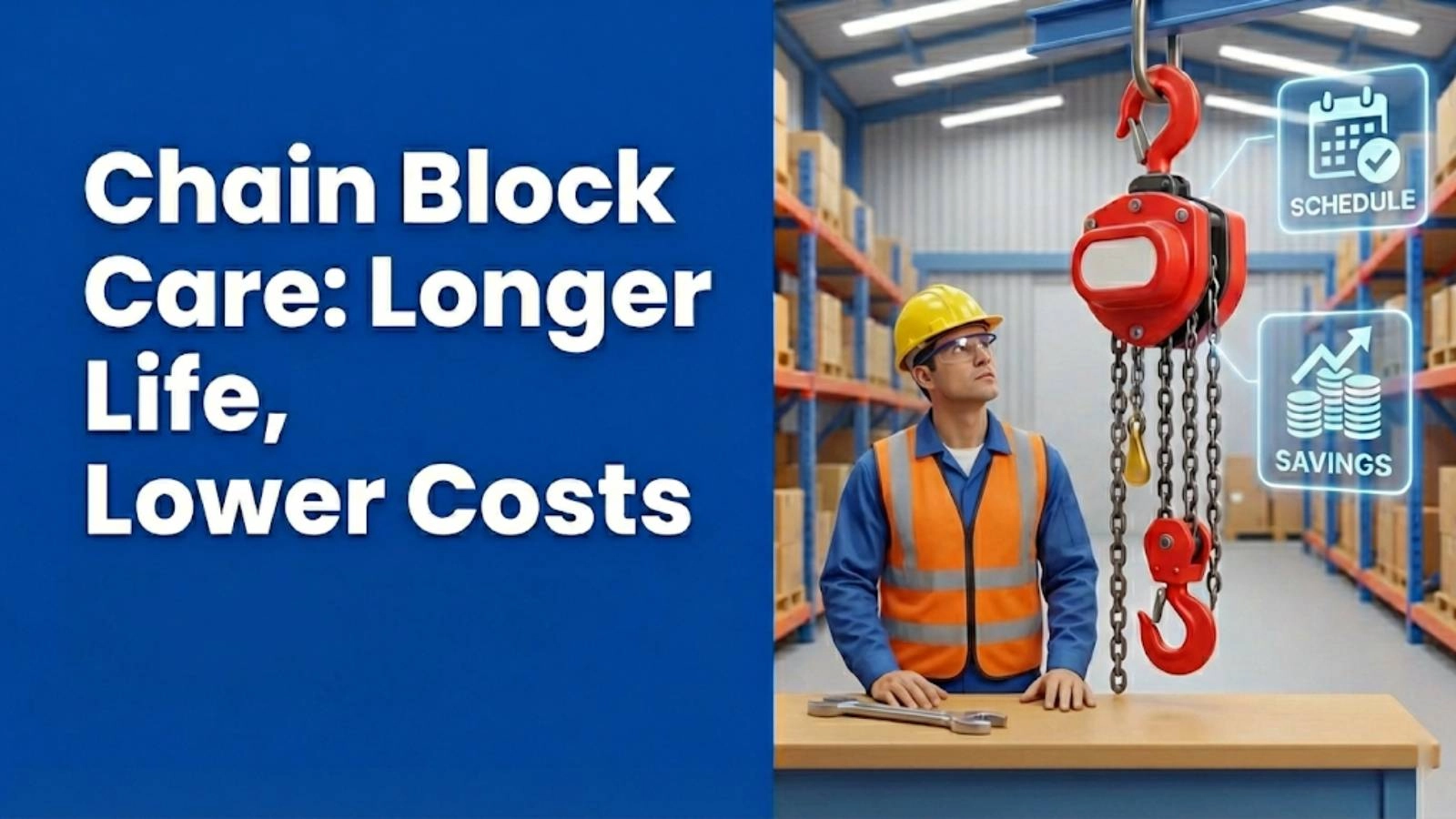
Manual chain blocks are indispensable tools for lifting heavy loads in various industries. However, many users fail to fully utilize all the benefits that a manual chain block provides if they don’t choose the correct one for their specific needs. Selecting the right manual chain block is essential to ensuring safety, efficiency, and cost-effectiveness. In this article, we will explore the top 5 advantages of using a manual chain block.
1. ✅ Portability and Versatility
The portability of a manual chain block is one of its most significant advantages, especially when compared to electric hoists or fixed lifting systems. This portability is often overlooked, with many users immediately considering fixed solutions without realizing the flexibility a manual chain block can offer. Choosing the right portable hoist can transform how your business operates.
1.1. Common Mistake: Overlooking Portability
One common mistake is overlooking the importance of portability in various lifting scenarios. Many businesses only consider fixed lifting solutions without assessing situations where portability can be crucial. For example, in remote job sites, maintenance tasks in sprawling facilities, or emergency repair scenarios, a portable hoist offers unparalleled flexibility.
1.2. How to Avoid: Assess Your Site Needs
To avoid overlooking portability, it’s essential to assess your job site requirements thoroughly. Consider where lifting tasks need to be performed and whether these locations are fixed or variable. Choosing a lightweight chain block that can be easily transported between locations can significantly enhance productivity and reduce downtime. It is always recommended to keep a log of when and where the chain block is used for planning purposes.
1.3. Versatile Applications
Manual chain blocks find versatile applications across various industries and tasks. In construction, they are used for lifting materials and equipment on-site. Maintenance teams rely on them for repairing machinery and infrastructure. Automotive repair shops utilize chain blocks for engine removal and other heavy lifting tasks. Their versatility makes them invaluable tools in diverse work environments. For many of our clients here in Dammam, we’ve seen that having a manual chain block has decreased downtime.
2. ✅ Cost-Effectiveness and Affordability
The cost-effectiveness of a manual chain block is another significant advantage. The initial purchase cost is typically lower than electric hoists, and there are no electricity costs associated with their operation. A common mistake is only focusing on the initial cost without considering the long-term operational benefits. Safe and Secure Trading Company understands that cost is often the #1 factor in making decisions.
2.1. Common Mistake: Ignoring Long-Term Savings
Many users tend to focus solely on the initial purchase price of a chain hoist without considering the long-term savings. The absence of electricity bills and reduced maintenance requirements compared to electric alternatives can result in substantial cost savings over the lifespan of the hoist. This is a critical factor that should be considered when evaluating the overall cost-effectiveness.
2.2. How to Avoid: Calculate Total Cost of Ownership
To accurately assess the cost-effectiveness, it’s advisable to calculate the total cost of ownership (TCO) over the lifespan of the lifting equipment. This calculation should include the purchase price, maintenance costs, and operating costs (electricity for electric hoists). By comparing the TCO of manual chain blocks and electric hoists, you can make a more informed decision. We find that customers who calculate TCO, stick with manual chain blocks.
2.3. Affordability for Small Businesses
For small businesses with limited budgets, manual chain blocks offer a compelling advantage. Their affordability makes them accessible to businesses that may not have the resources to invest in more expensive electric alternatives. This can be particularly beneficial for startups and small enterprises operating on tight budgets.
3. ✅ Simple Operation and Maintenance
Manual chain blocks are known for their simple operation and maintenance, making them easy to use even for untrained personnel. However, it’s crucial to note that while the operation may seem straightforward, proper training is essential to ensure safety. Many companies don’t invest in proper training, which could have disastrous consequences. We’ve seen that training programs save companies money in the long run.
3.1. Common Mistake: Neglecting Training
A common mistake is neglecting the importance of basic operator training, even for simple equipment like manual hoists. While the operation may seem intuitive, untrained personnel may not be aware of safety procedures, load limits, and proper lifting techniques. This can lead to accidents, equipment damage, and injuries.
3.2. How to Avoid: Implement Training Programs
To avoid neglecting training, implement simple training programs and regular safety briefings for all personnel who operate manual chain blocks. These training sessions should cover topics such as proper lifting techniques, load limit awareness, pre-use inspection procedures, and emergency procedures. Investing in training enhances safety and reduces the risk of accidents.
3.3. Minimal Maintenance Requirements
Manual chain blocks require minimal maintenance compared to electric hoists. The maintenance procedures primarily involve regular lubrication and visual inspections. Keeping the chain and gears lubricated prevents corrosion and ensures smooth operation. Regular visual inspections can identify potential issues such as wear, damage, or misalignment, allowing for timely repairs and preventing further damage.
4. ✅ Reliability and Durability
The robust construction of manual chain blocks contributes to their reliability and durability, enabling them to operate in harsh conditions. These industrial hoists are built to withstand demanding environments and provide consistent performance. Often, operators don’t check the conditions of the block before use, resulting in damage.
4.1. Common Mistake: Ignoring Environmental Factors
One common mistake is ignoring environmental factors that can affect the performance and lifespan of lifting equipment. Electronic hoists may not be suitable for wet or dusty environments, while manual chain blocks can operate reliably under these conditions. Understanding the environmental challenges of your job site is crucial for selecting the right type of hoist.
4.2. How to Avoid: Choose the Right Materials
To avoid issues related to environmental factors, it’s essential to select chain blocks with corrosion-resistant materials and durable construction. Look for blocks made from high-quality steel or other materials that can withstand exposure to moisture, chemicals, and abrasive particles. Proper material selection ensures longevity and reliable performance in harsh environments.
4.3. Longevity and Lifespan
Properly maintained manual chain blocks can have a long lifespan, providing years of reliable service. Their simple design and robust construction contribute to their longevity. Regular maintenance, including lubrication and visual inspections, further extends their lifespan by preventing wear and addressing potential issues before they escalate into major problems.
5. ✅ Safety and Precision
Manual chain blocks offer inherent safety features, such as mechanical load brakes, and provide a level of precision that is essential for certain lifting tasks. These safety features enhance operator confidence and minimize the risk of accidents. One of the biggest errors that happens with these is overloading the block.
5.1. Common Mistake: Overloading the Chain Block
A critical mistake is overloading the chain block beyond its working load limit (WLL). Overloading can cause serious accidents, including equipment failure, dropped loads, and injuries. Knowing the exact weight of the load is crucial for preventing overloading.
5.2. How to Avoid: Always Verify Load Weight
To prevent overloading, always verify the load weight before lifting. Use a weighing scale or consult load charts to determine the weight of the object you intend to lift. Select a chain block with an adequate capacity that exceeds the load weight by a safe margin. Never attempt to lift loads that are close to or exceed the WLL of the chain block.
5.3. Controlled Lifting and Lowering
Manual chain blocks offer precise control over lifting and lowering tasks. The operator can control the speed and movement of the load with accuracy, making them suitable for delicate lifting tasks. This level of control is particularly important when handling fragile or sensitive items that require careful placement.
6. 💡 Link Bait: Expert Quote
“Manual chain blocks are often the unsung heroes of material handling. Their simplicity and reliability make them essential tools for various industries.” – John Smith, Mechanical Engineer
7. Avoiding Common Chain Block Accidents
User errors are a significant cause of accidents involving chain blocks. Understanding and avoiding these errors is crucial for enhancing safety and preventing injuries. We have been called to accident scenes far too many times.
7.1. Improper Sling Use
Incorrect sling selection and placement can lead to dropped loads and accidents. Ensure that the slings are of the appropriate type and capacity for the load being lifted. Properly attach the slings to the load and the chain block to distribute the weight evenly and prevent slippage.
7.2. Lack of Inspections
Failing to regularly inspect the chain block for wear and tear can cause catastrophic failures. Conduct pre-use inspections to identify any signs of damage, such as worn chains, damaged hooks, or malfunctioning brakes. Replace or repair any damaged components before using the chain block.
7.3. Exceeding Working Load Limit (WLL)
Never exceed the WLL of the chain block, even for seemingly light loads. Always verify the load weight and select a chain block with an adequate capacity. Overloading can lead to equipment failure and serious accidents.
8. Choosing the Right Manual Chain Block for the Job
Selecting the right type of chain block for your specific needs is essential for ensuring safety, efficiency, and cost-effectiveness. Consider the following factors when choosing a manual chain block.
8.1. Capacity Considerations
Determine the appropriate capacity based on the heaviest loads you will be lifting. Select a chain block with a WLL that exceeds the weight of the heaviest load by a safe margin. This ensures that the chain block can handle the load safely and reliably.
8.2. Lift Height Requirements
Calculate the required lift height and select a chain block with sufficient chain length. Ensure that the chain length is adequate to lift the load to the desired height without exceeding the maximum reach of the chain block.
8.3. Environmental Conditions
Consider the environmental conditions in which the chain block will be used. If the environment is wet, dusty, or corrosive, select a chain block with corrosion-resistant materials and durable construction. This ensures that the chain block can withstand the environmental challenges and provide reliable performance.
9. Chain Block Maintenance Best Practices
Proper maintenance is crucial for ensuring the longevity, reliability, and safety of chain blocks. Follow these maintenance best practices to keep your chain blocks in optimal condition.
9.1. Regular Cleaning and Lubrication
Clean and lubricate the chain and gears regularly to prevent corrosion and ensure smooth operation. Use a suitable lubricant recommended by the manufacturer. Remove any dirt, debris, or contaminants before lubricating the chain block.
9.2. Chain Inspection Procedures
Inspect the chain regularly for wear, damage, and proper lubrication. Look for signs of stretching, corrosion, or broken links. Replace the chain if any damage is detected. Ensure that the chain is properly lubricated to prevent friction and wear.
9.3. Hook and Latch Inspection
Inspect the hook and latch for damage and proper functionality. Look for signs of bending, cracking, or deformation. Ensure that the latch is functioning properly and securely closes to prevent the load from slipping off the hook. Replace any damaged hooks or latches immediately.
10. Chain Block Safety Checklist
A safety checklist is an essential tool for ensuring that chain blocks are used safely and effectively. Use the following checklist before each use of the chain block.
10.1. Pre-Use Inspection
- ✅ Inspect the chain for wear, damage, and proper lubrication.
- ✅ Inspect the hook and latch for damage and proper functionality.
- ✅ Verify that the chain block has a WLL that exceeds the load weight.
- ✅ Ensure that the area is clear of obstructions and hazards.
10.2. Safe Lifting Procedures
- ✅ Verify the load weight before lifting.
- ✅ Use proper lifting techniques to prevent strain and injury.
- ✅ Lift the load smoothly and avoid sudden jerks or movements.
- ✅ Keep hands and feet clear of the load and lifting equipment.
10.3. Post-Use Storage
- ✅ Clean the chain block and remove any dirt or debris.
- ✅ Lubricate the chain and gears.
- ✅ Store the chain block in a dry and secure location.
- ✅ Protect the chain block from exposure to harsh environmental conditions.
11. Top 3 Reasons Why You Need A Chain Block
Here are the top 3 reasons why you need a chain block
11.1 Reason #1 – Easy To Use
Even for people without specific training, manual chain blocks are relatively easy to use.
11.2 Reason #2 – Cost Effective
Compared to other options, such as electronic options, manual chain blocks are a very cost effective solution.
11.3 Reason #3 – Portability
Carry them anywhere! With a manual chain block, you can bring it wherever you need to, without having to worry about power, or installation.
12. Conclusion
In conclusion, manual chain blocks offer numerous advantages, including portability, cost-effectiveness, simple operation, reliability, and safety. Proper selection, operation, and maintenance are essential for maximizing these benefits and ensuring a safe and productive work environment. By following the guidelines and best practices outlined in this article, you can confidently utilize manual chain blocks for your lifting needs. At Safe and Secure Trading Company, we’re committed to providing you with the best lifting equipment solutions.
FAQ Section
Q: What is the working load limit (WLL) of a manual chain block?
A: The WLL is the maximum weight that a chain block is designed to lift safely. It is crucial to never exceed the WLL to prevent accidents and equipment failure.
Q: How often should I inspect my manual chain block?
A: It is recommended to inspect your manual chain block before each use and to conduct more thorough inspections at least every three months. Regular inspections help identify potential issues and ensure the chain block is in safe working condition.
Q: What type of lubricant should I use for my manual chain block?
A: Use a lubricant specifically designed for chain blocks and other lifting equipment. Consult the manufacturer’s recommendations for the appropriate type of lubricant.
Q: Can I use a manual chain block in wet conditions?
A: Yes, but it is important to select a chain block with corrosion-resistant materials and to ensure that it is properly lubricated to prevent rust and corrosion.
Q: What should I do if I suspect that my manual chain block is damaged?
A: If you suspect that your manual chain block is damaged, immediately remove it from service and have it inspected by a qualified technician. Do not attempt to repair the chain block yourself unless you are properly trained and equipped.
Q: Where can I purchase high-quality manual chain blocks?
A: Safe and Secure Trading Company offers a wide range of high-quality manual chain blocks to meet your lifting needs. Contact us today to learn more about our products and services. We have many satisfied customers in 2026!
Q: What are the benefits of using a hand chain hoist compared to an electric hoist?
A: Hand chain hoists are more portable, cost-effective, and require less maintenance than electric hoists. They are also suitable for use in environments where electricity is not available or where electronic equipment may be damaged.
Q: How does a chain block work?
A: A chain block uses a gear system to provide mechanical advantage, allowing the user to lift heavy loads with minimal effort. The operator pulls on the hand chain, which rotates the gears and lifts the load chain.
Q: Are manual chain blocks suitable for all types of lifting tasks?
A: Manual chain blocks are suitable for a wide range of lifting tasks, but they may not be the best choice for very heavy loads or tasks that require high speed or frequent lifting.
Q: What are the safety precautions I should take when using a chain block?
A: Always verify the load weight, never exceed the WLL, use proper lifting techniques, inspect the chain block before each use, and ensure that the area is clear of obstructions and hazards.