The construction site buzzed with activity, a symphony of hammers, drills, and shouting. Amidst the organized chaos, a worker, perched precariously on scaffolding, adjusted his safety harness. He confidently told his coworker, “Don’t worry, it’s just a quick job. I don’t need to clip in for a minute.” That “minute” could have changed everything. This near-miss underscores the critical importance of accurate information when it comes to fall protection. The illusion of safety, created by believing in fall protection myths, can have devastating consequences.
At Safe and Secure Trading Company (SSTC), we see the impact of these misconceptions daily. From our operations here in Jubail to project sites throughout the region, we are committed to promoting workplace safety through education, quality equipment, and expert consultation. We understand that fall prevention hinges on separating fact from fiction, which is what we aim to do in this article.
1. Myth: “Fall Protection Isn’t Always Necessary for Short Falls”
The Illusion of ‘Just a Little Fall’
✅ It’s a common sentiment: “It’s just a small fall; what’s the worst that could happen?” This dangerous mindset often leads to complacency and a disregard for fall safety protocols. Even falls from seemingly low heights can result in serious injuries, including fractures, sprains, concussions, and even fatalities. The perception of risk is often skewed, leading workers to underestimate the potential for harm.
According to the National Safety Council, a significant percentage of fall injuries occur from heights of 10 feet or less. This statistic underscores the importance of consistent fall protection, regardless of the perceived risk. Remember, complacency is a silent hazard, and even a momentary lapse in judgment can have life-altering consequences.
SSTC’s Perspective on Fall Height
💡 At SSTC, we maintain a strict policy regarding fall protection height requirements. We believe that any work performed at a height of four feet or more necessitates the use of appropriate personal protective equipment (PPE) and fall prevention measures. We’ve seen firsthand how seemingly minor incidents can escalate into major injuries when proper precautions are not taken.
For work at lower heights, we often recommend solutions such as guardrails, scaffolding with proper access, and the use of non-slip footwear. For higher elevations, we emphasize the use of full-body harnesses, lanyards, and secure anchor points. We always prioritize fall safety and tailor our recommendations to the specific needs of each worksite, and consider it a critical component of workplace safety.
2. Myth: “Any Harness Will Do”
The Devil in the Details of Harness Selection
➡️ Not all harnesses are created equal. A general-purpose harness might seem adequate, but using the wrong type of harness for a specific task can be just as dangerous as not using one at all. Different harnesses are designed for different applications, load capacities, and environmental conditions. Selecting the appropriate harness requires careful consideration of the task at hand and the potential hazards involved.
For example, a construction worker performing welding at height requires a harness made of fire-resistant materials, while someone working in a confined space might need a harness with retrieval loops for emergency extraction. A harness that is too large or too small will not provide adequate protection and can even increase the risk of injury. The proper fit, adjustment, and application can all make a difference in fall safety.
Matching the Harness to the Task: An SSTC Guide
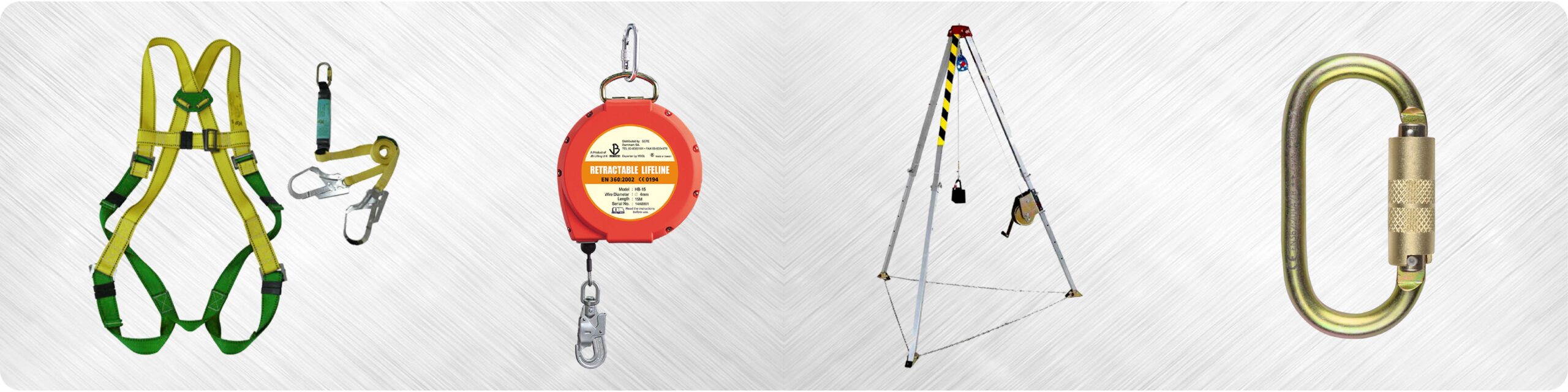
💡 As a trusted provider of PPE, SSTC offers a wide range of harnesses to meet the diverse needs of our clients. For general construction work, we often recommend a standard five-point harness with adjustable straps for a secure and comfortable fit. These harnesses typically feature a dorsal D-ring for connecting to a lanyard or self-retracting lifeline (SRL). For roofing applications, we offer specialized harnesses with additional padding and features designed for prolonged use in demanding conditions.
For work in confined spaces, we provide harnesses with integrated retrieval loops that allow for quick and safe extraction in the event of an emergency. These harnesses are often paired with a tripod and winch system for vertical lifting and lowering. No matter the application, we emphasize the importance of proper training in the use and inspection of harnesses. For example, in the oil and gas industry in Yanbu, we have seen the importance of this first hand. You can explore our extensive selection of harnesses in our product catalog on our website.
3. Myth: “Anchor Points Are Always Strong Enough”
The Unseen Weakness Above
✅ A harness and lanyard are only as effective as the anchor point to which they are attached. Many workers assume that any overhead structure is strong enough to serve as an anchor point, but this is a dangerous assumption. Anchor points must be capable of withstanding the force generated during a fall, which can be several times the worker’s weight.
Inadequate anchor points are a leading cause of fall protection failures. Before commencing any work at height, it is crucial to inspect and verify the strength of the anchor point. This may involve consulting with a qualified engineer or conducting load testing to ensure compliance with OSHA standards and safety regulations. Ignoring this step can have catastrophic consequences.
SSTC’s Anchor Point Inspection Services
➡️ SSTC offers comprehensive anchor point inspection and certification services to help our clients ensure the fall safety of their workers. Our team of certified inspectors can assess the suitability of existing anchor points and recommend solutions for strengthening or replacing inadequate ones. We use calibrated testing equipment to determine the load-bearing capacity of anchor points and provide detailed reports outlining our findings.
We once conducted an inspection for a client in the petrochemical industry and discovered that several of their anchor points were severely corroded and unable to meet the required safety standards. By identifying and addressing these weaknesses, we helped the client prevent a potential fall incident and avoid costly downtime. Our dedication to detail keeps your workplace safety in mind.
4. Myth: “Fall Protection is Only Necessary for Inexperienced Workers”
Experience Doesn’t Equal Immunity
💡 While experience can be valuable, it does not make a worker immune to falls. In fact, experienced workers may be more likely to take risks and disregard fall safety protocols due to overconfidence or a false sense of security. Familiarity with a task can lead to complacency, causing workers to overlook potential hazards.
Furthermore, fatigue, distractions, and changes in work conditions can affect even the most experienced workers. Ongoing training and refresher courses are essential for reinforcing safety regulations and promoting a culture of hazard awareness. It’s important to recognize that fall prevention is a continuous process, not a one-time event.
Continuous Learning: SSTC’s Training Programs
✅ SSTC offers a comprehensive range of training programs designed to enhance hazard awareness and promote fall safety among workers of all experience levels. Our training modules cover topics such as PPE selection and usage, anchor point inspection, fall prevention techniques, and emergency response procedures. We offer both on-site training and virtual training options to accommodate the diverse needs of our clients.
We also provide customized training modules tailored to specific industries and job tasks. For example, we offer specialized training for workers in the construction, oil and gas, and telecommunications industries. Our training programs are designed to be engaging, informative, and practical, equipping workers with the knowledge and skills they need to stay safe on the job. We work to make training as convenient as possible, even offering courses in multiple languages in areas such as Riyadh.
5. Myth: “Using a Safety Net is Always Sufficient”
The Net’s Limitations
➡️ Safety nets can be an effective fall protection measure, but they are not a foolproof solution. Safety nets must be installed and maintained properly to function as intended. The height and configuration of the net must be appropriate for the specific work environment. The presence of debris or sharp objects in the net can compromise its integrity and increase the risk of injury.
Environmental factors, such as wind and temperature, can also affect the performance of safety nets. Strong winds can cause the net to sag or become dislodged, while extreme temperatures can weaken the net’s material. It is essential to regularly inspect safety nets for damage and ensure that they are properly secured. Safety nets should be used in conjunction with other fall protection measures, such as harnesses and lanyards, to provide comprehensive protection.
Integrated Fall Protection: The SSTC Approach
💡 At SSTC, we advocate for an integrated approach to fall protection, combining different measures to create a comprehensive safety system. We believe that no single solution is adequate in all situations. Instead, we work with our clients to develop customized fall prevention plans that address the specific hazards and risks present in their work environments.
This approach may involve using a combination of guardrails, safety nets, harnesses, lanyards, and SRLs. We also emphasize the importance of hazard awareness, proper training, and regular inspections to ensure the effectiveness of the safety system. By integrating different fall protection measures, we can create a safer and more secure work environment for everyone.
6. Myth: “Self-Retracting Lanyards Don’t Need Inspection”
The Hidden Dangers Within
✅ Self-retracting lanyards (SRLs) are a popular choice for fall protection, providing freedom of movement while automatically arresting a fall. However, many workers mistakenly believe that SRLs require little or no maintenance. In reality, SRLs are complex mechanical devices that require regular inspection and maintenance to ensure proper functioning.
SRLs contain internal components that can wear down or become damaged over time. The lifeline itself can become frayed or cut, compromising its strength. The braking mechanism can become corroded or obstructed, preventing it from engaging properly in a fall. Using a damaged or malfunctioning SRL can have catastrophic consequences.
Keeping Your SRLs in Top Shape: SSTC’s Maintenance Tips
➡️ To ensure the longevity and reliability of your SRLs, SSTC recommends the following maintenance tips:
- Regularly inspect the lifeline for signs of wear, cuts, or fraying.
- Check the housing for cracks, dents, or corrosion.
- Ensure that the braking mechanism engages smoothly and quickly.
- Lubricate the internal components according to the manufacturer’s instructions.
- Store SRLs in a clean, dry environment away from direct sunlight and extreme temperatures.
SSTC also offers repair and maintenance services for SRLs. Our team of trained technicians can diagnose and repair any issues with your SRLs, ensuring that they meet the required safety standards. The following table illustrates a typical inspection checklist.
| Component |
Inspection Point |
Action Required if Issue Found |
| Lifeline |
Check for cuts, fraying, or abrasion. |
Replace the SRL immediately. |
| Housing |
Inspect for cracks, dents, or corrosion. |
Send the SRL for professional repair. |
| Braking Mechanism |
Verify smooth and rapid engagement. |
Send the SRL for professional repair. |
| Snap Hook/Carabiner |
Ensure proper locking and swivel action. |
Replace the snap hook/carabiner. |
| Labeling |
Confirm that all labels are legible and intact. |
Replace the SRL if labels are missing or illegible. |
7. Myth: “Fall Protection Equipment is Too Expensive”
The Cost of Neglect
✅ While fall protection equipment may seem like an added expense, it is a necessary investment in worker safety. The cost of a fall injury can far outweigh the cost of providing adequate fall protection. Fall injuries can result in significant medical expenses, lost wages, and workers’ compensation claims. They can also lead to decreased productivity, damaged equipment, and legal liabilities.
Moreover, workplace accidents can damage a company’s reputation and erode employee morale. Investing in quality fall protection equipment demonstrates a commitment to worker safety, which can improve employee retention and attract top talent. Ultimately, the cost of fall protection is a small price to pay for protecting the lives and well-being of workers.
Investing in Safety: SSTC’s Affordable Solutions
💡 SSTC is committed to providing affordable fall protection solutions to help our clients protect their workers without breaking the bank. We offer a wide range of PPE and fall prevention equipment at competitive prices. We also offer financing options and bulk discounts to make fall protection more accessible to businesses of all sizes.
We believe that everyone deserves to work in a safe and secure environment. We work closely with our clients to understand their specific needs and develop cost-effective fall protection plans that meet their budget and safety requirements. We often say that safety isn’t expensive, it’s priceless.
> “Fall protection is not just about compliance; it’s about creating a culture of safety where every worker feels valued and protected.” – John Smith, Lead Safety Inspector
Conclusion: Separating Fact from Fiction
In this article, we’ve debunked several common fall protection myths that can put workers at risk. We’ve emphasized the importance of accurate information, proper training, and quality equipment in preventing falls. Remember, even short falls can be dangerous, and no worker is immune to the risk of falling. Fall prevention requires a comprehensive approach that integrates different fall protection measures and promotes a culture of hazard awareness.
At SSTC, we are dedicated to providing our clients with the resources and expertise they need to create a safe and secure work environment. We offer a wide range of fall protection equipment, training programs, and inspection services to help you protect your workers and comply with safety regulations. We believe that every worker deserves to go home safe at the end of the day.
FAQ Section
Q: What is the minimum height at which fall protection is required?
A: While OSHA standards may vary, SSTC recommends fall protection for any work performed at a height of four feet or more. This is because even falls from lower heights can result in serious injuries.
Q: How often should fall protection equipment be inspected?
A: Fall protection equipment should be inspected before each use and at least annually by a competent person. Regular inspections can help identify signs of wear, damage, or malfunction, ensuring that the equipment is in safe working condition.
Q: What is the difference between a fall arrest system and a fall restraint system?
A: A fall arrest system is designed to stop a fall in progress, while a fall restraint system is designed to prevent a worker from reaching a fall hazard. Fall arrest systems typically include a full-body harness, lanyard, and anchor point, while fall restraint systems may include a shorter lanyard or a guardrail.
Q: How can I improve hazard awareness in my workplace?
A: Improving hazard awareness requires a multi-faceted approach that includes training, communication, and regular inspections. Provide workers with comprehensive training on potential hazards and fall prevention techniques. Encourage open communication about safety concerns and near-miss incidents. Conduct regular inspections to identify and address potential hazards before they lead to accidents.
Q: What are the consequences of violating OSHA standards for fall protection?
A: Violating OSHA standards for fall protection can result in significant fines, penalties, and legal liabilities. In addition to financial consequences, workplace accidents can damage a company’s reputation and erode employee morale. It is essential to comply with safety regulations and prioritize worker safety to avoid these consequences.
Q: Where can I find more information about fall protection and workplace safety?
A: You can find more information about fall protection and workplace safety on the OSHA website, the National Safety Council website, and the SSTC website. We also offer a variety of resources, including articles, white papers, and training materials, to help you create a safer work environment. Remember to always follow proper safety regulations.
Q: What is the role of personal protective equipment (PPE) in fall protection?
A: PPE, such as harnesses, lanyards, and helmets, plays a crucial role in fall protection. PPE is designed to protect workers from the impact of a fall and reduce the risk of injury. It is essential to select the appropriate PPE for the specific task and ensure that workers are properly trained in its use and maintenance.
Q: How does SSTC contribute to workplace safety in the region?
A: SSTC is committed to promoting workplace safety in the region through our comprehensive range of fall protection equipment, training programs, and inspection services. We work closely with our clients to develop customized fall prevention plans that address their specific needs and hazards. We also participate in industry events and conferences to share our expertise and promote best practices for workplace safety.
Q: What are the latest innovations in fall protection technology?
A: Recent innovations in fall protection technology include the development of lighter and more comfortable harnesses, SRLs with integrated energy absorbers, and smart PPE that can monitor worker location and detect potential hazards. These technologies are designed to improve worker safety and enhance the effectiveness of fall prevention measures. We are always looking to provide our clients with the most cutting-edge technology.