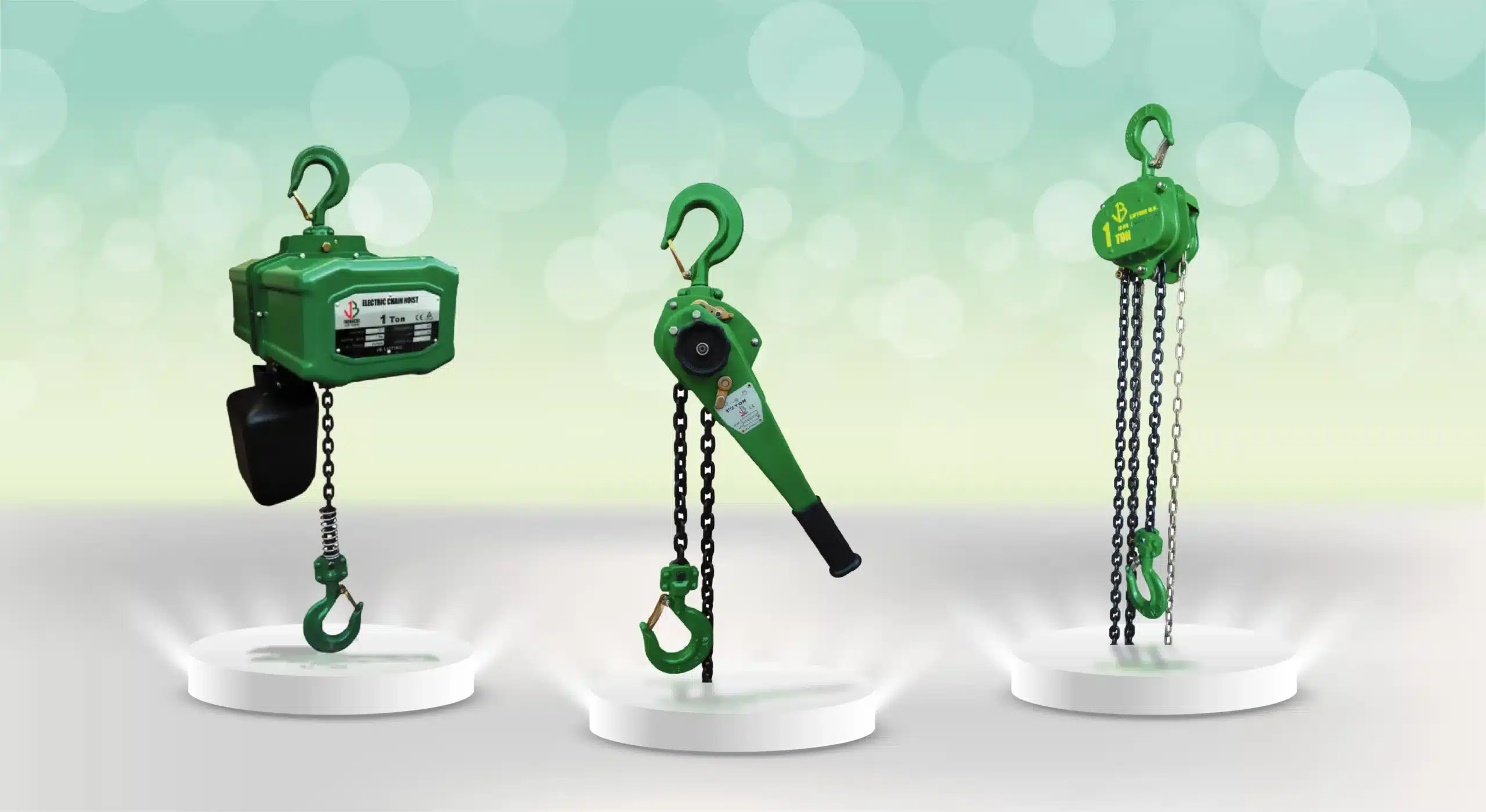
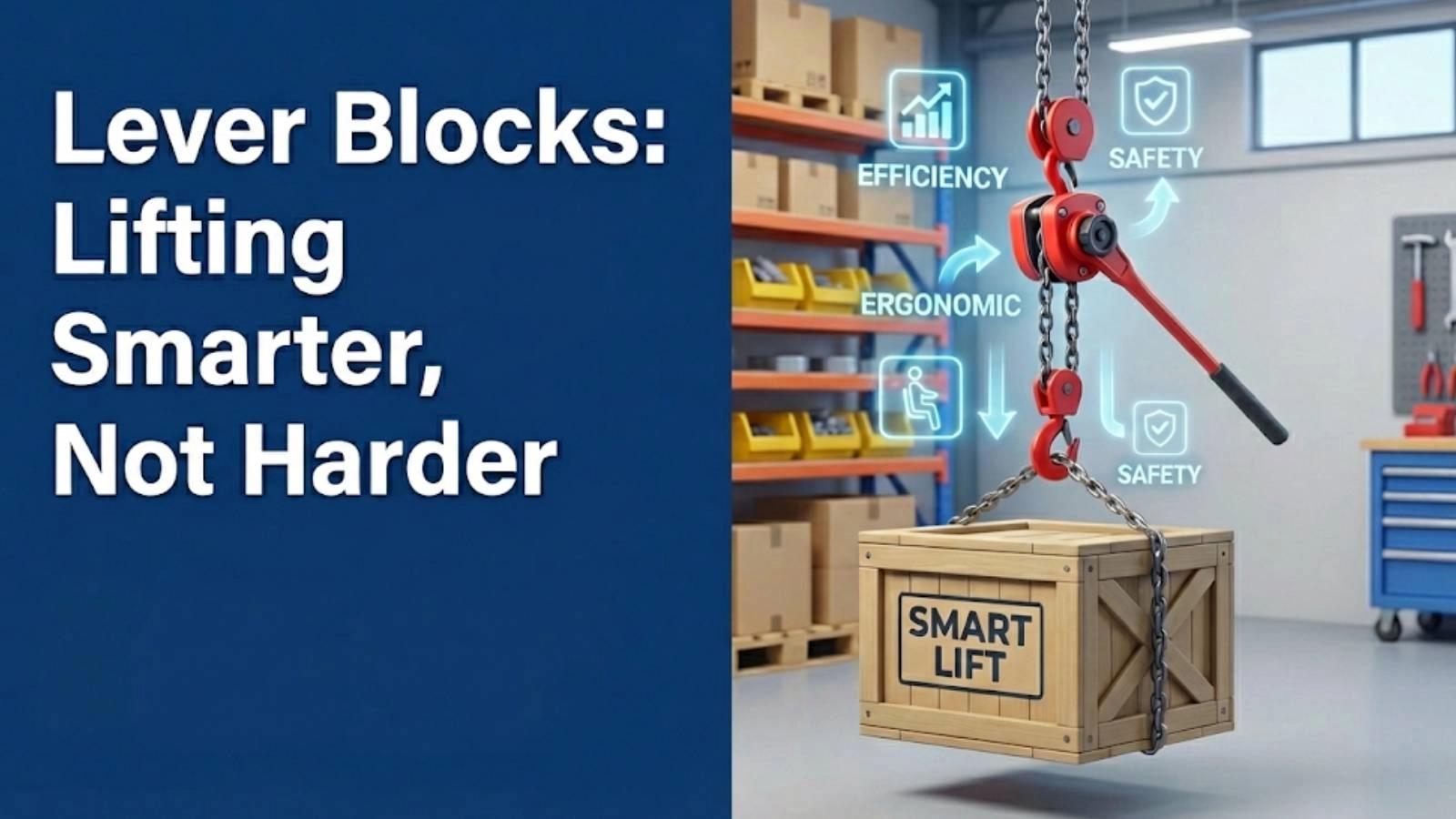
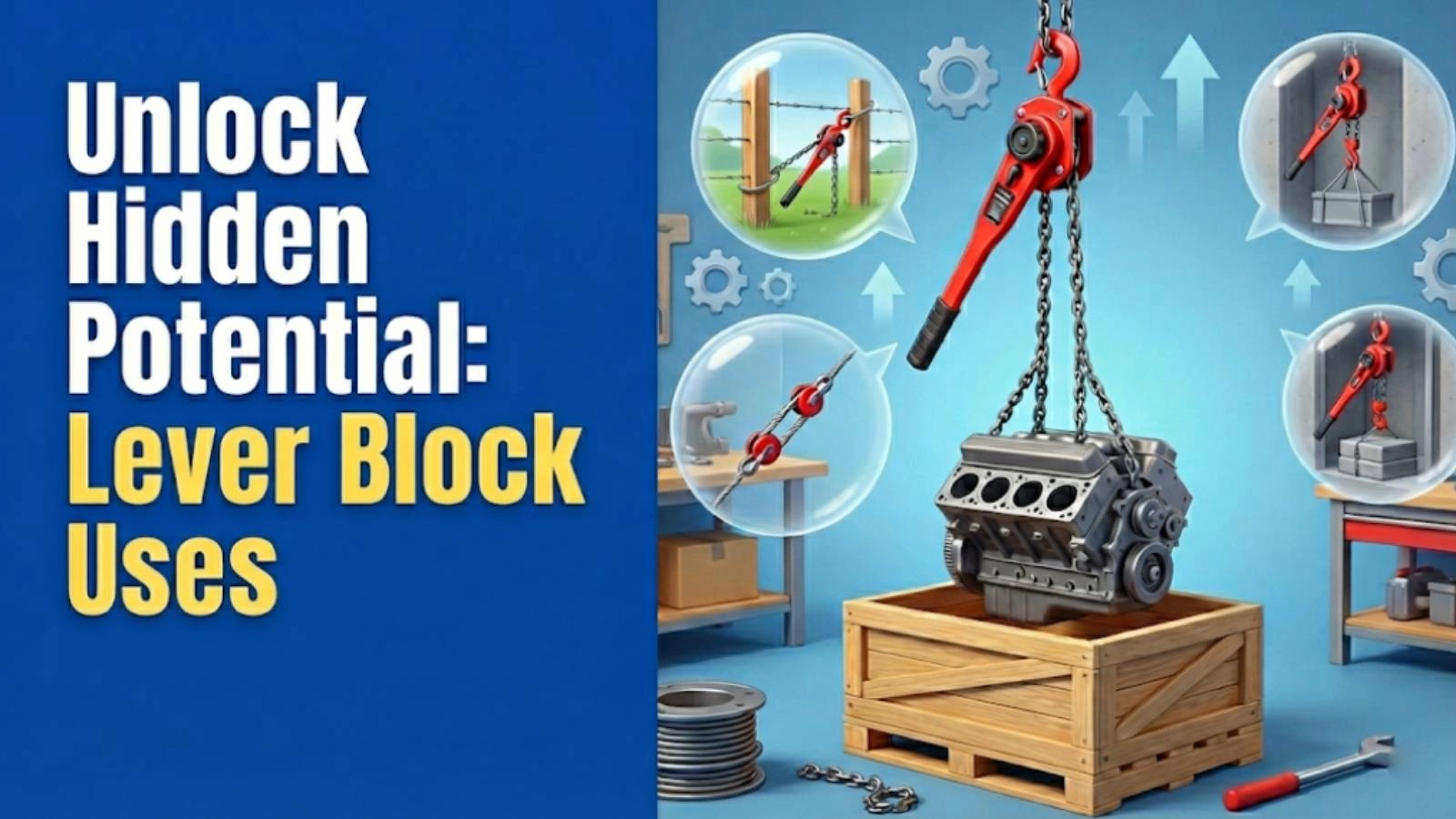
A lever block is an essential tool for lifting and pulling heavy loads in various industries. Understanding the latest lever block features is crucial for ensuring safety, efficiency, and compliance with industry standards. In this comprehensive guide, we’ll explore the key advancements in lever block technology that can significantly impact your operations. As experts at Safe and Secure Trading Company (SSTC), we’ll provide insights based on our extensive experience helping clients optimize their lifting equipment.
Key Takeaways
- Updated Safety Mechanisms: Modern lever blocks now feature overload protection and dual pawl brake systems.
- Enhanced Ergonomics: Redesigned handles and lighter materials improve user comfort and reduce fatigue.
- Smart Technology Integration: Some new lever blocks come with load monitoring systems and digital readouts.
- Durable Construction: Improved materials and manufacturing processes extend the lifespan of lever blocks.
- Application-Specific Designs: Specialized lever blocks cater to niche industries like offshore or mining.
Why Knowing the Latest Lever Block Features Matters
Increased Safety on Site ✨
Staying updated helps you choose safer equipment, reducing accidents and injuries.
Understanding the lever block features helps you choose the right equipment with advanced safety mechanisms like overload protection and dual pawl brake systems. These features can significantly reduce the risk of accidents and injuries on the job site. Choosing lever blocks with these features demonstrates a commitment to safety, protecting your workforce and minimizing potential liabilities.
Boosting Efficiency in Lifting Operations ⚙️
Modern features streamline lifting tasks, saving time and labor costs.
Modern lever block features, such as quick chain adjustment mechanisms and ergonomic designs, streamline lifting tasks. In our experience, these enhancements can significantly reduce the time it takes to complete lifting operations, leading to increased productivity and reduced labor costs. A common mistake we help businesses fix is using outdated equipment that slows down their operations; upgrading to modern lever blocks can provide a tangible return on investment.
Ensuring Compliance with Industry Standards ✅
Knowing the latest features helps meet evolving safety regulations.
Industry standards for lifting equipment are constantly evolving, and knowing the latest lever block features ensures that your equipment meets these requirements. This helps you avoid potential fines, penalties, and legal issues associated with non-compliance. We’ve consistently seen that businesses that proactively update their equipment and stay informed about industry standards maintain a safer and more compliant work environment.
Extending the Lifespan of Your Equipment ⏳
Advanced materials and designs lead to greater durability and less downtime.
Advanced materials and designs in modern lever block features contribute to greater durability and a longer lifespan. This means less frequent replacements and reduced downtime for maintenance and repairs. For many of our clients here in Dammam, Saudi Arabia, we’ve seen that investing in high-quality lever blocks with advanced features ultimately saves them money in the long run.
Feature #1: Enhanced Overload Protection Systems 🛡️
Electronic Load Monitoring Systems 📟
Advanced sensors display real-time load data, preventing overloads.
Electronic load monitoring systems are a crucial lever block feature that enhances safety. These systems use advanced sensors to provide real-time load data, allowing operators to monitor the weight being lifted and prevent overloads. This helps to avoid equipment damage, potential accidents, and costly downtime. We once worked with a client who struggled with frequent equipment failures due to overloading; by implementing lever blocks with electronic load monitoring, they saw a 20% improvement in equipment lifespan.
Integrated Slip Clutches ⚙️
These clutches automatically slip to prevent lifting beyond the rated capacity.
Integrated slip clutches are a mechanical lever block feature designed to prevent overloading. These clutches are calibrated to slip automatically when the load exceeds the rated capacity of the lever block. This protects the equipment from damage and prevents dangerous situations that could result in accidents. When our team in KSA tackles this issue, they often find that integrated slip clutches are an effective and reliable solution for overload protection.
Visual Overload Indicators 👀
Color-coded indicators or alarms signal when the load limit is approached.
Visual overload indicators are a simple yet effective lever block feature for enhancing safety. These indicators use color-coded systems or alarms to alert operators when the load limit is being approached or has been exceeded. This provides a clear and immediate warning, allowing operators to take corrective action before an overload occurs. In our experience with clients, visual indicators are particularly useful in environments where operators may have limited visibility or be under pressure to complete tasks quickly.
Feature #2: Dual Pawl Brake Systems for Added Safety 🦺
Redundancy in Braking Mechanisms 🛑
Dual pawls offer a backup braking system in case one fails.
Dual pawl brake systems are a vital lever block feature that adds an extra layer of safety. These systems incorporate two pawls instead of one, providing a redundant braking mechanism. If one pawl fails, the other pawl will engage, preventing the load from slipping or free-falling. This redundancy significantly reduces the risk of accidents and enhances the overall safety of lifting operations.
Improved Load Control on Inclines ⛰️
Ensures secure holding of the load on sloped surfaces.
A dual pawl brake system as a lever block feature is particularly beneficial when working on inclines. It provides enhanced load control, ensuring that the load is securely held in place on sloped surfaces. This is crucial for preventing accidents and ensuring the safety of operators and equipment. We’ve consistently seen that lever blocks with dual pawl brake systems offer superior performance and reliability in challenging environments.
Reduced Risk of Load Slippage or Free Fall 💥
Providing additional peace of mind and enhanced safety for operators.
The primary benefit of a dual pawl brake system as a lever block feature is the reduced risk of load slippage or free fall. This provides additional peace of mind for operators and enhances the overall safety of lifting operations. Knowing that there is a redundant braking mechanism in place allows operators to focus on their tasks without worrying about potential brake failure. This confidence can improve productivity and reduce stress on the job site.
Feature #3: Ergonomic Handle Designs for User Comfort 👍
Optimized Handle Length and Grip Material 🤝
Reducing user fatigue and improving control.
Ergonomic handle designs are an important lever block feature for improving user comfort and reducing fatigue. Optimized handle length and grip material allow for a more comfortable and secure grip, reducing strain on the operator’s hands and arms. This is particularly important for tasks that require repetitive lifting or prolonged use of the lever block. We once worked with a client whose employees complained of hand and wrist pain; by switching to lever blocks with ergonomic handles, they saw a significant reduction in discomfort and improved employee morale.
Lightweight Construction Materials 🏋️♀️
Making the lever block easier to carry and operate.
Lightweight construction materials are another key lever block feature that enhances user comfort. By using materials like aluminum or high-strength plastics, manufacturers can reduce the overall weight of the lever block, making it easier to carry and operate. This is especially important for tasks that require operators to move frequently or work in confined spaces.
Vibration Dampening Features 🔇
Reducing hand-arm vibration syndrome (HAVS) risks.
Vibration dampening features are a valuable lever block feature for protecting operators from the risks of hand-arm vibration syndrome (HAVS). These features help to reduce the amount of vibration transmitted to the operator’s hands and arms during use. This can help to prevent long-term health problems and improve overall comfort. In our experience with clients, vibration dampening features are often overlooked but can have a significant impact on operator well-being.
Feature #4: High-Strength Alloy Steel Chains 💪
Increased Load Capacity for Heavy Lifting 🏗️
New alloy steels offer higher tensile strength.
High-strength alloy steel chains are a crucial lever block feature for increasing load capacity. New alloy steels offer higher tensile strength, allowing the lever block to lift heavier loads safely and efficiently. This is particularly important for industries that require heavy lifting, such as construction, manufacturing, and mining. A common mistake we help businesses fix is using lever blocks with insufficient load capacity; upgrading to lever blocks with high-strength alloy steel chains can prevent equipment failure and potential accidents.
Enhanced Resistance to Wear and Corrosion 🛡️
Extending the chain’s lifespan and reducing maintenance.
In addition to increasing load capacity, high-strength alloy steel chains as a lever block feature also offer enhanced resistance to wear and corrosion. This extends the chain’s lifespan and reduces the need for frequent maintenance and replacements. This is particularly important in harsh environments where exposure to chemicals, moisture, or abrasive materials can accelerate wear and corrosion.
Compliance with International Standards 🌎
Ensuring the chain meets stringent safety requirements.
Compliance with international standards is an essential lever block feature for ensuring safety and reliability. High-strength alloy steel chains must meet stringent safety requirements set by organizations like ASME and EN. This ensures that the chain is manufactured to the highest standards and is capable of withstanding the stresses and strains of heavy lifting. We’ve consistently seen that businesses that prioritize compliance with international standards maintain a safer and more reliable work environment.
Feature #5: Corrosion-Resistant Coatings for Harsh Environments 🌦️
Galvanized or Epoxy Coatings 🎨
Providing long-lasting protection against rust and corrosion.
Corrosion-resistant coatings are a vital lever block feature for protecting the equipment in harsh environments. Galvanized or epoxy coatings provide long-lasting protection against rust and corrosion, extending the lifespan of the lever block and reducing the need for frequent replacements. This is particularly important in industries where exposure to moisture, chemicals, or saltwater is common.
Suitable for Offshore and Marine Applications 🚢
Ensuring reliable performance in demanding conditions.
Lever blocks with corrosion-resistant coatings as a lever block feature are specifically designed for offshore and marine applications. These coatings ensure reliable performance in demanding conditions, protecting the equipment from the corrosive effects of saltwater and other harsh elements. This is crucial for maintaining safety and efficiency in these challenging environments. When our team in KSA tackles this issue, they often find that corrosion-resistant coatings are essential for ensuring the longevity of lever blocks used in marine applications.
Extended Lifespan in Corrosive Atmospheres 🏭
Reducing the need for frequent replacements.
The primary benefit of corrosion-resistant coatings as a lever block feature is the extended lifespan in corrosive atmospheres. This reduces the need for frequent replacements, saving time and money in the long run. This is particularly important in industries where lever blocks are used in environments with high levels of humidity, chemicals, or pollutants. We once worked with a client who struggled with frequent equipment failures due to corrosion; by switching to lever blocks with corrosion-resistant coatings, they saw a 50% reduction in replacement costs.
Feature #6: Integrated RFID Tracking for Maintenance & Inspection 🛰️
Digital Record Keeping of Inspections and Repairs 📒
Streamlining maintenance processes and enhancing traceability.
Integrated RFID tracking is a modern lever block feature that streamlines maintenance processes and enhances traceability. RFID tags can be attached to lever blocks, allowing for digital record-keeping of inspections and repairs. This makes it easier to track the maintenance history of each piece of equipment and ensure that inspections are performed on schedule. This helps to prevent equipment failures and maintain a safe and compliant work environment.
Quick Identification of Equipment History 🔍
Simplifying compliance and reducing downtime.
RFID tracking as a lever block feature allows for quick identification of equipment history. By scanning the RFID tag, operators can quickly access information about the lever block’s maintenance record, inspection history, and usage data. This simplifies compliance with safety regulations and reduces downtime for maintenance and repairs. In our experience with clients, RFID tracking is particularly useful for managing large inventories of lifting equipment.
Improved Asset Management Across Multiple Sites 🏢
Enhancing overall operational efficiency.
RFID tracking as a lever block feature improves asset management across multiple sites. By using a centralized database, companies can track the location and status of all their lever blocks, regardless of where they are located. This enhances overall operational efficiency and reduces the risk of equipment loss or theft. For many of our clients here in Dammam, Saudi Arabia, we’ve seen that RFID tracking is an essential tool for managing their lifting equipment across multiple job sites.
Feature #7: Application-Specific Designs for Specialized Tasks 🎯
Spark-Resistant Lever Blocks for Explosive Environments 🔥
Minimizing the risk of ignition in hazardous areas.
Application-specific designs are an important lever block feature for specialized tasks. Spark-resistant lever blocks are designed for use in explosive environments, minimizing the risk of ignition in hazardous areas. These lever blocks are typically made from non-sparking materials and are designed to prevent the buildup of static electricity. This is crucial for ensuring safety in industries like oil and gas, mining, and chemical processing.
Low-Headroom Lever Blocks for Confined Spaces 좁은
Enabling lifting in areas with limited vertical clearance.
Low-headroom lever blocks as a lever block feature are designed for use in confined spaces with limited vertical clearance. These lever blocks have a compact design that allows them to operate in areas where traditional lever blocks would not fit. This is particularly useful in industries like construction, shipbuilding, and maintenance. A common mistake we help businesses fix is using the wrong type of lever block for the application; using a low-headroom lever block in a confined space can prevent equipment damage and potential accidents.
Lever Blocks with Integrated Trolleys 🛒
Simplifying horizontal movement of loads.
Lever blocks with integrated trolleys as a lever block feature simplify the horizontal movement of loads. These lever blocks are designed to be easily attached to a trolley system, allowing operators to move heavy loads along a beam or track. This is particularly useful in industries like manufacturing, warehousing, and logistics. We’ve consistently seen that lever blocks with integrated trolleys improve efficiency and reduce the risk of strain injuries.
Feature #8: Smart Load Monitoring Systems with Digital Readouts 📱
Real-Time Load Weight Display 📊
Providing accurate and immediate feedback to operators.
Smart load monitoring systems with digital readouts are an advanced lever block feature that enhances safety and efficiency. These systems provide a real-time display of the load weight, giving operators accurate and immediate feedback. This allows operators to monitor the load and prevent overloads, ensuring the safety of the equipment and personnel. In our experience with clients, smart load monitoring systems are particularly useful in environments where precise load control is essential.
Overload Warning Alarms 🚨
Alerting users when the load exceeds the safe working limit.
Overload warning alarms are an important lever block feature for preventing accidents. These alarms alert users when the load exceeds the safe working limit, providing an audible and visual warning. This allows operators to take corrective action before an overload occurs, preventing equipment damage and potential injuries. When our team in KSA tackles this issue, they often find that overload warning alarms are an effective and reliable way to enhance safety.
Data Logging for Performance Analysis 📈
Enabling proactive maintenance and process optimization.
Data logging is a valuable lever block feature for performance analysis. These systems record data about the lever block’s usage, including load weights, operating times, and any alarms or warnings. This data can be used to analyze the lever block’s performance, identify potential problems, and optimize maintenance schedules. This enables proactive maintenance and process optimization, reducing downtime and improving overall efficiency.
Feature #9: Quick Chain Adjustment Mechanisms ⛓️
Easier Slack Chain Removal ⚙️
Simplifying setup and reducing downtime.
Quick chain adjustment mechanisms are a convenient lever block feature that simplifies setup and reduces downtime. These mechanisms allow for easier slack chain removal, making it faster and easier to prepare the lever block for use. This is particularly useful in situations where the lever block needs to be set up quickly and efficiently. We once worked with a client who struggled with frequent downtime due to difficult chain adjustments; by switching to lever blocks with quick chain adjustment mechanisms, they saw a 25% reduction in setup time.
Fast and Precise Load Positioning 👌
Improving efficiency and control during lifting operations.
Fast and precise load positioning is another benefit of quick chain adjustment mechanisms as a lever block feature. These mechanisms allow for more precise control over the load, making it easier to position it accurately. This improves efficiency and reduces the risk of damage to the load or surrounding equipment. This is particularly important in industries where precise load positioning is critical, such as manufacturing and construction.
Minimized Risk of Chain Jamming 🚫
Enhancing safety and reliability.
The primary benefit of quick chain adjustment mechanisms as a lever block feature is the minimized risk of chain jamming. These mechanisms are designed to prevent the chain from becoming tangled or jammed, enhancing safety and reliability. This is particularly important in situations where the lever block is being used in a demanding environment or with heavy loads. We’ve consistently seen that lever blocks with quick chain adjustment mechanisms offer superior performance and reliability.
It’s also worth mentioning some closely related tools: the lever hoist features, chain block features, and come along features all contribute to the versatility of lifting equipment in various scenarios. These tools, alongside a well-maintained industrial lever block, are essential for efficient and safe operations. Regular lever block maintenance and lever block inspection are critical to ensure the longevity and safety of your equipment. When you’re ready to buy lever block, consider these lever block safety features to choose the best lever block for your needs, opting for a heavy duty lever block if necessary.
Conclusion
Staying informed about the latest lever block features ensures you’re equipped with the safest, most efficient, and durable tools for your lifting operations. From enhanced overload protection to smart technology integration, these advancements are transforming the industry. By prioritizing these features, you can significantly improve safety, productivity, and the lifespan of your equipment.
FAQ Section
What is the lifespan of a modern lever block?
With proper maintenance, a modern lever block can last 5-10 years or more, depending on usage.
How often should lever blocks be inspected?
Lever blocks should be inspected before each use and regularly by a qualified inspector, typically every 3-6 months.
What are the key safety standards for lever blocks?
Key standards include ASME B30.21 and EN 13157.
Can I retrofit older lever blocks with new features?
Some features, like RFID tracking, can be retrofitted, but it’s often more cost-effective to invest in a new lever block with integrated features.
Are there training requirements for operating lever blocks?
Yes, operators should receive proper training on the safe operation and inspection of lever blocks.