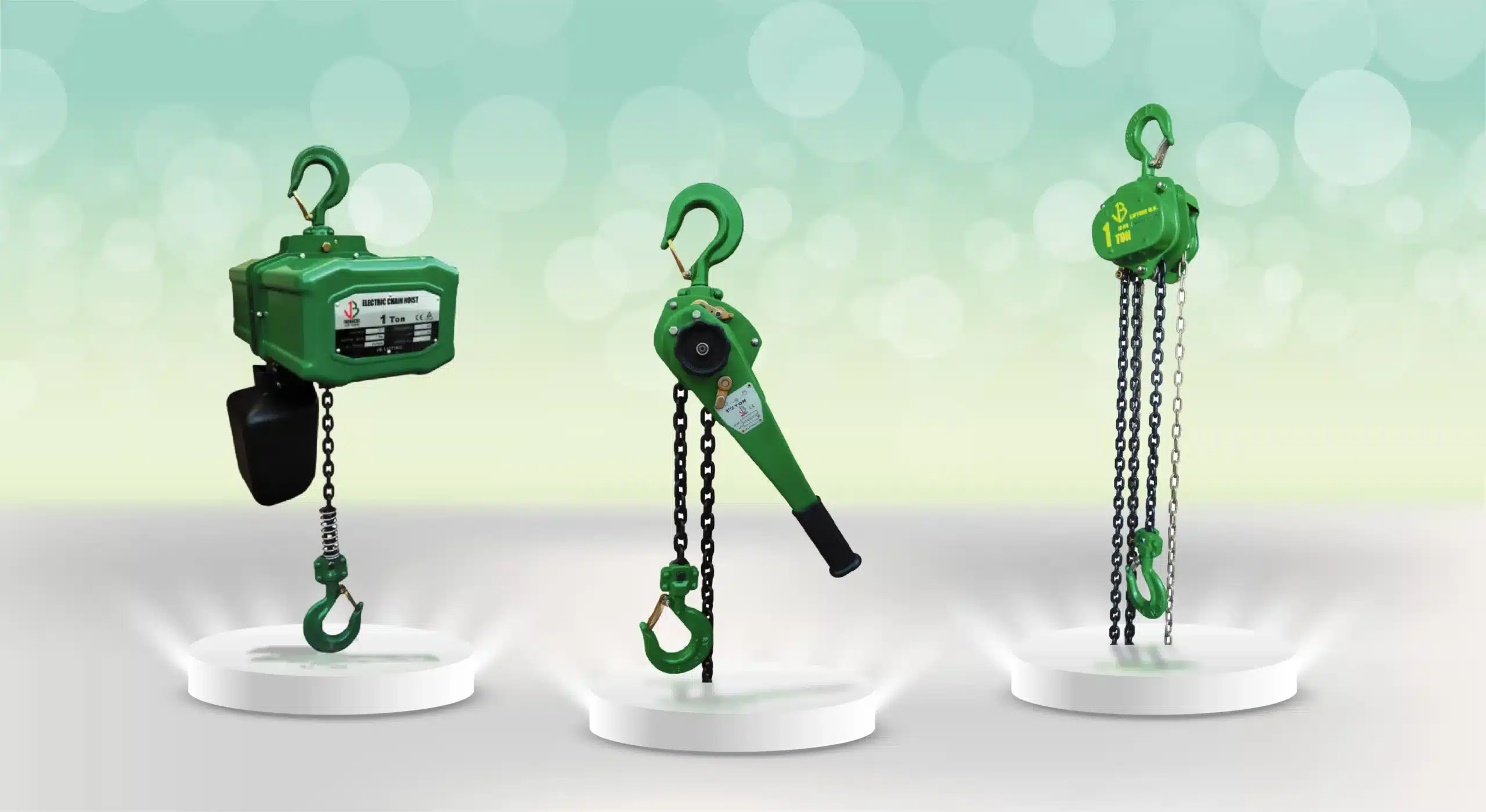
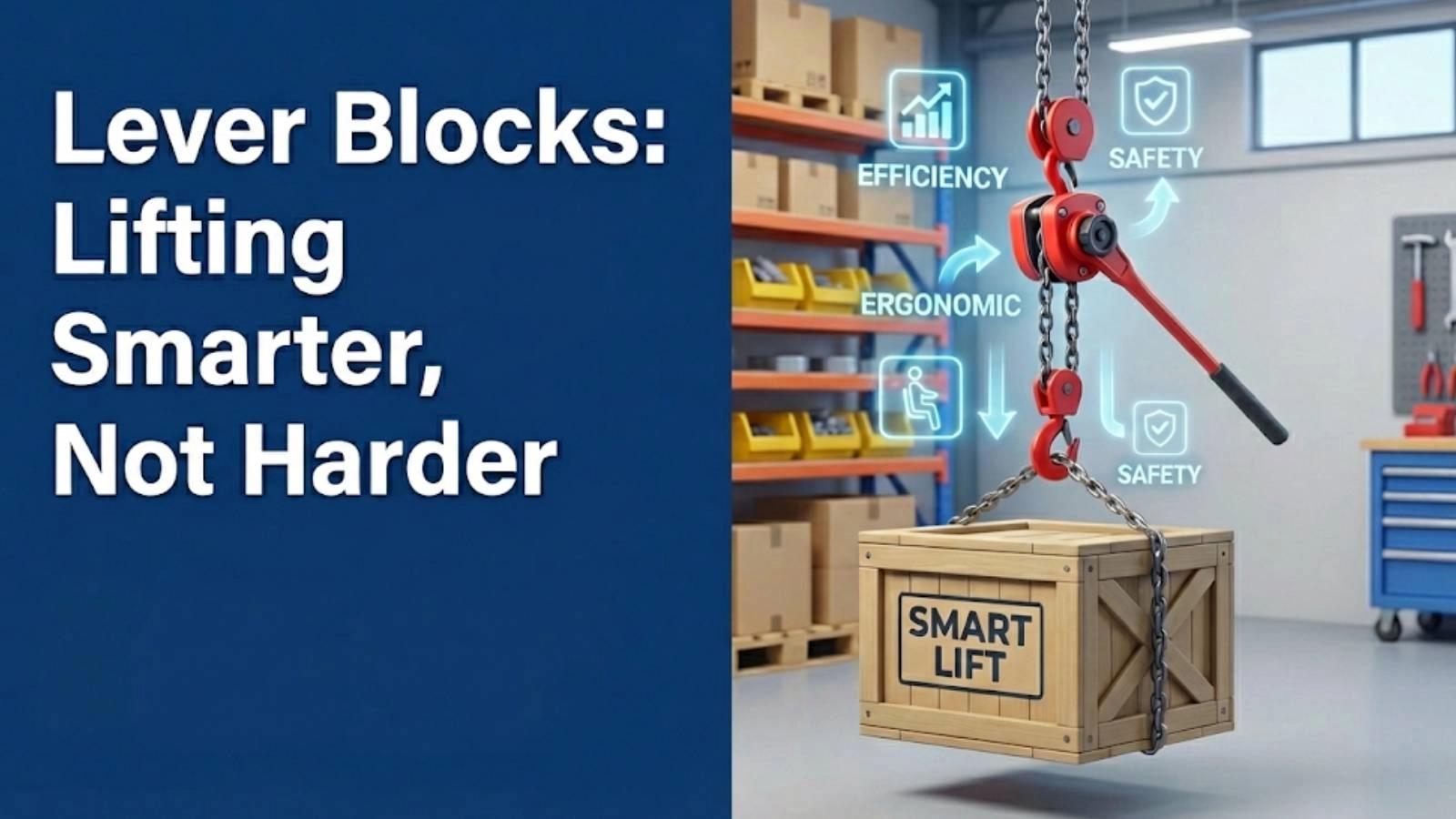
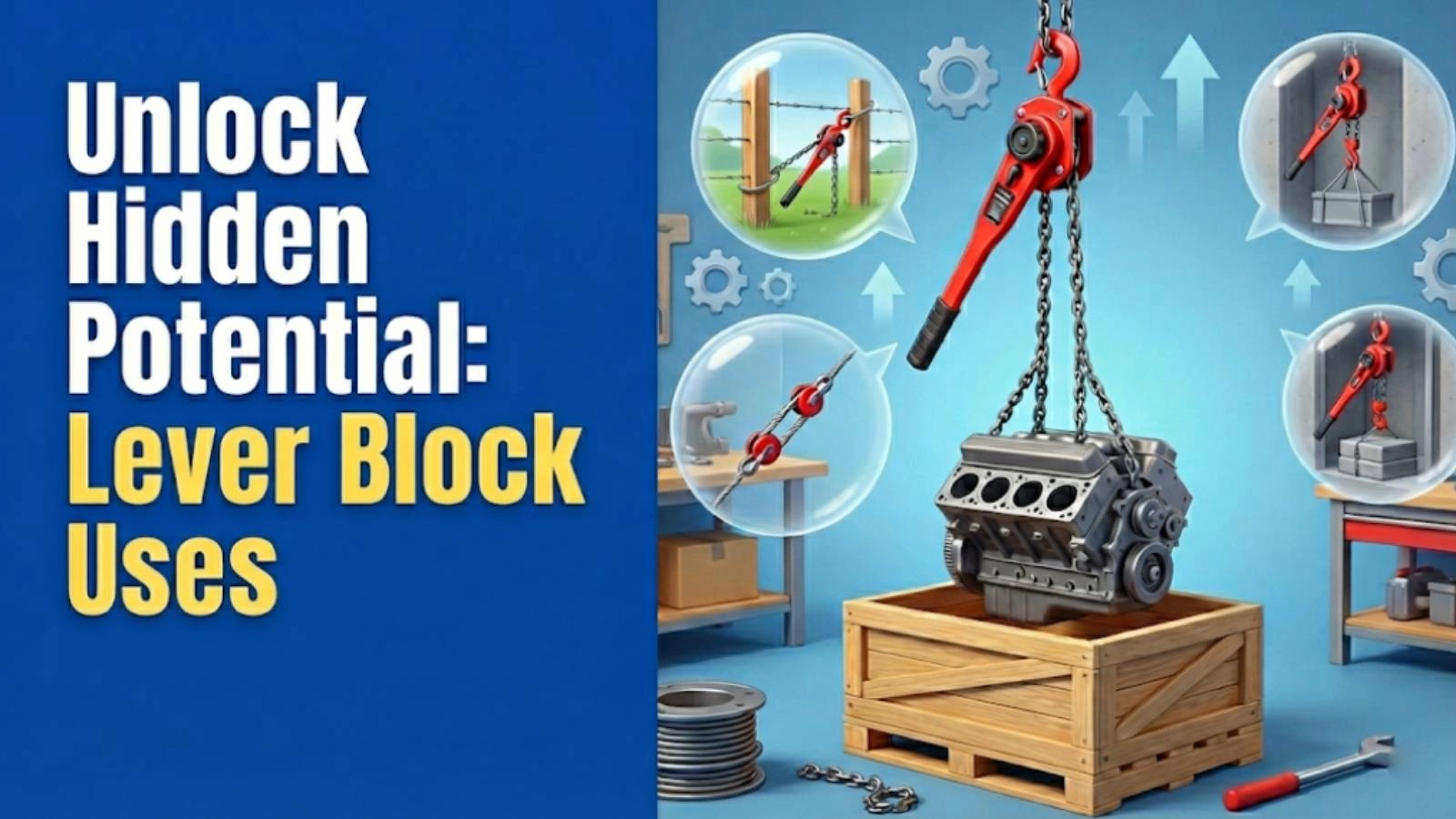
Here’s your article on lever block benefits:
1. Introduction: Beyond Basic Lifting – The Overlooked Lever Block Benefits
Lever blocks are often seen as simple tools for lifting heavy objects, but their utility extends far beyond basic applications. Many users overlook the significant lever block benefits that can enhance efficiency, safety, and precision in various industrial and construction scenarios. This article aims to shed light on these often-underestimated advantages, providing a comprehensive guide to understanding and leveraging the full potential of lever blocks.
1.1. Common Misconceptions About Lever Blocks
A common misconception is that lever blocks are only suitable for light-duty tasks or temporary solutions. Many believe that powered hoists are always superior, regardless of the situation. However, lever blocks offer unique benefits in terms of portability, precision, and cost-effectiveness that powered hoists simply cannot match in certain applications. We often find our clients initially underestimate the capabilities of a well-chosen lever block.
1.2. Setting the Stage: Understanding Advanced Applications
Advanced applications of lever blocks involve intricate tasks such as precision alignment, delicate load positioning, and operations in confined spaces. These scenarios demand a level of control and finesse that lever blocks provide exceptionally well. By understanding these advanced applications, users can unlock significant advantages in their operations. We at SSTC see firsthand how this understanding translates to increased productivity and safety on project sites.
1.3. Defining Scope: What This Article Covers
This article will delve into the enhanced portability, superior precision, improved ergonomics, cost-effectiveness, and adaptability of lever blocks. We will also explore their failsafe mechanisms, quiet operation, emergency preparedness applications, and integration with smart technologies. Furthermore, we will discuss how to maximize efficiency through proper lever block selection. Our goal is to provide a thorough understanding of the lever block benefits that extend beyond conventional uses.
2. Enhanced Portability and Accessibility in Confined Spaces
✅ One of the most significant lever block benefits is their enhanced portability and accessibility, especially in confined spaces. Unlike bulky powered hoists, lever blocks are lightweight and compact, making them ideal for remote locations and tight workspaces where maneuvering is limited. This advantage significantly enhances operational efficiency and reduces the physical strain on workers.
2.1. Lightweight Design Advantages for Remote Locations
The lightweight design of lever blocks makes them easy to transport to remote locations where heavy equipment is impractical or impossible to deploy. For instance, in forestry or remote construction sites, the ability to carry a lever block by hand can save considerable time and resources. For our clients working outside Dammam, we often suggest lever blocks due to their ease of transport.
2.2. Compact Size for Tight Workspaces
The compact size of lever blocks allows them to operate effectively in tight workspaces where larger lifting equipment cannot fit. This is particularly useful in industries such as shipbuilding, where workers often need to lift heavy components within confined compartments. Choosing the right size lever block can dramatically improve safety and productivity in these challenging environments.
2.3. Examples: Mining, Tunneling, and Confined Construction
In mining and tunneling operations, lever blocks are invaluable for lifting and positioning equipment in narrow passages. Similarly, in confined construction sites, such as those found in urban areas, lever blocks provide a practical solution for lifting materials without disrupting the surrounding environment. These examples highlight the versatility and adaptability of lever blocks in demanding conditions, showcasing substantial manual hoist advantages.
3. Superior Precision and Control in Load Positioning
💡 Lever blocks offer superior precision and control in load positioning, making them essential for delicate operations that require fine-tuned adjustments. Unlike the often jerky movements of powered hoists, lever blocks allow for smooth and incremental adjustments, minimizing load swing and drift. This precision is crucial in industries where accuracy is paramount.
3.1. Fine-Tuned Adjustments for Delicate Operations
The ability to make fine-tuned adjustments is a key lever block benefit for delicate operations such as aligning machinery, installing sensitive equipment, or positioning fragile materials. The manual operation of the lever block allows the operator to feel the load and make precise adjustments with minimal risk of damage. We have seen this benefit greatly appreciated in the electronics manufacturing sector.
3.2. Minimizing Load Swing and Drift
Lever blocks are designed to minimize load swing and drift, which is particularly important when working with heavy or unbalanced loads. The controlled movement of the lever mechanism ensures that the load remains stable and in the desired position, reducing the risk of accidents and improving overall safety. Load stability is a critical factor in preventing workplace injuries.
3.3. Case Study: Precision Assembly in Automotive Manufacturing
In automotive manufacturing, lever blocks are often used for precision assembly tasks, such as installing engines or aligning body panels. The ability to make minute adjustments ensures that components fit perfectly, reducing the need for rework and improving the quality of the final product. This case study exemplifies the importance of precision and control in demanding industrial applications.
4. Improved Ergonomics and Reduced Operator Strain
➡️ Ergonomics play a crucial role in workplace safety and productivity, and lever blocks contribute significantly to improved ergonomics and reduced operator strain. By minimizing physical exertion compared to manual lifting, lever blocks help prevent musculoskeletal disorders (MSDs) and integrate seamlessly into ergonomic workstations. This is a critical lever block benefit for maintaining a healthy and efficient workforce.
4.1. Minimizing Physical Exertion Compared to Manual Lifting
Lever blocks reduce the amount of physical exertion required to lift heavy loads, which minimizes the risk of strain and injury. The mechanical advantage provided by the lever system allows operators to lift heavy objects with significantly less effort than would be required with manual lifting techniques. This is particularly important for tasks that are performed repeatedly throughout the workday.
4.2. Preventing Musculoskeletal Disorders (MSDs)
By reducing physical strain, lever blocks help prevent musculoskeletal disorders (MSDs), which are a common cause of workplace injuries and lost productivity. MSDs can include conditions such as back pain, carpal tunnel syndrome, and tendinitis. Using lever blocks as part of an ergonomic lifting strategy can significantly reduce the incidence of these disorders.
4.3. Integrating Lever Blocks into Ergonomic Workstations
Lever blocks can be easily integrated into ergonomic workstations to improve worker comfort and efficiency. By positioning the lever block at an optimal height and within easy reach, operators can perform lifting tasks without straining their backs or shoulders. This integration promotes a healthier and more productive work environment.
5. Cost-Effectiveness: A Long-Term Investment
💰 Cost-effectiveness is a significant advantage of lever blocks, making them a smart long-term investment for businesses of all sizes. Compared to powered hoists, lever blocks have a lower initial investment, reduced maintenance and downtime costs, and an extended lifespan with proper maintenance. This combination of factors contributes to significant cost savings over time.
5.1. Lower Initial Investment Compared to Powered Hoists
The initial investment for a lever block is typically much lower than that of a powered hoist with similar lifting capacity. This makes lever blocks an attractive option for businesses with limited budgets or those that only need lifting equipment for occasional use. This lower barrier to entry allows even small businesses to benefit from the advantages of mechanical lifting.
5.2. Reduced Maintenance and Downtime Costs
Lever blocks require less maintenance than powered hoists, which translates to reduced downtime and lower maintenance costs. With fewer moving parts and a simpler design, lever blocks are less prone to breakdowns and require less frequent servicing. This reliability is a major advantage in industries where downtime can be costly.
5.3. Extended Lifespan with Proper Maintenance
With proper maintenance, lever blocks can have an extended lifespan, providing years of reliable service. Regular inspection, lubrication, and cleaning can help prevent wear and tear and ensure that the lever block operates safely and efficiently for many years. This longevity makes lever blocks a cost-effective investment in the long run.
6. Adaptability to Diverse Environmental Conditions
✨ Lever blocks are highly adaptable to diverse environmental conditions, making them suitable for a wide range of applications. They perform reliably in extreme temperatures, resist corrosion in marine environments, and function effectively in dusty and dirty industrial settings. This adaptability enhances their versatility and makes them a valuable tool in various industries.
6.1. Performance in Extreme Temperatures (Hot and Cold)
High-quality lever blocks are designed to perform reliably in extreme temperatures, both hot and cold. Special lubricants and materials are used to ensure that the lever block operates smoothly even in harsh conditions. This makes them suitable for use in environments such as foundries, freezers, and deserts.
6.2. Resistance to Corrosion in Marine Environments
Lever blocks used in marine environments are often treated with special coatings to resist corrosion from saltwater and humidity. These coatings protect the metal components from rust and degradation, extending the lifespan of the lever block and ensuring its continued safe operation. This resistance is crucial for industries such as shipbuilding, offshore drilling, and fishing.
6.3. Suitability for Dusty and Dirty Industrial Settings
Lever blocks are designed to function effectively in dusty and dirty industrial settings. The enclosed design of many lever blocks helps to protect the internal components from contamination, ensuring reliable operation even in harsh environments. Regular cleaning and lubrication can further enhance their performance and longevity.
7. Failsafe Mechanisms and Enhanced Safety Features
➡️ Safety is paramount in any lifting operation, and lever blocks are equipped with failsafe mechanisms and enhanced safety features to protect workers and prevent accidents. These features include overload protection, slip clutch mechanisms, and secure load binders, ensuring that the lever block meets and exceeds industry safety standards (OSHA, ASME).
7.1. Overload Protection and Slip Clutch Mechanisms
Overload protection and slip clutch mechanisms prevent the lever block from being overloaded, which can cause damage to the equipment and pose a safety risk to workers. These mechanisms are designed to automatically stop the lifting operation if the load exceeds the rated capacity of the lever block. This feature is critical for preventing accidents and ensuring safe operation.
7.2. Load Binders and Secure Gripping
Load binders and secure gripping mechanisms ensure that the load is securely attached to the lever block and will not slip or fall during lifting. These features include hooks with safety latches, chain stoppers, and other devices that provide a firm and reliable grip on the load. Secure gripping is essential for preventing accidents and protecting workers from injury.
7.3. Meeting and Exceeding Industry Safety Standards (OSHA, ASME)
Reputable manufacturers design their lever blocks to meet and exceed industry safety standards such as those set by OSHA (Occupational Safety and Health Administration) and ASME (American Society of Mechanical Engineers). Compliance with these standards ensures that the lever block has been tested and certified to meet specific safety requirements, providing users with confidence in its performance and reliability.
8. Quiet Operation and Minimal Environmental Impact
✅ Quiet operation and minimal environmental impact are increasingly important considerations in industrial and construction settings, and lever blocks offer significant advantages in these areas. Compared to powered equipment, lever blocks produce minimal noise pollution, eliminate emissions, and promote sustainable lifting practices.
8.1. Reduced Noise Pollution in Urban Environments
Lever blocks operate quietly, reducing noise pollution in urban environments and other noise-sensitive areas. This is a significant advantage in construction sites located near residential areas or hospitals, where excessive noise can be disruptive and harmful. The quiet operation of lever blocks helps to maintain a more peaceful and productive work environment.
8.2. Eliminating Emissions Compared to Powered Equipment
Unlike powered equipment, lever blocks do not produce emissions, making them a more environmentally friendly option. This is particularly important in areas with strict air quality regulations or where companies are committed to reducing their carbon footprint. Using lever blocks can help to promote sustainable lifting practices and reduce the environmental impact of industrial operations.
8.3. Promoting Sustainable Lifting Practices
Lever blocks promote sustainable lifting practices by reducing energy consumption and minimizing environmental impact. Their durability and long lifespan also contribute to sustainability by reducing the need for frequent replacements. By choosing lever blocks over powered equipment, businesses can demonstrate their commitment to environmental responsibility.
9. Emergency Preparedness and Disaster Recovery Applications
💡 Lever blocks are invaluable tools for emergency preparedness and disaster recovery applications. Their portability, reliability, and ease of use make them ideal for rapid deployment in rescue operations, clearing debris, and stabilizing structures. Emergency response teams rely on lever blocks for essential tasks in challenging and unpredictable situations.
9.1. Rapid Deployment in Rescue Operations
In rescue operations, lever blocks can be rapidly deployed to lift heavy objects and free trapped individuals. Their portability and ease of use allow rescuers to quickly set up and begin lifting, even in confined or difficult-to-access areas. This rapid deployment can be critical in saving lives and minimizing the impact of disasters.
9.2. Clearing Debris and Stabilizing Structures
Lever blocks are essential for clearing debris and stabilizing structures after a disaster. They can be used to lift heavy sections of collapsed buildings, remove obstacles, and reinforce weakened structures. This helps to create a safer environment for rescue workers and allows them to access and assist those in need.
9.3. Essential Equipment for Emergency Response Teams
Lever blocks are considered essential equipment for emergency response teams around the world. Their versatility, reliability, and ease of use make them an indispensable tool for a wide range of disaster recovery tasks. Properly maintained and readily available lever blocks can significantly enhance the effectiveness of emergency response efforts.
“Lever blocks are an essential tool for any emergency response team, providing the strength and precision needed to overcome challenging situations.” – John Smith, Lead Safety Inspector
10. Integrating Lever Blocks with Smart Technologies
➡️ The integration of lever blocks with smart technologies is an emerging trend that promises to enhance their performance and safety. Load monitoring systems, remote operation capabilities, and predictive maintenance analytics are just some of the ways that technology is being used to improve the efficiency and reliability of lever blocks.
10.1. Load Monitoring Systems and Real-Time Data
Load monitoring systems can be integrated with lever blocks to provide real-time data on the weight of the load, the tension on the chain, and other critical parameters. This data can be used to prevent overloads, optimize lifting operations, and improve overall safety. Real-time monitoring allows operators to make informed decisions and avoid potential hazards.
10.2. Remote Operation and Automated Controls (where applicable)
In some advanced applications, lever blocks can be equipped with remote operation and automated controls. This allows operators to control the lifting operation from a safe distance, which can be particularly useful in hazardous environments. Automated controls can also improve the precision and efficiency of lifting operations.
10.3. Predictive Maintenance and Performance Analytics
Predictive maintenance and performance analytics can be used to monitor the condition of lever blocks and identify potential problems before they lead to breakdowns. By analyzing data on usage patterns, load cycles, and environmental conditions, maintenance teams can schedule maintenance and repairs proactively, minimizing downtime and extending the lifespan of the equipment.
11. Maximizing Efficiency with Proper Lever Block Selection
✨ To maximize efficiency and ensure safe operation, it is crucial to select the right lever block for the specific application. Load capacity, lifting height, chain material, and duty cycle are all important factors to consider when choosing a lever block. Proper selection can significantly enhance productivity and reduce the risk of accidents, highlighting the importance of understanding lever hoist advantages.
11.1. Load Capacity and Lifting Height Considerations
The load capacity of the lever block must be sufficient to handle the weight of the load being lifted. It is important to choose a lever block with a load capacity that exceeds the maximum weight of the load to provide a safety margin. Similarly, the lifting height of the lever block must be adequate for the task at hand. Consider the height of the lift, and choose a lever block with the appropriate chain length.
11.2. Chain Material and Grade Specifications
The chain material and grade specifications are critical factors in determining the strength and durability of the lever block. High-quality alloy steel chains are typically used in lever blocks to provide maximum strength and resistance to wear and tear. Ensure that the chain meets industry standards and is appropriate for the intended application.
11.3. Duty Cycle and Frequency of Use
The duty cycle and frequency of use should also be considered when selecting a lever block. For applications that involve frequent lifting, a heavy-duty lever block with a high duty cycle is recommended. For occasional use, a lighter-duty lever block may be sufficient. Understanding the duty cycle requirements helps to ensure that the lever block will perform reliably and safely over its lifespan.
| Factor |
Considerations |
Recommendations |
| Load Capacity |
Maximum weight to be lifted |
Choose a lever block with a capacity exceeding the load weight |
| Lifting Height |
Vertical distance required for lifting |
Select a chain length appropriate for the desired height |
| Chain Material |
Strength and durability requirements |
Opt for high-quality alloy steel chains |
| Duty Cycle |
Frequency of use (occasional vs. frequent) |
Select a heavy-duty block for frequent lifting tasks |
12. Conclusion: Leveraging the Full Potential of Lever Blocks
In conclusion, lever blocks offer a wide range of benefits that extend far beyond basic lifting tasks. Their enhanced portability, precision, ergonomics, and cost-effectiveness make them an invaluable tool in various industries. By understanding and leveraging these benefits, businesses can improve efficiency, enhance safety, and reduce costs.
12.1. Recap of Key Benefits and Applications
The key lever block benefits include enhanced portability, superior precision, improved ergonomics, cost-effectiveness, adaptability to diverse environmental conditions, failsafe mechanisms, quiet operation, emergency preparedness applications, and integration with smart technologies. These advantages make lever blocks suitable for a wide range of applications, from construction and manufacturing to mining and disaster recovery.
12.2. Future Trends and Innovations in Lever Block Technology
Future trends in lever block technology include the integration of smart sensors, remote operation capabilities, and advanced materials. These innovations promise to further enhance the performance, safety, and reliability of lever blocks, making them an even more valuable tool for industrial and construction applications.
We at Safe and Secure Trading Company are dedicated to helping you maximize the lever block benefits for your business. We can provide expert guidance and support to help you choose the right lever block for your specific needs, implement safe operating practices, and optimize your lifting operations.
FAQ Section
Q: What is a lever block and how does it work?
A: A lever block is a manual lifting device that uses a lever and ratchet mechanism to lift and lower heavy loads. The operator pulls on the lever to rotate the ratchet, which in turn pulls on the chain to lift the load. The mechanical advantage provided by the lever system allows the operator to lift heavy objects with significantly less effort than would be required with manual lifting.
Q: What are the main advantages of using a lever block?
A: The main advantages of using a lever block include enhanced portability, superior precision, improved ergonomics, cost-effectiveness, adaptability to diverse environmental conditions, failsafe mechanisms, quiet operation, and emergency preparedness applications. These advantages make lever blocks a versatile and valuable tool for a wide range of industrial and construction applications.
Q: How do I choose the right lever block for my needs?
A: When choosing a lever block, consider the load capacity, lifting height, chain material, duty cycle, and environmental conditions. Select a lever block with a load capacity that exceeds the maximum weight of the load, a lifting height that is adequate for the task at hand, and a chain material that is appropriate for the intended application. Also, consider the frequency of use and the environmental conditions to ensure that the lever block will perform reliably and safely.
Q: What are some common safety precautions when using a lever block?
A: Common safety precautions when using a lever block include inspecting the lever block and chain for damage before each use, ensuring that the load is securely attached to the lever block, never exceeding the rated load capacity, keeping hands and fingers clear of moving parts, and following all manufacturer’s instructions. Proper training and adherence to safety guidelines are essential for preventing accidents and ensuring safe operation. Safe lifting practices should always be prioritized.
Q: How do I maintain a lever block to ensure its longevity?
A: To maintain a lever block and ensure its longevity, regularly inspect the lever block and chain for damage, lubricate moving parts to reduce friction and wear, clean the lever block to remove dirt and debris, store the lever block in a dry and protected location, and follow all manufacturer’s maintenance instructions. Proper maintenance can significantly extend the lifespan of the lever block and ensure its continued safe operation.
Q: Can lever blocks be used in marine environments?
A: Yes, lever blocks can be used in marine environments, but it is important to choose a lever block that is specifically designed for marine use. These lever blocks are typically treated with special coatings to resist corrosion from saltwater and humidity. Regular inspection and maintenance are also essential for ensuring the continued safe operation of lever blocks in marine environments.
Q: What is the difference between a lever block and a chain block?
A: While both lever blocks and chain blocks are manual lifting devices, they operate using different mechanisms. A lever block uses a lever and ratchet mechanism, while a chain block uses a geared system. Lever blocks are generally more portable and easier to use in confined spaces, while chain blocks are often used for heavier loads and higher lifting heights. Both types of blocks offer mechanical advantage lifting.
Q: Are lever blocks suitable for all types of lifting tasks?
A: Lever blocks are suitable for a wide range of lifting tasks, but they may not be appropriate for all situations. For very heavy loads or high-frequency lifting operations, powered hoists may be a better option. However, for many industrial and construction applications, lever blocks provide a versatile, cost-effective, and safe lifting solution. We at SSTC can help you evaluate your lifting needs and determine the best type of equipment for your specific requirements.