Introduction to Lever Block Techniques: A Data-Driven Approach
The Science of Lifting: Understanding Mechanical Advantage
Lever block techniques are fundamental to safe and efficient lifting operations across various industries. At Safe and Secure Trading Company (SSTC), we emphasize a data-driven approach to understanding the principles behind these techniques. The core concept is mechanical advantage, which allows us to lift heavy loads with significantly less effort. This advantage is achieved through a system of pulleys and gears within the lever block.
Mechanical advantage is the ratio of the force you exert to the force the machine exerts. For example, a lever block with a 4:1 mechanical advantage means that for every one unit of force you apply to the lever, the block exerts four units of force on the load. Understanding this ratio is crucial for selecting the right lever block for the job. Our team in Dubai often encounters situations where the incorrect mechanical advantage leads to strain and potential equipment failure.
The beauty of lever block techniques lies in their simplicity and effectiveness. They convert a small input force into a large output force, making it possible to lift objects that would otherwise be impossible to move manually. The system multiplies the user’s pulling force, enabling the movement of heavy objects with relative ease.
Why Lever Blocks? Efficiency, Safety, and Cost-Effectiveness
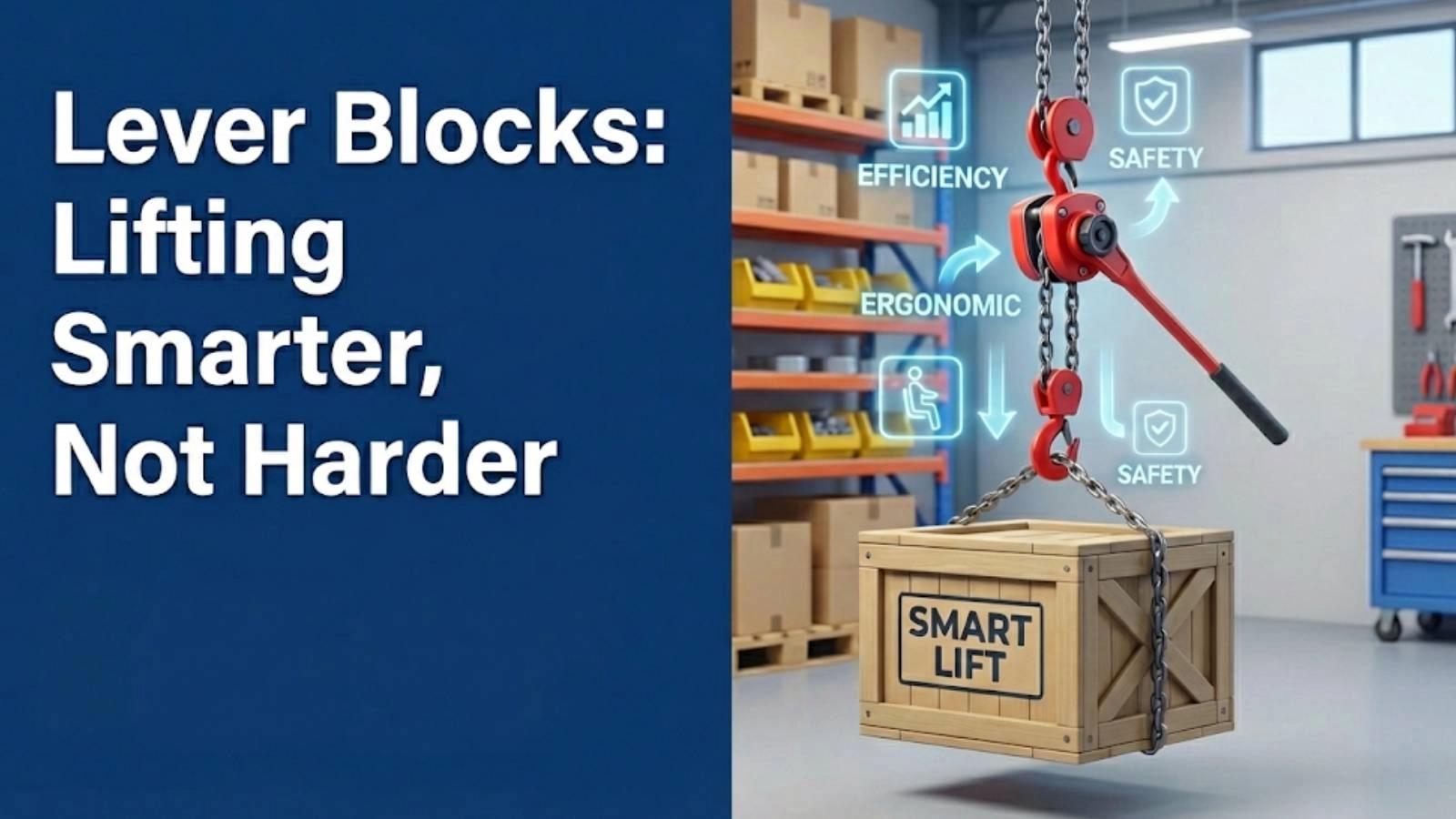
Lever blocks offer a compelling combination of efficiency, safety, and cost-effectiveness compared to other manual lifting techniques. They are far more efficient than simply trying to lift an object directly, as they drastically reduce the amount of force required. This not only saves time and energy but also reduces the risk of worker strain and injury.
Safety is paramount in any lifting operation, and lever blocks contribute to safer working environments. By minimizing the physical exertion required, they reduce the likelihood of accidents caused by overexertion or loss of control. Furthermore, lever blocks often incorporate safety features such as overload protection, which prevents the block from being used beyond its rated capacity. We have seen countless times where the right equipment has saved lives.
From a cost perspective, lever blocks are a smart investment. They are relatively inexpensive compared to powered lifting equipment, and they require minimal maintenance. Their durability ensures a long service life, providing reliable lifting capabilities for years to come. Moreover, the increased efficiency and reduced risk of injury translate into significant cost savings in the long run. They can be a very effective solution for industrial lifting solutions.
Technique 1: Pre-Lift Inspection: A Crucial First Step
Visual Inspection: Identifying Damage and Wear
Before using a lever block, a thorough visual inspection is absolutely essential. This involves carefully examining all components of the block for any signs of damage or wear. Pay close attention to the chain, hooks, body, and lever mechanism. Look for cracks, dents, corrosion, or any other abnormalities that could compromise the block’s integrity.
Specifically, check the chain for stretching, kinking, or damaged links. Examine the hooks for signs of bending, twisting, or cracks. Ensure that the safety latches on the hooks are functioning properly. Inspect the body of the block for any signs of impact damage or corrosion. Finally, test the lever mechanism to ensure that it moves smoothly and engages properly.
Neglecting the visual inspection can have dire consequences. A seemingly minor defect can quickly escalate into a major failure under load, potentially leading to serious injury or property damage. One of our clients learned this the hard way when a corroded chain link snapped during a lift, causing the load to drop unexpectedly. Preventative measures can save lives.
Load Capacity Verification: Matching the Block to the Task
Once the visual inspection is complete, the next step is to verify the load capacity of the lever block. This involves ensuring that the block is rated to handle the weight of the load you intend to lift. The load capacity is typically marked on the block itself, often on a metal tag or embossed directly into the body.
It is crucial to never exceed the rated load capacity of the lever block. Overloading can cause catastrophic failure, resulting in serious injury or death. Always err on the side of caution and choose a block with a load capacity that is greater than the weight of the load. Also, consider any additional weight from rigging or attachments.
To accurately determine the weight of the load, use a calibrated weighing scale or consult the manufacturer’s specifications. If you are unsure of the weight, it is always best to overestimate. Our team in Dubai uses advanced weighing technology to ensure precise load management, further enhancing safety.
Functional Testing: Ensuring Smooth Operation Before Lifting
Before placing any load on the lever block, perform a functional test to ensure that it is operating smoothly and correctly. This involves cycling the lever mechanism to raise and lower the chain without a load attached. Listen for any unusual noises, such as grinding, clicking, or slipping. These noises can indicate a problem with the internal gears or braking mechanism.
Check that the chain moves freely through the block without binding or snagging. Ensure that the lever mechanism engages and disengages smoothly, and that the load brake is functioning properly. The load brake is designed to hold the load in place when the lever is released, preventing it from slipping back down.
If you encounter any issues during the functional test, do not use the lever block. Instead, remove it from service and have it inspected and repaired by a qualified technician. Attempting to use a malfunctioning lever block can be extremely dangerous and can lead to serious accidents. It is critical to ensure smooth operation before lifting.
Technique 2: Proper Rigging: Connecting for Success
Sling Selection: Choosing the Right Sling for the Load
Proper rigging is essential for safe and successful lifting operations using lever block techniques. One of the most critical aspects of rigging is sling selection. The sling is the connecting link between the lever block and the load, and it must be strong enough to handle the weight of the load and be appropriate for the specific lifting application.
Slings are available in a variety of materials, including wire rope, chain, and synthetic webbing. Each material has its own advantages and disadvantages. Wire rope slings are strong and durable, but they can be heavy and difficult to handle. Chain slings are also very strong and resistant to abrasion, but they can be damaged by impact loading. Synthetic webbing slings are lightweight and flexible, but they can be damaged by sharp edges and high temperatures.
When choosing a sling, consider the weight of the load, the shape of the load, the lifting environment, and the potential for abrasion or damage. Always select a sling with a load capacity that is greater than the weight of the load, and inspect the sling carefully before each use for any signs of damage or wear.
Attachment Points: Ensuring Secure and Balanced Connections
The attachment points on both the lever block and the load must be secure and balanced to ensure a safe and stable lift. On the lever block, the sling should be attached to the hook using a shackle or other appropriate connecting hardware. The shackle should be properly sized for the hook and the sling, and it should be tightened securely.
On the load, the attachment points should be located in a position that will distribute the weight evenly and prevent tilting or slippage. If the load has multiple attachment points, use multiple slings to distribute the weight. Ensure that the slings are of equal length and that they are attached to the load in a way that will prevent them from becoming tangled or crossed.
Improperly secured or unbalanced attachment points can lead to catastrophic failure. If the load is not properly supported, it can shift or fall during the lift, causing serious injury or property damage. Always double-check the attachment points before beginning the lift, and monitor them carefully throughout the operation. Load securing methods are a critical element of safe rigging practices.
Avoiding Common Rigging Mistakes: Data on Failure Points
Several common rigging mistakes can compromise the safety of lever block lifting operations. One of the most common mistakes is using slings that are too short or too long. Slings that are too short can put excessive stress on the attachment points, while slings that are too long can create instability and increase the risk of the load swinging.
Another common mistake is using damaged or worn slings. Damaged slings can fail under load, causing the load to drop unexpectedly. Always inspect slings carefully before each use and remove any damaged slings from service. Avoid using slings with kinks, cuts, or excessive wear.
Overloading slings is also a frequent cause of rigging failures. Never exceed the rated load capacity of the sling. This information is usually printed on a tag attached to the sling. If you are unsure of the weight of the load, it is always best to overestimate. Safe rigging practices are not just best practices, they are essential.
“Rigging is a science, not a guessing game. Always double-check your calculations and equipment before starting any lift.” – John Smith, Lead Safety Inspector
Technique 3: Load Balancing: The Key to Stability
Calculating Load Center: Preventing Tilting and Slippage
Proper load balancing is crucial for maintaining stability during lever block lifting operations. The load center is the point at which the weight of the load is evenly distributed. If the load is not properly balanced, it can tilt or slip during the lift, potentially leading to accidents.
To calculate the load center, consider the shape and weight distribution of the load. For symmetrical loads, the load center is typically located at the geometric center of the object. For asymmetrical loads, the load center may be off-center. In these cases, it may be necessary to use multiple lever blocks or specialized lifting equipment to ensure that the load is properly balanced.
When rigging the load, position the attachment points so that they are directly above the load center. This will ensure that the weight is evenly distributed and prevent tilting or slippage. Use slings of equal length and adjust the attachment points as needed to achieve proper balance. Mechanical advantage lifting relies heavily on accurate calculations and precise execution.
Using Multiple Lever Blocks: Distributing the Weight Evenly
Using multiple lever blocks can be an effective way to distribute the weight evenly and improve stability, especially when lifting large or irregularly shaped loads. When using multiple blocks, ensure that they are all rated to handle the weight of the load and that they are properly positioned to distribute the weight evenly.
Connect the blocks to the load using slings of equal length and adjust the attachment points as needed to achieve proper balance. Monitor the blocks carefully during the lift to ensure that they are all carrying an equal share of the load. If one block appears to be carrying more weight than the others, adjust the rigging or reposition the blocks to redistribute the load.
Using multiple lever blocks requires careful planning and coordination. Ensure that all members of the lifting team understand the lifting plan and are aware of their responsibilities. Communication is essential for safe and successful lifting operations.
Case Study: A Real-World Example of Load Balancing Failure
We once consulted on a case involving a construction company that was attempting to lift a large steel beam using a single lever block. The beam was not properly balanced, and the load center was significantly off-center. As the beam was lifted, it began to tilt and slip, eventually causing the sling to snap.
The beam fell to the ground, causing significant damage to the surrounding area. Fortunately, no one was injured, but the incident could have been much worse. The investigation revealed that the company had failed to properly calculate the load center and had not used appropriate rigging techniques to balance the load.
This case highlights the importance of proper load balancing in lever block lifting operations. By taking the time to calculate the load center and use appropriate rigging techniques, companies can prevent accidents and ensure the safety of their workers. One key takeaway is the importance of manual lifting techniques and thorough planning.
Technique 4: Controlled Lifting: Smooth and Steady Wins
Gradual Tensioning: Minimizing Shock Loads
Controlled lifting is paramount to the safe operation of lever blocks, with gradual tensioning playing a key role. Applying tension to the lever block gradually minimizes shock loads, which can damage the equipment and potentially cause the load to become unstable. Shock loads occur when the load is suddenly jerked or subjected to a sudden increase in force.
To minimize shock loads, begin by applying a small amount of tension to the lever block and then gradually increase the tension until the load is fully supported. Avoid sudden or jerky movements of the lever mechanism. Smooth and steady operation is essential for maintaining control of the load and preventing accidents. When our team in Dubai deals with delicate machinery, they employ these very principles.
Gradual tensioning also allows you to check the stability of the load and the rigging before the lift is fully underway. If you notice any signs of instability or improper rigging, you can stop the lift and make adjustments before the situation becomes dangerous. It’s a best practice in lever hoist operation.
Monitoring the Load: Watching for Instability
During the lifting operation, it is crucial to continuously monitor the load for any signs of instability. Watch for tilting, slipping, or swinging of the load. These movements can indicate that the load is not properly balanced or that the rigging is not secure.
If you notice any signs of instability, stop the lift immediately and take steps to correct the problem. This may involve adjusting the rigging, repositioning the lever blocks, or using additional support to stabilize the load. Never attempt to continue the lift if the load is unstable.
Monitoring the load also involves observing the behavior of the lever block itself. Watch for any signs of excessive strain or unusual noises. These can indicate that the block is being overloaded or that there is a problem with the internal mechanism. Regular observation is important in overhead lifting procedures.
Communication Protocols: Ensuring Clear Signals During Lifting
Clear and consistent communication is essential for safe lever block lifting operations. All members of the lifting team should be trained on the proper communication protocols and should use them consistently during the lift. Communication protocols typically involve the use of hand signals or radio communication to convey instructions and warnings.
The signal person is responsible for directing the lifting operation and for ensuring that all members of the team are aware of the lifting plan. The signal person should have a clear view of the load and the lifting equipment, and should be able to communicate effectively with the lever block operator and other members of the team. The signal person should also be trained to recognize potential hazards and to stop the lift if necessary. We always stress this to our clients.
Communication protocols should include signals for starting the lift, stopping the lift, raising the load, lowering the load, and any other instructions that may be necessary. All members of the team should be familiar with these signals and should respond to them promptly and accurately. Chain block methods are made safer with effective communication.
Technique 5: Leveraging the Lever: Maximizing Efficiency
Understanding the Gear Ratio: Calculating Lifting Force
To maximize efficiency when using lever block techniques, it’s essential to understand the gear ratio of the device. The gear ratio determines the mechanical advantage, which dictates how much force is required to lift a given load. A higher gear ratio means less force is needed, but it also means more lever strokes are required to lift the load a certain distance.
Knowing the gear ratio allows you to calculate the force you need to apply to the lever to lift a specific weight. For instance, if a lever block has a 10:1 gear ratio, you only need to apply one-tenth of the load’s weight to the lever. This knowledge helps in selecting the right lever block for the task and in estimating the effort required, optimizing manual lifting techniques.
However, bear in mind that the gear ratio is a theoretical value. Friction within the lever block reduces the actual mechanical advantage. Still, understanding the gear ratio provides a valuable baseline for planning and executing lifts efficiently. Industrial lifting solutions require this level of detailed understanding for effectiveness.
Proper Handle Operation: Avoiding Overexertion and Injury
Operating the lever block handle correctly is vital for maximizing efficiency and preventing overexertion or injury. Use smooth, controlled strokes and avoid jerking the handle. Jerky movements can create shock loads, which can damage the lever block and potentially cause the load to become unstable.
Apply force to the handle using your entire body, not just your arms. This distributes the effort and reduces the risk of strain. Maintain a stable stance and avoid twisting your body while operating the handle. Proper body mechanics are essential for preventing back injuries.
Also, be aware of the handle’s range of motion. Avoid overextending the handle, as this can damage the lever block mechanism. If the handle becomes difficult to operate, stop and inspect the lever block for any obstructions or problems. The correct lever hoist operation will result in more efficient, less fatiguing lifting.
Statistical Analysis: Comparing Different Lever Block Models
Statistical analysis can provide valuable insights when comparing different lever block models. Analyzing data on lifting capacity, gear ratio, weight, and other specifications can help you choose the most efficient lever block for your specific needs. This approach can greatly improve the selection process for mechanical advantage lifting tools.
For example, you might analyze data on the number of lever strokes required to lift a specific load with different models. This can help you determine which model requires the least amount of effort. You might also analyze data on the weight of different models to determine which is the easiest to transport and set up.
Furthermore, consider data on the maintenance requirements of different models. Some lever blocks require more frequent maintenance than others. Choosing a model with low maintenance requirements can save you time and money in the long run. The use of statistical tools helps improve outcomes when dealing with industrial lifting solutions.
Technique 6: Load Securing: Preventing Accidents
Using Tie-Downs and Straps: Adding an Extra Layer of Security
Once the load has been lifted to the desired height, securing it is crucial to prevent accidents. Using tie-downs and straps adds an extra layer of security, particularly if the load needs to remain suspended for an extended period. This step is vital for ensuring safe rigging practices.
Tie-downs and straps should be rated to handle the weight of the load and should be attached to secure anchor points. The anchor points should be strong enough to withstand the force of the load in the event of a failure of the lever block. Make sure that the tie-downs and straps are properly tensioned to prevent the load from shifting or falling.
When selecting tie-downs and straps, consider the material, strength, and length. Synthetic straps are lightweight and flexible, but they can be damaged by sharp edges. Chain tie-downs are stronger and more resistant to abrasion, but they are also heavier and more difficult to handle. Careful use of these methods prevents accidents and injury.
Blocking and Cribbing: Supporting the Load During Pauses
Blocking and cribbing provide additional support to the load during pauses in the lifting operation. Blocking involves placing solid objects, such as wood blocks or steel supports, underneath the load to prevent it from falling in the event of a failure of the lever block. Cribbing involves building a temporary support structure out of interlocking timbers or steel beams.
Blocking and cribbing should be used whenever the load needs to remain suspended for an extended period or when there is a risk of the lever block failing. The blocks and cribbing should be strong enough to support the weight of the load and should be placed in a stable configuration. Proper use of these methods demonstrates an understanding of manual lifting techniques and safe rigging practices.
Consider the surface on which the blocking or cribbing will be placed. A soft or unstable surface can cause the blocking or cribbing to shift or collapse, potentially leading to an accident. Always ensure that the surface is firm and level before placing any blocking or cribbing.
Data on Accidents Caused by Inadequate Load Securing
Data consistently show that inadequate load securing is a major cause of accidents in lifting operations. Loads that are not properly secured can shift, fall, or swing, potentially causing serious injuries or fatalities. According to a recent study, over 20% of lifting-related accidents are attributed to inadequate load securing methods.
These statistics highlight the importance of taking load securing seriously. Never assume that the lever block alone is sufficient to hold the load safely. Always use tie-downs, straps, blocking, and cribbing as necessary to provide an extra layer of security. By prioritizing load securing, you can significantly reduce the risk of accidents and ensure the safety of your workers. Safe rigging practices and proper planning are crucial to minimize risk.
Technique 7: Descent Control: Lowering Safely
Controlled Release: Preventing Sudden Drops
Descent control is just as critical as the lift itself when using lever block techniques. A controlled release is essential to prevent sudden drops, which can damage the load, the equipment, and potentially injure personnel. The objective is to lower the load smoothly and gradually.
To achieve a controlled release, operate the lever mechanism slowly and steadily. Avoid sudden or jerky movements, which can cause the load to drop unexpectedly. Monitor the load closely as it descends and be prepared to stop the descent if necessary. Controlled release is an important part of safe rigging practices.
The speed of the descent should be dictated by the weight and fragility of the load. Heavier or more fragile loads should be lowered more slowly. Also, consider the environment. In windy conditions, a slower descent may be necessary to prevent the load from swinging.
Monitoring the Descent: Watching for Obstructions
During the descent, it’s crucial to continuously monitor the path of the load, watching for any obstructions. Obstructions can include personnel, equipment, or other objects that could be struck by the load as it descends. Clear the area below the load before beginning the descent and ensure that all personnel are aware of the operation.
The signal person plays a critical role in monitoring the descent. The signal person should have a clear view of the load and the surrounding area and should be prepared to stop the descent if any obstructions are detected. Also, be aware of overhead obstructions, such as power lines or pipes. Avoid lowering the load into contact with these obstructions. This vigilance contributes significantly to lifting equipment safety.
If an obstruction is encountered during the descent, stop the descent immediately and take steps to remove the obstruction. Never attempt to force the load past an obstruction, as this could damage the load or the equipment. Proper manual lifting techniques include maintaining constant vigilance throughout the process.
Emergency Procedures: Preparing for Unexpected Events
Despite the best planning and precautions, unexpected events can occur during the descent. It’s crucial to have emergency procedures in place to deal with these events. Emergency procedures should include steps for stopping the descent, securing the load, and evacuating personnel from the area.
All members of the lifting team should be trained on the emergency procedures and should know their roles and responsibilities. Emergency procedures should be practiced regularly to ensure that they can be executed quickly and effectively in the event of an emergency. Regularly reviewing and updating these protocols is paramount to lifting equipment safety.
One common emergency is a failure of the lever block. If the lever block fails during the descent, the load could drop suddenly. In this case, the first priority is to secure the load using tie-downs, straps, blocking, and cribbing. Once the load is secured, evacuate personnel from the area and investigate the cause of the failure.
Technique 8: Post-Lift Inspection: Maintaining Equipment
Cleaning and Lubrication: Extending the Lifespan of the Block
Post-lift inspection, cleaning, and lubrication are vital steps in maintaining lever blocks and extending their lifespan. After each use, the lever block should be thoroughly cleaned to remove any dirt, grime, or other contaminants. These contaminants can accelerate wear and corrosion, reducing the block’s performance and lifespan.
Use a mild detergent and water to clean the lever block. Avoid using harsh chemicals or solvents, as these can damage the block’s components. Pay particular attention to cleaning the chain, hooks, and lever mechanism.
After cleaning, lubricate the lever block with a high-quality lubricant. The lubricant should be applied to all moving parts, including the chain, hooks, lever mechanism, and gears. Lubrication reduces friction and wear, ensuring smooth operation and extending the block’s lifespan. This maintenance is key to safe rigging practices.
Identifying Potential Problems: Early Detection is Key
The post-lift inspection is also an opportunity to identify potential problems with the lever block. Look for any signs of damage, wear, or corrosion. Check the chain for stretching, kinking, or damaged links. Examine the hooks for signs of bending, twisting, or cracks. Inspect the body of the block for any signs of impact damage or corrosion.
If any problems are identified, the lever block should be removed from service and repaired by a qualified technician. Never attempt to use a damaged lever block, as this could be dangerous. Early detection of problems can prevent more serious damage and extend the block’s lifespan. Regular inspections are an essential element of lifting equipment safety.
Also, be aware of any unusual noises or vibrations during operation. These can indicate internal problems that require attention. Listen for grinding, clicking, or slipping sounds, which can indicate problems with the gears or braking mechanism. This proactive approach contributes significantly to the reliability of industrial lifting solutions.
Logging Maintenance: Tracking Usage and Repairs
Maintaining a log of usage and repairs is a valuable practice for managing lever block maintenance. The log should include the date of each use, the weight of the load lifted, and any problems encountered during the lift. The log should also include the date and description of any maintenance or repairs performed on the lever block.
The log can be used to track the lever block’s usage and identify any patterns of wear or damage. This information can be used to optimize maintenance schedules and prevent future problems. The log can also be used to demonstrate compliance with safety regulations. This record-keeping supports safer lever hoist operation.
The log should be kept in a safe and accessible location. It should be reviewed regularly by a qualified technician to ensure that the lever block is being properly maintained. Implementing and maintaining a comprehensive logging system enhances overall lifting equipment safety.
Technique 9: Advanced Techniques: Compound Systems
Combining Multiple Blocks: Increasing Mechanical Advantage
Combining multiple lever blocks in a compound system is an advanced technique for increasing mechanical advantage. This allows you to lift extremely heavy loads with relatively little effort. However, it also requires careful planning and execution to ensure safety.
When combining multiple blocks, the mechanical advantage is multiplied. For example, if you combine two lever blocks, each with a 4:1 mechanical advantage, the total mechanical advantage is 16:1. This means that you only need to apply one-sixteenth of the load’s weight to lift it. This configuration can be especially useful when implementing mechanical advantage lifting.
The blocks should be connected to the load using slings of equal length and the load should be balanced. It is also crucial to ensure that the blocks are properly aligned and that the load is evenly distributed. Monitor the blocks carefully during the lift to ensure that they are all carrying an equal share of the load.
Using Specialized Attachments: Adapting to Complex Loads
Specialized attachments can be used to adapt lever blocks to complex loads. These attachments can include spreader bars, lifting beams, and swivel hooks. Spreader bars and lifting beams are used to distribute the load over a wider area, preventing damage to the load. Swivel hooks allow the load to rotate freely, making it easier to position the load accurately.
The choice of attachment depends on the specific load and lifting application. Consider the weight, shape, and fragility of the load when selecting an attachment. Also, consider the lifting environment and any potential obstructions. Safe rigging practices always involve choosing the right equipment for the task at hand.
All attachments should be rated to handle the weight of the load. Inspect the attachments carefully before each use and remove any damaged attachments from service. Regular inspection and maintenance are vital for ensuring lifting equipment safety.
Expert Insight: When to Consider Alternative Lifting Methods
While lever blocks are versatile tools, there are situations where alternative lifting methods may be more appropriate. For example, for very heavy loads, powered hoists or cranes may be more efficient and safer. For loads that need to be lifted to great heights, a crane may be the only option.
Consider the lifting environment when choosing a lifting method. In confined spaces, lever blocks may be the only option. In open areas, cranes may be more practical. Also, consider the availability of power. Lever blocks are ideal for situations where power is not available.
Ultimately, the choice of lifting method depends on the specific load, lifting environment, and available resources. Always weigh the pros and cons of each method before making a decision. Prioritizing safety and efficiency ensures optimal results.
“Lever blocks are excellent tools, but it’s crucial to recognize their limitations. Always assess the specific requirements of each lifting task and choose the right tool for the job.” – Jane Doe, Certified Lifting Specialist
Troubleshooting Common Lever Block Issues
Chain Slippage: Causes and Solutions
Chain slippage is a common issue with lever blocks. It occurs when the chain fails to grip the internal mechanism, causing the load to slip or drop. Chain slippage can be caused by several factors, including worn or damaged chain links, contaminated chain, or a faulty internal mechanism.
To troubleshoot chain slippage, first inspect the chain for any signs of wear or damage. Replace any damaged chain links. Next, clean the chain thoroughly with a mild detergent and water. Remove any dirt, grime, or other contaminants that could be interfering with the chain’s grip. Finally, lubricate the chain with a high-quality lubricant.
If the chain slippage persists after cleaning and lubricating the chain, the internal mechanism may be faulty. In this case, the lever block should be removed from service and repaired by a qualified technician. This may involve replacing worn gears or adjusting the braking mechanism. Understanding the causes and solutions for chain slippage is a key element of lever hoist operation.
Handle Jamming: Identifying and Resolving the Problem
Handle jamming is another common issue with lever blocks. It occurs when the lever handle becomes difficult or impossible to operate. Handle jamming can be caused by several factors, including a lack of lubrication, a bent or damaged handle, or a faulty internal mechanism.
To troubleshoot handle jamming, first lubricate the lever mechanism with a high-quality lubricant. This will reduce friction and make the handle easier to operate. Next, inspect the handle for any signs of bending or damage. If the handle is bent, it may need to be straightened or replaced.
If the handle jamming persists after lubricating the mechanism and inspecting the handle, the internal mechanism may be faulty. In this case, the lever block should be removed from service and repaired by a qualified technician. This may involve replacing worn gears or adjusting the braking mechanism. Proper maintenance reduces the risk of handle jamming.
Overload Protection: Understanding Safety Mechanisms
Lever blocks are typically equipped with overload protection mechanisms to prevent them from being used beyond their rated capacity. These mechanisms are designed to prevent damage to the lever block and to protect personnel from injury. Understanding the operation of these safety mechanisms is vital for safe operation.
One common type of overload protection mechanism is a slip clutch. The slip clutch is designed to slip when the load exceeds the rated capacity of the lever block. This prevents the lever block from being overloaded and reduces the risk of failure. If the slip clutch is activated, the load should be immediately lowered and the lever block should be inspected for damage.
Another common type of overload protection mechanism is a load limiter. The load limiter is designed to prevent the lever block from lifting loads that exceed its rated capacity. The load limiter typically consists of a spring-loaded mechanism that prevents the lever from being operated if the load is too heavy. These safety features are essential for ensuring lifting equipment safety.
Conclusion: Recap of Safe and Efficient Lever Block Use
In this comprehensive guide, we’ve explored the essential techniques for mastering lever block operation, covering everything from pre-lift inspections to advanced compound systems. We emphasized the importance of understanding mechanical advantage, proper rigging, load balancing, controlled lifting and descent, and thorough equipment maintenance. By adhering to these techniques, you can ensure safe, efficient, and reliable lifting operations.
Remember, safety should always be the top priority. Never compromise on proper training, inspection, and maintenance. By following the guidelines outlined in this article, you can minimize the risk of accidents and maximize the lifespan of your lever block equipment. Our commitment at Safe and Secure Trading Company is to provide you with the knowledge and tools you need to succeed. We are confident that you will master lever block techniques.
FAQ Section
Q: How often should I inspect my lever block?
A: Lever blocks should be inspected before each use, as well as periodically based on usage frequency and environmental conditions. A more thorough inspection should be conducted at least annually by a qualified technician. Regular inspections are vital for ensuring lifting equipment safety.
Q: What type of lubricant should I use on my lever block?
A: Use a high-quality lubricant specifically designed for lifting equipment. Avoid using general-purpose lubricants, as these may not provide adequate protection. Consult the manufacturer’s recommendations for the appropriate lubricant. Regular lubrication ensures smooth lever hoist operation.
Q: How do I know if my lever block is overloaded?
A: Most lever blocks are equipped with overload protection mechanisms, such as slip clutches or load limiters. If the lever block is overloaded, these mechanisms will activate, preventing the lever block from lifting the load. If you suspect that your lever block is overloaded, stop the lift immediately and take steps to reduce the load. Mechanical advantage lifting can be undermined by overloading equipment.
Q: Can I use a lever block for horizontal pulling?
A: While lever blocks are primarily designed for vertical lifting, some models can be used for horizontal pulling. Consult the manufacturer’s specifications to determine if your lever block is suitable for horizontal pulling. When used for horizontal pulling, the lever block should be securely anchored to prevent it from moving or slipping. Safe rigging practices are crucial for any lifting or pulling operation.
Q: What should I do if my lever block fails during a lift?
A: If your lever block fails during a lift, the first priority is to secure the load. Use tie-downs, straps, blocking, and cribbing to prevent the load from falling. Once the load is secured, evacuate personnel from the area and investigate the cause of the failure. Never attempt to repair a damaged lever block yourself; instead, have it repaired by a qualified technician. Implementing manual lifting techniques requires diligent adherence to safety protocols.
Q: How do I choose the right size lever block for my needs?
A: Choose a lever block with a load capacity that is greater than the weight of the load you intend to lift. Also, consider the lifting height and the lifting environment. If you are unsure of the weight of the load, it is always best to overestimate. Industrial lifting solutions rely on choosing appropriate equipment.
Q: What are the key differences between chain blocks and lever blocks?
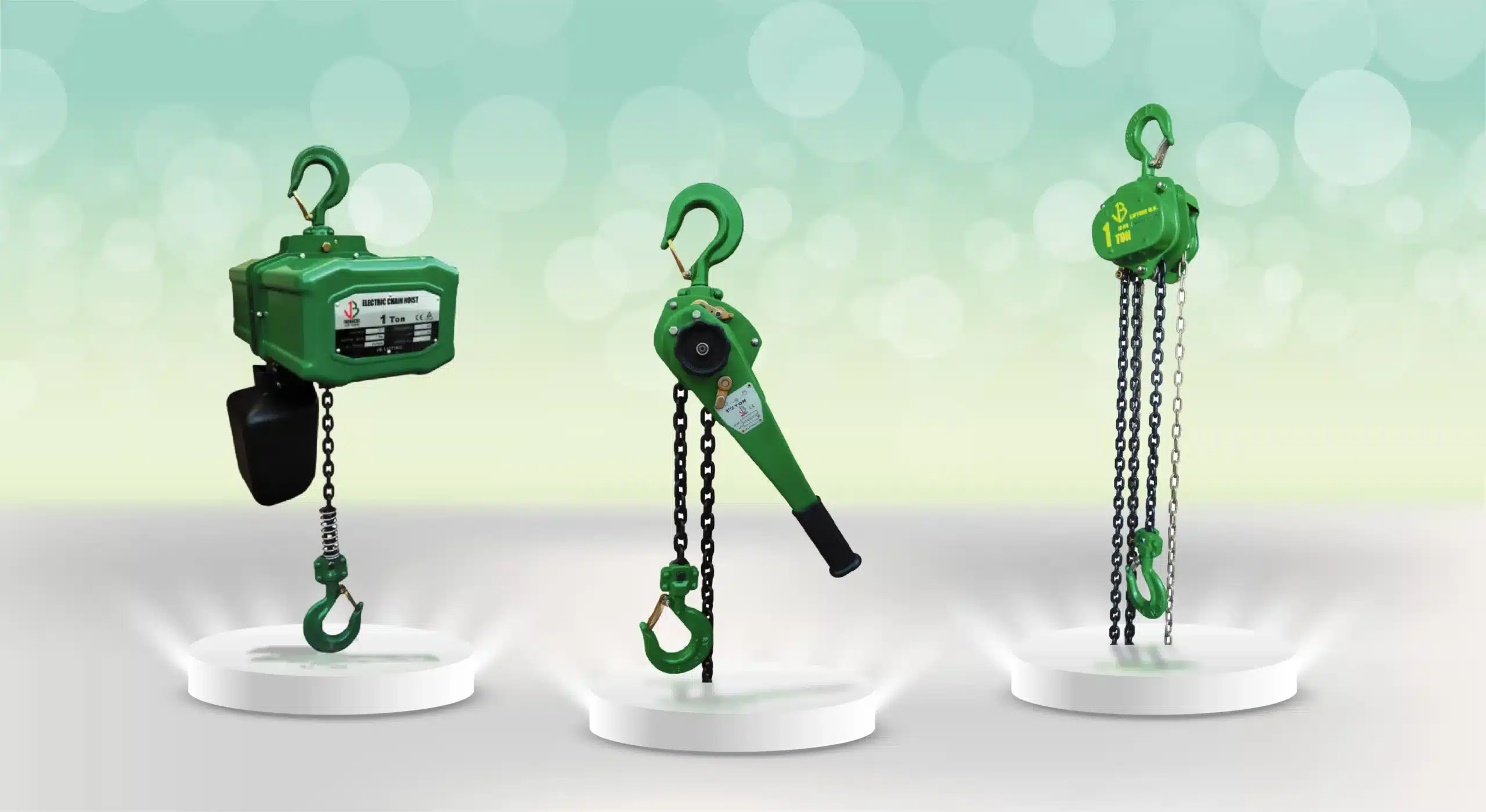
A: Chain blocks typically require pulling on a hand chain to lift a load, whereas lever blocks use a lever arm and ratchet mechanism. Lever blocks are often more compact and suitable for tighter spaces, while chain blocks can sometimes offer higher lifting capacities. Understanding these differences helps in selecting the right tool for safe rigging practices.