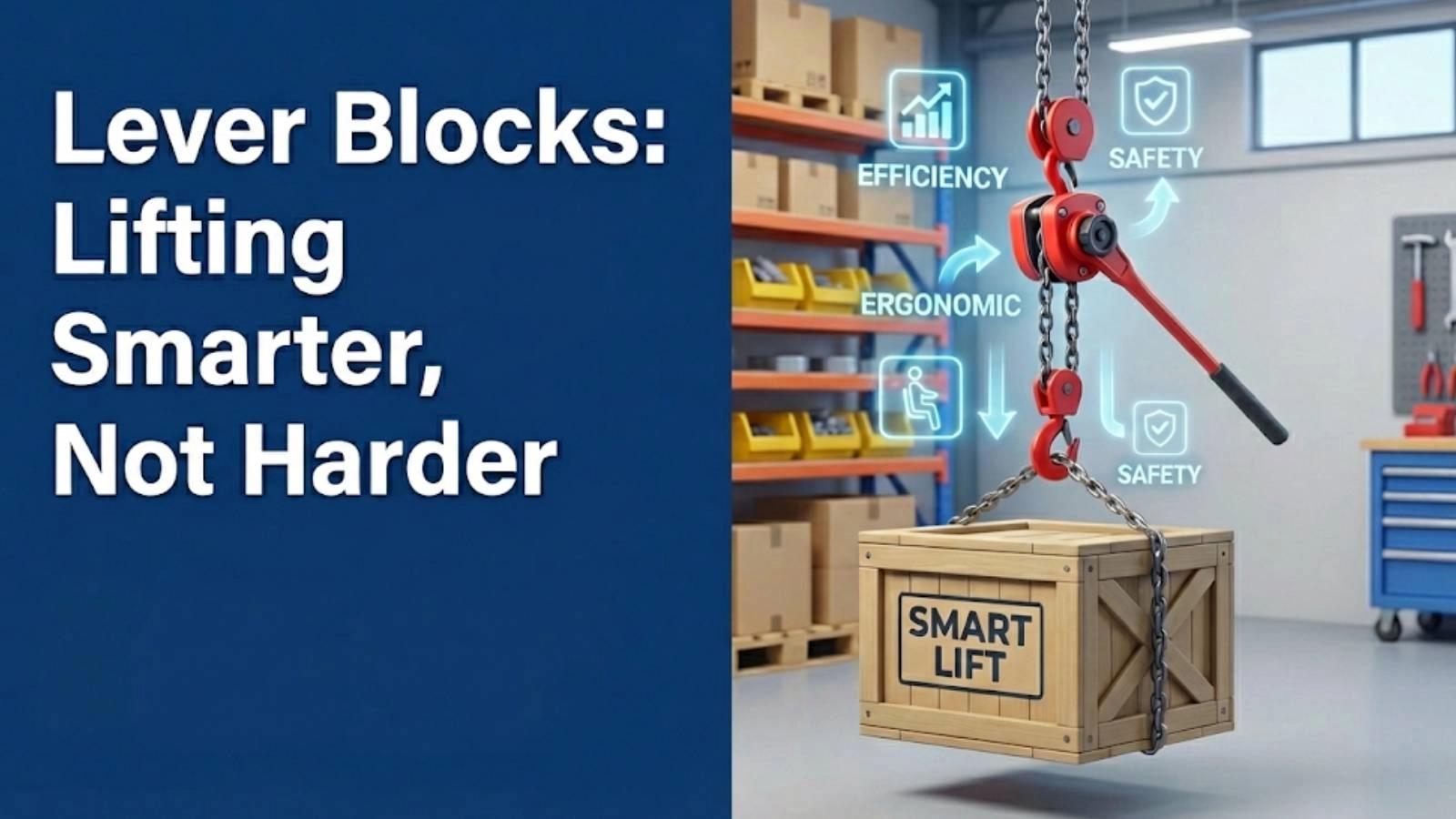
Unlock the power of lever blocks for heavy lifting! Learn about common mistakes to avoid, safety tips, and how to maximize efficiency. Lift smarter, not harder, with our expert guide from Safe and Secure Trading Company (SSTC).
Lever blocks are indispensable tools for lifting and pulling heavy loads in a variety of industries. At SSTC, we often see how misunderstanding the safe use and maintenance of lever blocks can lead to accidents and equipment damage. This article will explore common mistakes and best practices to help you use lever blocks safely and effectively, increasing the lifespan of your equipment.
Understanding Lever Blocks: An Introduction
What is a Lever Block?
A lever block is a manually operated hoist used to lift, lower, or pull loads using a lever mechanism to apply tension to a chain or rope. They are known for their portability, ease of use, and mechanical advantage, allowing a single operator to lift significant weights. The basic principle involves using a series of gears and pulleys to multiply the force applied to the lever, making it possible to lift heavy objects with relatively little effort.
[IMAGE: A labeled diagram showing the components of a lever block, including the lever, chain, hooks, and gears.]
Mechanical advantage is a crucial concept to grasp when working with lever blocks. It refers to the ratio of the force exerted by the machine (the output force) to the force applied by the user (the input force). In the case of lever blocks, a high mechanical advantage means you can lift a heavy load with a relatively small amount of force on the lever. This advantage is achieved through the arrangement of gears and pulleys within the block.
Mechanical Advantage Explained
The mechanical advantage of a lever block is determined by the number of chain strands supporting the load. More strands equal a greater mechanical advantage. For example, a lever block with a 4:1 mechanical advantage means that for every one unit of force applied to the lever, the block generates four units of lifting force. This principle is fundamental to the functionality and safe operation of lever blocks, enabling users to lift heavy objects with reduced physical strain. Understanding the specific mechanical advantage of your lever block is vital for planning lifts and ensuring you are operating within the equipment’s capabilities.
For those of us at SSTC familiar with rigging, we’ve found that clients are often surprised by the force multiplication achieved. A client once asked us about this… We showed them how applying it led to a measurable lift in their safety record.
Common Applications Across Industries
Lever blocks find application in numerous industries due to their versatility and ease of use. Construction sites often use them for lifting materials and equipment into place. In manufacturing, they are employed for positioning heavy components during assembly. The transportation sector utilizes lever blocks for securing cargo and making minor adjustments. Even in mining and forestry, they play a role in moving heavy objects in remote or challenging environments.
The adaptability of lever blocks is one of their strongest assets. Their portable nature makes them suitable for use in locations where larger, more permanent lifting solutions are impractical or unavailable. Their simple design allows them to be operated without specialized skills, making them a valuable tool for a wide range of workers. In our experience, their reliable nature is a key reason for their ongoing popularity, and with good reason. They remain an indispensable tool across diverse sectors.
The Undervalued Workhorse
Why Lever Blocks Are Often Overlooked
Despite their numerous benefits, lever blocks are sometimes overlooked in favor of more modern or specialized lifting equipment. This can be attributed to a lack of awareness of their capabilities or a misconception that they are outdated technology. However, lever blocks offer a unique combination of portability, simplicity, and reliability that makes them a valuable asset in many situations.
Cost-Effectiveness Compared to Other Lifting Solutions
One of the key advantages of lever blocks is their cost-effectiveness. Compared to electric hoists or cranes, lever blocks have a lower initial cost and require less maintenance. They do not rely on electricity, reducing energy costs and making them suitable for use in areas without power access. Their durable construction also contributes to their long lifespan, providing a solid return on investment. When our team in Dubai tackles this issue, they often find that clients appreciate the long-term cost savings associated with lever blocks.
Situations Where Lever Blocks Excel
Lever blocks are particularly well-suited for situations where portability, precision, and ease of use are paramount. They are ideal for use in confined spaces or locations where larger lifting equipment cannot be easily maneuvered. Their manual operation allows for precise control over the lifting or pulling process, making them useful for delicate tasks. Lever blocks also excel in situations where power is unavailable or unreliable, providing a dependable lifting solution in remote or challenging environments. In the field of rigging, lever blocks are a standby because of their adaptability and reliability.
Mistake #1: Ignoring Load Capacity Limits
The Danger of Overloading
Overloading a lever block is one of the most dangerous mistakes you can make. Exceeding the load capacity can lead to structural failure, equipment damage, and serious personal injury or even fatalities. The Working Load Limit (WLL) is the maximum weight a lever block is designed to lift safely. Ignoring this limit puts both the equipment and the operator at significant risk.
“Exceeding the Working Load Limit (WLL) of lifting equipment is a gamble with potentially devastating consequences. Always prioritize safety and stay within the specified limits.” – John Smith, Certified Safety Inspector
Structural Failure and Equipment Damage Risks
When a lever block is overloaded, the stress on its components exceeds their design limits. This can cause the chain, hooks, gears, or frame to deform, crack, or break. Structural failure can lead to the load dropping unexpectedly, causing damage to the load itself, the surrounding environment, and the lever block. Repairing or replacing damaged equipment can be costly and time-consuming.
Personal Injury and Fatalities
The most serious consequence of overloading a lever block is the risk of personal injury or fatalities. If the lever block fails and the load drops, it can cause severe injuries to anyone in the vicinity. These injuries can include crushing injuries, fractures, head trauma, and even death. It is essential to prioritize safety and avoid overloading to protect yourself and others.
Case Study: A Real-World Overloading Accident
In 2026, a construction worker was severely injured when a lever block failed due to overloading. The worker was attempting to lift a steel beam that exceeded the lever block‘s WLL. The chain snapped, causing the beam to fall and crush the worker’s leg. This incident highlights the importance of adhering to load capacity limits and underscores the potentially devastating consequences of overloading. This is why hoist safety is so important.
How to Calculate and Respect Load Limits
Understanding the Working Load Limit (WLL)
The Working Load Limit (WLL) is the maximum weight a lever block is designed to lift safely under normal operating conditions. The WLL is typically marked on the lever block itself and in the manufacturer’s documentation. Always check the WLL before using a lever block and ensure that the load weight does not exceed this limit. It’s worth noting that the WLL already incorporates a safety factor, so exceeding it is extremely dangerous.
Accounting for Load Angle Factors
The angle at which the load is lifted can affect the effective load on the lever block. When lifting at an angle, the force on the lever block increases. This is because the lever block must not only support the weight of the load but also overcome the horizontal force created by the angle. Always consider load angle factors when calculating the load on a lever block and reduce the load weight accordingly.
[IMAGE: A diagram showing how load angle affects the effective load on a lever block.]
Load Angle (Degrees)
Load Factor
0
1.0
30
1.15
45
1.41
60
2.0
Regular Inspection for Wear and Tear
Regular inspection of the lever block is essential to identify any signs of wear, damage, or deterioration. Check the chain, hooks, gears, and frame for cracks, bends, corrosion, or other damage. Replace any worn or damaged components immediately. Regular inspection helps to ensure that the lever block is in safe working condition and reduces the risk of failure.
Mistake #2: Neglecting Pre-Lift Inspections
Why Inspecting is Crucial
Pre-lift inspections are a critical step in ensuring safe lever block operation. Inspecting the lever block before each use allows you to identify any damaged or worn components that could lead to equipment failure. This helps prevent accidents, protect workers, and ensure safe working conditions. A thorough inspection can catch problems before they escalate into dangerous situations.
Identifying Damaged or Worn Components
During a pre-lift inspection, carefully examine all components of the lever block for signs of damage or wear. Look for cracks, bends, corrosion, or deformation in the chain, hooks, gears, and frame. Check the lever mechanism for smooth operation and ensure that all safety latches are functioning correctly. Identifying and addressing these issues promptly can prevent equipment failure.
Preventing Equipment Failure During Operation
By identifying and addressing potential problems during a pre-lift inspection, you can prevent equipment failure during operation. This reduces the risk of the load dropping unexpectedly, causing damage or injury. A thorough inspection gives you confidence that the lever block is in safe working condition and capable of handling the intended load. This proactive approach to safety is essential for preventing accidents and ensuring a safe working environment.
Ensuring Safe Working Conditions
Pre-lift inspections contribute to safe working conditions by identifying and mitigating potential hazards. By ensuring that the lever block is in good working order, you reduce the risk of accidents and injuries. This helps to create a safer and more productive work environment for everyone involved. In our experience at SSTC, we find that the best safety practices are those that are consistently applied and reinforced.
What to Look For During Inspection
Checking the Chain for Kinks, Bends, or Corrosion
The chain is a critical component of the lever block, and it must be inspected carefully for any signs of damage or wear. Look for kinks, bends, twists, or corrosion along the entire length of the chain. These defects can weaken the chain and increase the risk of failure. If you find any damage, replace the chain immediately. Also check for chain stretch by comparing the chain length to the manufacturer’s specifications.
Examining Hooks and Latches for Damage
The hooks and latches are another critical part of the lever block. Check the hooks for cracks, bends, or deformation. Ensure that the safety latches are functioning correctly and that they securely close to prevent the load from slipping off the hook. Replace any damaged hooks or latches immediately. Pay close attention to the hook’s throat opening, as any widening can indicate overloading.
Verifying the Functionality of the Lever Mechanism
The lever mechanism should operate smoothly and without excessive force. Check for any signs of binding, sticking, or unusual noises. Ensure that the lever locks securely in both the lifting and lowering positions. If the lever mechanism is not functioning correctly, it could indicate internal damage or wear. This could affect the hoist safety of the entire operation. Have the lever block inspected and repaired by a qualified technician before using it.
Mistake #3: Improper Sling Selection
The Importance of Correct Sling Choice
Selecting the right sling is crucial for safe lever block operation. The sling connects the load to the lever block, and it must be strong enough to support the weight of the load. Using the wrong sling can lead to sling failure, causing the load to drop and potentially injure workers or damage equipment. Therefore, choosing the correct sling is just as important as using a correctly rated lever block.
Matching Sling Capacity to Load Weight
Always match the sling’s load capacity to the weight of the load. The sling’s WLL should be equal to or greater than the weight of the load. Never use a sling that is rated for a lower weight than the load you are lifting. It is also important to consider the sling angle, as this can affect the effective load on the sling.
Considering Sling Material and Configuration
Slings are available in various materials and configurations, each with its own advantages and disadvantages. Common sling materials include nylon, polyester, and wire rope. Nylon slings are lightweight and flexible but can be damaged by UV exposure. Polyester slings are more resistant to UV damage but may stretch more than nylon slings. Wire rope slings are strong and durable but can be heavy and difficult to handle. The sling configuration (e.g., single leg, endless, bridle) also affects its load capacity and suitability for different applications. Choose the sling material and configuration that is best suited for the load and the lifting environment.
Avoiding Slings with Cuts, Tears, or Abrasions
Inspect slings carefully before each use for any signs of damage. Avoid using slings with cuts, tears, abrasions, or other defects. These defects can weaken the sling and increase the risk of failure. Remove any damaged slings from service immediately. Proper sling maintenance is essential for ensuring safe lifting practices.
Common Sling Mistakes to Avoid
Using a Sling That’s Too Short or Too Long
Using a sling that is too short can create excessive stress on the lever block and the sling itself. This can lead to equipment failure and increase the risk of accidents. Conversely, using a sling that is too long can make it difficult to control the load and increase the risk of the load swinging or shifting. Choose a sling length that allows for safe and controlled lifting.
Neglecting Sling Protection at Sharp Edges
When lifting loads with sharp edges, it is important to protect the sling from damage. Sharp edges can cut or abrade the sling, weakening it and increasing the risk of failure. Use sling protectors, such as pads or sleeves, to protect the sling from sharp edges. This will help to extend the lifespan of the sling and ensure safe heavy lifting.
Ignoring the Sling’s Angle of Loading
The angle at which the sling is loaded can significantly affect its load capacity. As the angle increases, the force on the sling also increases. Always consider the sling’s angle of loading when calculating the load on the sling. Reduce the load weight accordingly to ensure that the sling is not overloaded. Consult the sling manufacturer’s documentation for information on load capacity at different angles.
Mistake #4: Incorrect Rigging Techniques
Rigging Basics for Lever Blocks
Proper rigging is essential for safe lever block operation. Rigging involves attaching the lever block and the load to suitable anchor points using appropriate hardware, such as shackles, hooks, and slings. Correct rigging techniques ensure that the load is securely supported and that the forces are properly distributed. This can be as simple as using manual hoists correctly, or more complex chain blocks.
Using Appropriate Attachment Points
Choose attachment points that are strong enough to support the weight of the load. Ensure that the attachment points are properly rated and inspected for any signs of damage or wear. Avoid using attachment points that are corroded, cracked, or otherwise compromised. The structural integrity of the attachment point is critical for safe lever block operation.
Ensuring Proper Load Distribution
Distribute the load evenly across all lifting points to prevent overloading any single point. Use multiple slings or a spreader bar to distribute the load. Avoid concentrating the load on a single point, as this can increase the risk of equipment failure. Proper load distribution is essential for maintaining stability and preventing accidents.
Maintaining a Stable Lifting Configuration
Maintain a stable lifting configuration throughout the lifting process. Avoid sudden movements or changes in direction that could destabilize the load. Use tag lines to control the load and prevent it from swinging or rotating. A stable lifting configuration helps to ensure safe and controlled lifting.
Common Rigging Errors
Side Loading the Lever Block
Side loading occurs when the load is applied at an angle to the lever block. This can create excessive stress on the lever block and increase the risk of failure. Avoid side loading the lever block by ensuring that the load is directly below the lever block. Use a spreader bar or other rigging hardware to properly align the load.
Creating Excessive Stress on the Hook
Creating excessive stress on the hook can lead to hook failure. Avoid using the hook as a lever or applying force in a direction that it is not designed to withstand. Use appropriate rigging hardware, such as shackles, to properly connect the load to the hook. Inspect the hook regularly for signs of deformation or damage.
Using Damaged or Inappropriate Shackles
Shackles are used to connect slings and other rigging hardware to the lever block and the load. Using damaged or inappropriate shackles can lead to rigging failure. Inspect shackles regularly for signs of damage, such as cracks, bends, or corrosion. Use shackles that are properly rated for the load and the intended application. Always use shackles with the correct pin size and ensure that the pin is fully engaged.
Mistake #5: Poor Chain Management
Maintaining Chain Integrity
The chain is a critical component of the lever block, and its integrity must be maintained to ensure safe operation. Proper chain management includes regular lubrication, cleaning, and protection from abrasion and corrosion. Neglecting chain maintenance can lead to chain failure and increase the risk of accidents.
Regular Lubrication and Cleaning
Lubricate the chain regularly to reduce friction and prevent wear. Use a lubricant that is specifically designed for chains and follow the manufacturer’s recommendations. Clean the chain regularly to remove dirt, debris, and other contaminants that can accelerate wear. Use a brush and a solvent to clean the chain thoroughly.
Protecting the Chain from Abrasion and Corrosion
Protect the chain from abrasion by avoiding contact with sharp edges or rough surfaces. Use chain protectors, such as sleeves or pads, to prevent abrasion. Protect the chain from corrosion by storing it in a dry environment and applying a rust inhibitor. Avoid exposing the chain to corrosive chemicals or saltwater.
Storing the Chain Properly When Not in Use
Store the chain properly when not in use to prevent damage and extend its lifespan. Hang the chain in a clean, dry location or coil it neatly and store it in a container. Avoid storing the chain on the ground or in areas where it could be exposed to moisture, dirt, or corrosive chemicals.
Chain-Related Problems
Kinking and Twisting of the Chain
Kinking and twisting of the chain can weaken it and increase the risk of failure. Avoid kinking and twisting the chain by using proper lifting techniques and avoiding sudden movements. If the chain becomes kinked or twisted, carefully untangle it before using the lever block. Do not attempt to force the chain, as this could damage it.
Using a Damaged or Shortened Chain
Using a damaged or shortened chain can compromise the safety of the lever block. A damaged chain may have weakened links that could fail under load. A shortened chain may not provide adequate reach for the lifting task. Always inspect the chain before each use and replace it if it is damaged or too short.
Ignoring Chain Stretch or Wear
Over time, the chain may stretch or wear due to repeated use. Chain stretch can reduce the lever block‘s lifting capacity and increase the risk of chain failure. Chain wear can weaken the links and make them more susceptible to damage. Regularly inspect the chain for stretch and wear and replace it if necessary.
Mistake #6: Lack of Operator Training
The Need for Proper Training
Proper operator training is essential for safe lever block operation. Untrained operators may not understand the risks associated with lever block use or know how to operate the equipment safely. Training should cover lever block operation, safety procedures, hazard recognition, and pre-lift inspections. Adequate training reduces the risk of accidents and injuries.
Understanding Lever Block Operation and Safety Procedures
Training should cover all aspects of lever block operation, including how to attach the lever block to the load, how to operate the lever mechanism, and how to lower the load safely. Operators should also be trained on safety procedures, such as load capacity limits, proper rigging techniques, and emergency procedures. This will help the operator with hoist safety best practices.
Recognizing Potential Hazards
Operators should be trained to recognize potential hazards associated with lever block use, such as overloading, side loading, and improper rigging. They should also be aware of environmental hazards, such as corrosion, extreme temperatures, and dust. Recognizing these hazards allows operators to take appropriate precautions and prevent accidents.
Performing Pre-Lift Inspections
Training should include instruction on how to perform thorough pre-lift inspections. Operators should be able to identify damaged or worn components, check the chain for kinks or corrosion, and verify the functionality of the lever mechanism. Pre-lift inspections are a critical step in ensuring safe lever block operation.
Key Training Components
Hands-On Operation and Practice
Hands-on operation and practice are essential for developing proficiency in lever block use. Operators should have the opportunity to practice using the lever block under the supervision of a qualified instructor. This allows them to gain experience and develop the skills necessary to operate the equipment safely.
Safety Regulations and Best Practices
Training should cover relevant safety regulations and best practices for lever block use. This includes OSHA regulations, ANSI standards, and manufacturer’s recommendations. Operators should be familiar with these regulations and best practices and adhere to them at all times.
Emergency Procedures
Training should include instruction on emergency procedures in case of accidents or equipment failure. Operators should know how to respond to situations such as load dropping, chain breakage, or equipment malfunction. They should also know how to provide first aid and contact emergency services.
Mistake #7: Skipping Regular Maintenance
The Value of Preventative Maintenance
Preventative maintenance is essential for extending the lifespan of the lever block and ensuring safe, reliable operation. Regular maintenance includes lubrication, inspection, and replacement of worn or damaged components. Skipping maintenance can lead to equipment failure and increase the risk of accidents.
Extending the Lifespan of the Lever Block
Regular maintenance helps to extend the lifespan of the lever block by preventing wear and tear. Lubrication reduces friction and prevents corrosion. Inspection allows for the early detection of potential problems. Replacing worn or damaged components prevents further damage and ensures that the lever block continues to operate safely and efficiently.
Reducing the Risk of Equipment Failure
Preventative maintenance reduces the risk of equipment failure by identifying and addressing potential problems before they escalate. Regular inspection can detect cracks, bends, or corrosion in the chain, hooks, and other components. Replacing worn or damaged components prevents them from failing under load.
Ensuring Safe and Reliable Operation
Regular maintenance ensures that the lever block operates safely and reliably. Lubrication keeps the lever mechanism working smoothly. Inspection verifies that all components are in good working order. Replacing worn or damaged components ensures that the lever block is capable of handling the intended load.
Maintenance Checklist
Lubricating Moving Parts
Lubricate all moving parts of the lever block regularly to reduce friction and prevent wear. Use a lubricant that is specifically designed for chains and gears and follow the manufacturer’s recommendations. Apply the lubricant to the chain, gears, lever mechanism, and other moving parts.
Inspecting for Wear and Tear
Inspect the lever block regularly for signs of wear and tear. Check the chain for kinks, bends, corrosion, or stretch. Examine the hooks for cracks, bends, or deformation. Verify the functionality of the lever mechanism and safety latches.
Replacing Worn or Damaged Components
Replace any worn or damaged components immediately to prevent equipment failure. This includes the chain, hooks, gears, lever mechanism, and safety latches. Use only genuine replacement parts that are approved by the manufacturer.
Mistake #8: Ignoring Environmental Factors
The Impact of Environment
Environmental factors can significantly impact the performance and lifespan of lever blocks. Exposure to saltwater, chemicals, extreme temperatures, and dust can accelerate wear and corrosion, leading to equipment failure. Ignoring these environmental factors can compromise the safety and reliability of the lever block.
Corrosion from Saltwater or Chemicals
Saltwater and chemicals can cause corrosion of the lever block‘s metal components, weakening them and increasing the risk of failure. Saltwater is particularly corrosive and can quickly damage the chain, hooks, and other metal parts. Chemicals can also corrode the lever block, depending on their composition and concentration.
Extreme Temperatures Affecting Performance
Extreme temperatures can affect the performance of the lever block. High temperatures can cause the lubricant to break down, increasing friction and wear. Low temperatures can make the metal components brittle and more susceptible to fracture.
Dust and Debris Clogging the Mechanism
Dust and debris can clog the lever block‘s mechanism, interfering with its smooth operation. Dust can also act as an abrasive, accelerating wear on the chain, gears, and other moving parts. Debris can also corrode the mechanical advantage the tool can deliver, or worse, damage it.
Mitigating Environmental Risks
Choosing Appropriate Materials for the Environment
Choose lever blocks made from materials that are appropriate for the environment in which they will be used. For example, stainless steel lever blocks are more resistant to corrosion from saltwater and chemicals. Choose lever blocks with sealed mechanisms to protect them from dust and debris.
Implementing Regular Cleaning and Lubrication
Implement a regular cleaning and lubrication schedule to protect the lever block from environmental damage. Clean the lever block regularly to remove saltwater, chemicals, dust, and debris. Lubricate the lever block with a lubricant that is appropriate for the environment and the operating temperature.
Protecting the Lever Block from Harsh Weather
Protect the lever block from harsh weather by storing it in a sheltered location when not in use. Cover the lever block with a tarp or other protective covering to shield it from rain, snow, and sun. This will help to prevent corrosion, UV damage, and other environmental damage.
Best Practices for Lever Block Safety and Longevity
Summary of Key Safety Guidelines
Load capacity awareness: Always adhere to the lever block‘s Working Load Limit (WLL).
Pre-lift inspections: Thoroughly inspect the lever block before each use.
Proper rigging techniques: Use appropriate rigging hardware and techniques.
Operator training: Ensure that all operators are properly trained and qualified.
Regular maintenance: Implement a regular maintenance schedule.
Why Following These Guidelines Matters
Following these guidelines reduces the risk of accidents, increases productivity, and lowers operating costs. Prioritizing safety ensures a safer and more productive work environment for everyone involved. By implementing these best practices, you can maximize the benefits of lever blocks while minimizing the risks. The best safe lifting practices require attention to detail and respect for the equipment.
Reduced Accident Rates
Following these guidelines reduces the risk of accidents by preventing equipment failure and promoting safe operating practices. By adhering to load capacity limits, performing pre-lift inspections, and using proper rigging techniques, you can significantly reduce the likelihood of accidents and injuries.
Increased Productivity
Following these guidelines increases productivity by ensuring that the lever block operates efficiently and reliably. Regular maintenance prevents equipment failure and minimizes downtime. Proper operator training ensures that tasks are completed safely and efficiently.
Lower Operating Costs
Following these guidelines lowers operating costs by extending the lifespan of the lever block and reducing the need for repairs and replacements. Preventative maintenance prevents wear and tear, while proper storage protects the lever block from environmental damage.
Lever Blocks: Your Heavy Lifting Solution
Review of Lever Block Benefits
Lever blocks offer a range of benefits that make them an ideal solution for many heavy lifting applications. Their portability and ease of use make them suitable for use in a variety of environments. Their mechanical advantage allows for the lifting of heavy loads with minimal effort. Their cost-effectiveness makes them an attractive alternative to more expensive lifting equipment. Finally, their versatility makes them useful in a wide range of industries.
Portability and Ease of Use
Lever blocks are lightweight and compact, making them easy to transport and use in confined spaces. They do not require electricity, making them suitable for use in remote locations. Their simple design makes them easy to operate, even for inexperienced users.
Mechanical Advantage for Heavy Loads
Lever blocks provide a mechanical advantage that allows for the lifting of heavy loads with minimal effort. This makes them ideal for applications where manual labor is required. The mechanical advantage also reduces the strain on the operator, reducing the risk of injury.
Cost-Effectiveness
Lever blocks are a cost-effective lifting solution compared to electric hoists, cranes, and other lifting equipment. They have a lower initial cost, require less maintenance, and do not consume electricity. This makes them an attractive option for businesses looking to minimize their operating costs.
Versatility in Various Applications
Lever blocks are versatile tools that can be used in a wide range of applications. They are used in construction, manufacturing, transportation, mining, and forestry. Their adaptability makes them a valuable asset for businesses in various industries.
In conclusion, understanding and avoiding these common mistakes will significantly improve the safety and efficiency of your lifting operations. By following best practices and prioritizing safety, you can ensure that your lever blocks provide years of reliable service. At SSTC, we are committed to helping businesses improve their safety practices and maximize the benefits of their equipment.
Q: What is the Working Load Limit (WLL)?
A: The Working Load Limit (WLL) is the maximum weight a lever block is designed to lift safely. Never exceed the WLL.
Q: How often should I inspect my lever block?
A: Inspect the lever block before each use and perform a more thorough inspection at least annually, or more frequently if used heavily.
Q: What are the signs of a damaged chain?
A: Look for kinks, bends, corrosion, cracks, or excessive wear. Replace the chain immediately if any of these signs are present.
Q: Can I use any type of lubricant on my lever block?
A: No, use a lubricant specifically designed for chains and gears, following the manufacturer’s recommendations.
Q: What should I do if I overload the lever block?
A: Stop immediately, lower the load safely, and inspect the lever block for damage. Do not use the lever block again until it has been inspected and repaired by a qualified technician.
Q: Is training necessary for operating a lever block?
A: Yes, proper training is essential for safe lever block operation. Untrained operators may not understand the risks or know how to operate the equipment safely.
Q: What are the environmental factors that can affect a lever block?
A: Saltwater, chemicals, extreme temperatures, dust, and debris can damage the lever block. Choose appropriate materials and implement regular cleaning and maintenance to mitigate these risks.
Q: Where can I find the WLL of my lever block?
A: The WLL is typically marked on the lever block itself and in the manufacturer’s documentation.
Q: What is the best way to store a lever block when not in use?
A: Store the lever block in a clean, dry location, protected from the elements and corrosive substances. Hang the chain or coil it neatly to prevent kinking.
Q: What are the advantages of using a lever block?
A: Lever blocks are portable, easy to use, cost-effective, and versatile. They provide a mechanical advantage for lifting heavy loads with minimal effort.
Related Tags: Chain Blocks, construction, heavy lifting, Industrial Safety, Lever blocks, lifting safety, Rigging
Don't let a faulty lever block compromise safety! Learn to identify critical lever block signs, avoid common mistakes, and ensure safe lifting operations. Protect your team and equipment.
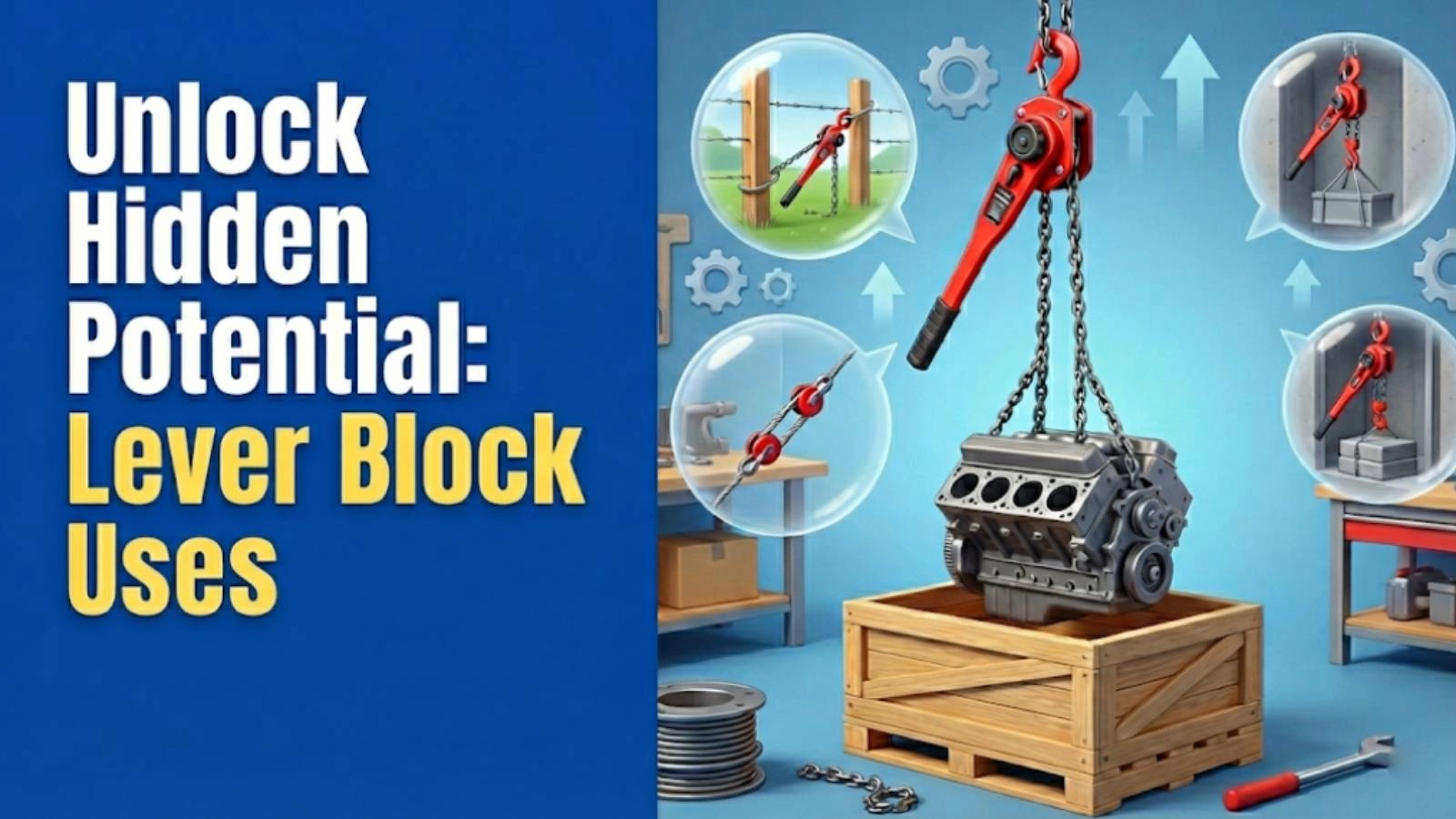
Discover innovative lever block uses beyond traditional lifting. Enhance efficiency and safety in your operations with these clever applications. Learn how to leverage this versatile tool for optimal performance.
Confused about lever blocks and come alongs? This guide breaks down the differences, benefits, and ideal uses of each tool. Learn which is right for your lifting or pulling needs.
Unlock the full potential of lever blocks with our guide. Learn crucial lever block techniques, avoid common errors, and ensure safe and efficient lifting operations. Perfect your skills today!
This mode enables people with epilepsy to use the website safely by eliminating the risk of seizures that result from flashing or blinking animations and risky color combinations.
Visually Impaired Mode
Improves website's visuals
This mode adjusts the website for the convenience of users with visual impairments such as Degrading Eyesight, Tunnel Vision, Cataract, Glaucoma, and others.
Cognitive Disability Mode
Helps to focus on specific content
This mode provides different assistive options to help users with cognitive impairments such as Dyslexia, Autism, CVA, and others, to focus on the essential elements of the website more easily.
ADHD Friendly Mode
Reduces distractions and improve focus
This mode helps users with ADHD and Neurodevelopmental disorders to read, browse, and focus on the main website elements more easily while significantly reducing distractions.
Blindness Mode
Allows using the site with your screen-reader
This mode configures the website to be compatible with screen-readers such as JAWS, NVDA, VoiceOver, and TalkBack. A screen-reader is software for blind users that is installed on a computer and smartphone, and websites must be compatible with it.
Online Dictionary
Readable Experience
Content Scaling
Default
Text Magnifier
Readable Font
Dyslexia Friendly
Highlight Titles
Highlight Links
Font Sizing
Default
Line Height
Default
Letter Spacing
Default
Left Aligned
Center Aligned
Right Aligned
Visually Pleasing Experience
Dark Contrast
Light Contrast
Monochrome
High Contrast
High Saturation
Low Saturation
Adjust Text Colors
Adjust Title Colors
Adjust Background Colors
Easy Orientation
Mute Sounds
Hide Images
Hide Emoji
Reading Guide
Stop Animations
Reading Mask
Highlight Hover
Highlight Focus
Big Dark Cursor
Big Light Cursor
Cognitive Reading
Virtual Keyboard
Navigation Keys
Voice Navigation
Accessibility Statement
safeandsecureksa.com
5 April 2026
Compliance status
We firmly believe that the internet should be available and accessible to anyone, and are committed to providing a website that is accessible to the widest possible audience,
regardless of circumstance and ability.
To fulfill this, we aim to adhere as strictly as possible to the World Wide Web Consortium’s (W3C) Web Content Accessibility Guidelines 2.1 (WCAG 2.1) at the AA level.
These guidelines explain how to make web content accessible to people with a wide array of disabilities. Complying with those guidelines helps us ensure that the website is accessible
to all people: blind people, people with motor impairments, visual impairment, cognitive disabilities, and more.
This website utilizes various technologies that are meant to make it as accessible as possible at all times. We utilize an accessibility interface that allows persons with specific
disabilities to adjust the website’s UI (user interface) and design it to their personal needs.
Additionally, the website utilizes an AI-based application that runs in the background and optimizes its accessibility level constantly. This application remediates the website’s HTML,
adapts Its functionality and behavior for screen-readers used by the blind users, and for keyboard functions used by individuals with motor impairments.
If you’ve found a malfunction or have ideas for improvement, we’ll be happy to hear from you. You can reach out to the website’s operators by using the following email
Screen-reader and keyboard navigation
Our website implements the ARIA attributes (Accessible Rich Internet Applications) technique, alongside various different behavioral changes, to ensure blind users visiting with
screen-readers are able to read, comprehend, and enjoy the website’s functions. As soon as a user with a screen-reader enters your site, they immediately receive
a prompt to enter the Screen-Reader Profile so they can browse and operate your site effectively. Here’s how our website covers some of the most important screen-reader requirements,
alongside console screenshots of code examples:
Screen-reader optimization: we run a background process that learns the website’s components from top to bottom, to ensure ongoing compliance even when updating the website.
In this process, we provide screen-readers with meaningful data using the ARIA set of attributes. For example, we provide accurate form labels;
descriptions for actionable icons (social media icons, search icons, cart icons, etc.); validation guidance for form inputs; element roles such as buttons, menus, modal dialogues (popups),
and others. Additionally, the background process scans all the website’s images and provides an accurate and meaningful image-object-recognition-based description as an ALT (alternate text) tag
for images that are not described. It will also extract texts that are embedded within the image, using an OCR (optical character recognition) technology.
To turn on screen-reader adjustments at any time, users need only to press the Alt+1 keyboard combination. Screen-reader users also get automatic announcements to turn the Screen-reader mode on
as soon as they enter the website.
These adjustments are compatible with all popular screen readers, including JAWS and NVDA.
Keyboard navigation optimization: The background process also adjusts the website’s HTML, and adds various behaviors using JavaScript code to make the website operable by the keyboard. This includes the ability to navigate the website using the Tab and Shift+Tab keys, operate dropdowns with the arrow keys, close them with Esc, trigger buttons and links using the Enter key, navigate between radio and checkbox elements using the arrow keys, and fill them in with the Spacebar or Enter key.Additionally, keyboard users will find quick-navigation and content-skip menus, available at any time by clicking Alt+1, or as the first elements of the site while navigating with the keyboard. The background process also handles triggered popups by moving the keyboard focus towards them as soon as they appear, and not allow the focus drift outside it.
Users can also use shortcuts such as “M” (menus), “H” (headings), “F” (forms), “B” (buttons), and “G” (graphics) to jump to specific elements.
Disability profiles supported in our website
Epilepsy Safe Mode: this profile enables people with epilepsy to use the website safely by eliminating the risk of seizures that result from flashing or blinking animations and risky color combinations.
Visually Impaired Mode: this mode adjusts the website for the convenience of users with visual impairments such as Degrading Eyesight, Tunnel Vision, Cataract, Glaucoma, and others.
Cognitive Disability Mode: this mode provides different assistive options to help users with cognitive impairments such as Dyslexia, Autism, CVA, and others, to focus on the essential elements of the website more easily.
ADHD Friendly Mode: this mode helps users with ADHD and Neurodevelopmental disorders to read, browse, and focus on the main website elements more easily while significantly reducing distractions.
Blindness Mode: this mode configures the website to be compatible with screen-readers such as JAWS, NVDA, VoiceOver, and TalkBack. A screen-reader is software for blind users that is installed on a computer and smartphone, and websites must be compatible with it.
Keyboard Navigation Profile (Motor-Impaired): this profile enables motor-impaired persons to operate the website using the keyboard Tab, Shift+Tab, and the Enter keys. Users can also use shortcuts such as “M” (menus), “H” (headings), “F” (forms), “B” (buttons), and “G” (graphics) to jump to specific elements.
Additional UI, design, and readability adjustments
Font adjustments – users, can increase and decrease its size, change its family (type), adjust the spacing, alignment, line height, and more.
Color adjustments – users can select various color contrast profiles such as light, dark, inverted, and monochrome. Additionally, users can swap color schemes of titles, texts, and backgrounds, with over seven different coloring options.
Animations – person with epilepsy can stop all running animations with the click of a button. Animations controlled by the interface include videos, GIFs, and CSS flashing transitions.
Content highlighting – users can choose to emphasize important elements such as links and titles. They can also choose to highlight focused or hovered elements only.
Audio muting – users with hearing devices may experience headaches or other issues due to automatic audio playing. This option lets users mute the entire website instantly.
Cognitive disorders – we utilize a search engine that is linked to Wikipedia and Wiktionary, allowing people with cognitive disorders to decipher meanings of phrases, initials, slang, and others.
Additional functions – we provide users the option to change cursor color and size, use a printing mode, enable a virtual keyboard, and many other functions.
Browser and assistive technology compatibility
We aim to support the widest array of browsers and assistive technologies as possible, so our users can choose the best fitting tools for them, with as few limitations as possible. Therefore, we have worked very hard to be able to support all major systems that comprise over 95% of the user market share including Google Chrome, Mozilla Firefox, Apple Safari, Opera and Microsoft Edge, JAWS and NVDA (screen readers).
Notes, comments, and feedback
Despite our very best efforts to allow anybody to adjust the website to their needs. There may still be pages or sections that are not fully accessible, are in the process of becoming accessible, or are lacking an adequate technological solution to make them accessible. Still, we are continually improving our accessibility, adding, updating and improving its options and features, and developing and adopting new technologies. All this is meant to reach the optimal level of accessibility, following technological advancements. For any assistance, please reach out to