Introduction: Lever Block vs. Come Along – What’s the Difference?
A lever block and a come along are both essential pieces of rigging equipment used for lifting or pulling heavy loads, but they operate on different mechanisms and are suited for different applications. Choosing the right tool for the job is crucial for safety and efficiency. At Safe and Secure Trading Company (SSTC), we often encounter customers unsure of which tool best fits their needs. This article will provide a detailed comparison to help you make an informed decision.
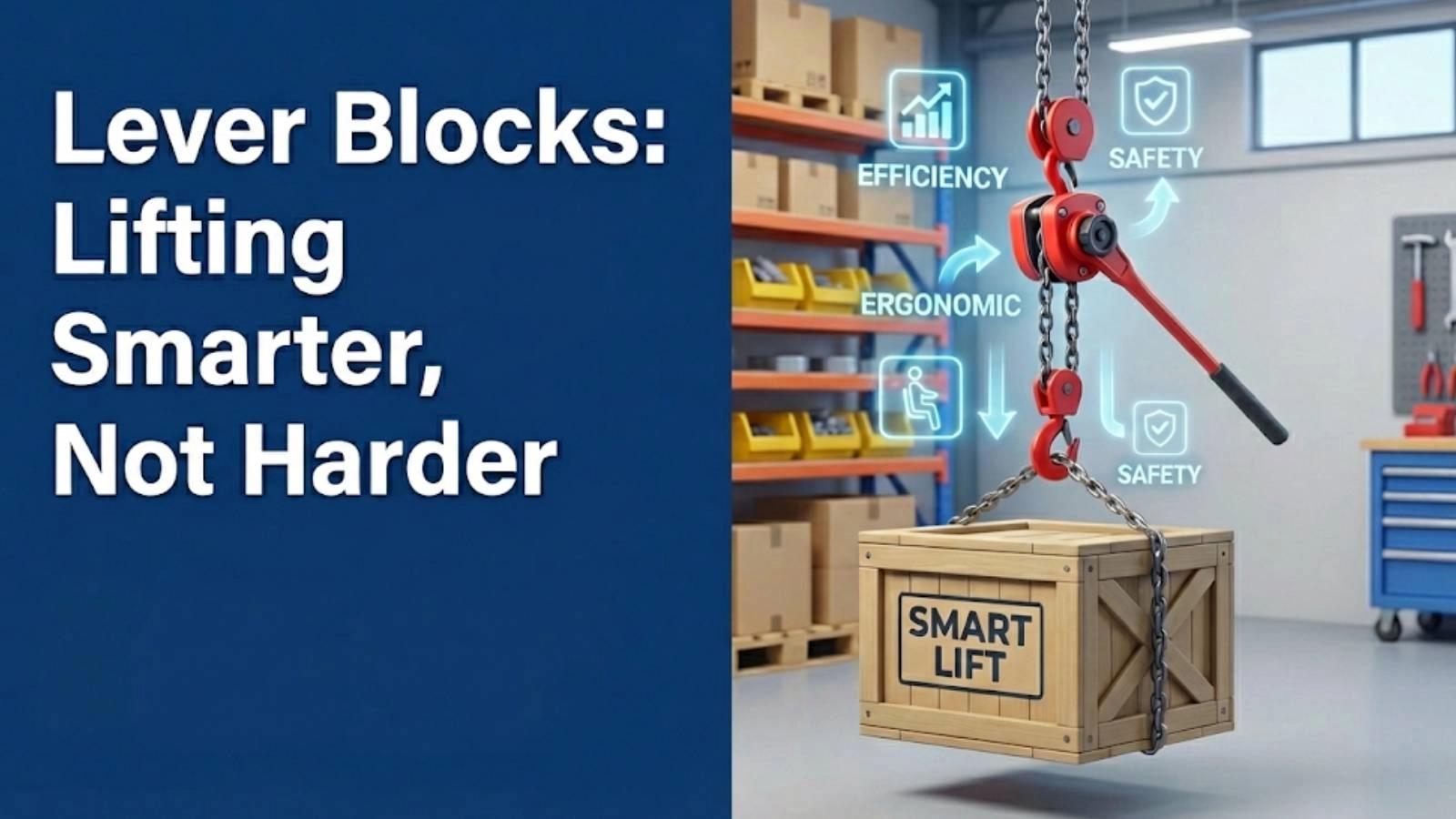
A lever block is a manual lifting device that uses a lever and gears to provide mechanical advantage for lifting heavy objects vertically. It is commonly used in workshops, construction sites, and industrial settings. A come along, also known as a chain hoist or come along winch, is a manual pulling device that uses a ratchet mechanism to provide pulling force, typically in a horizontal direction. It’s frequently used for vehicle recovery, fence stretching, and moving heavy objects over short distances. The goal of this article is to clearly outline the differences between a lever block and a come along, explain their ideal applications, and provide guidance on selecting the right tool for your specific needs.
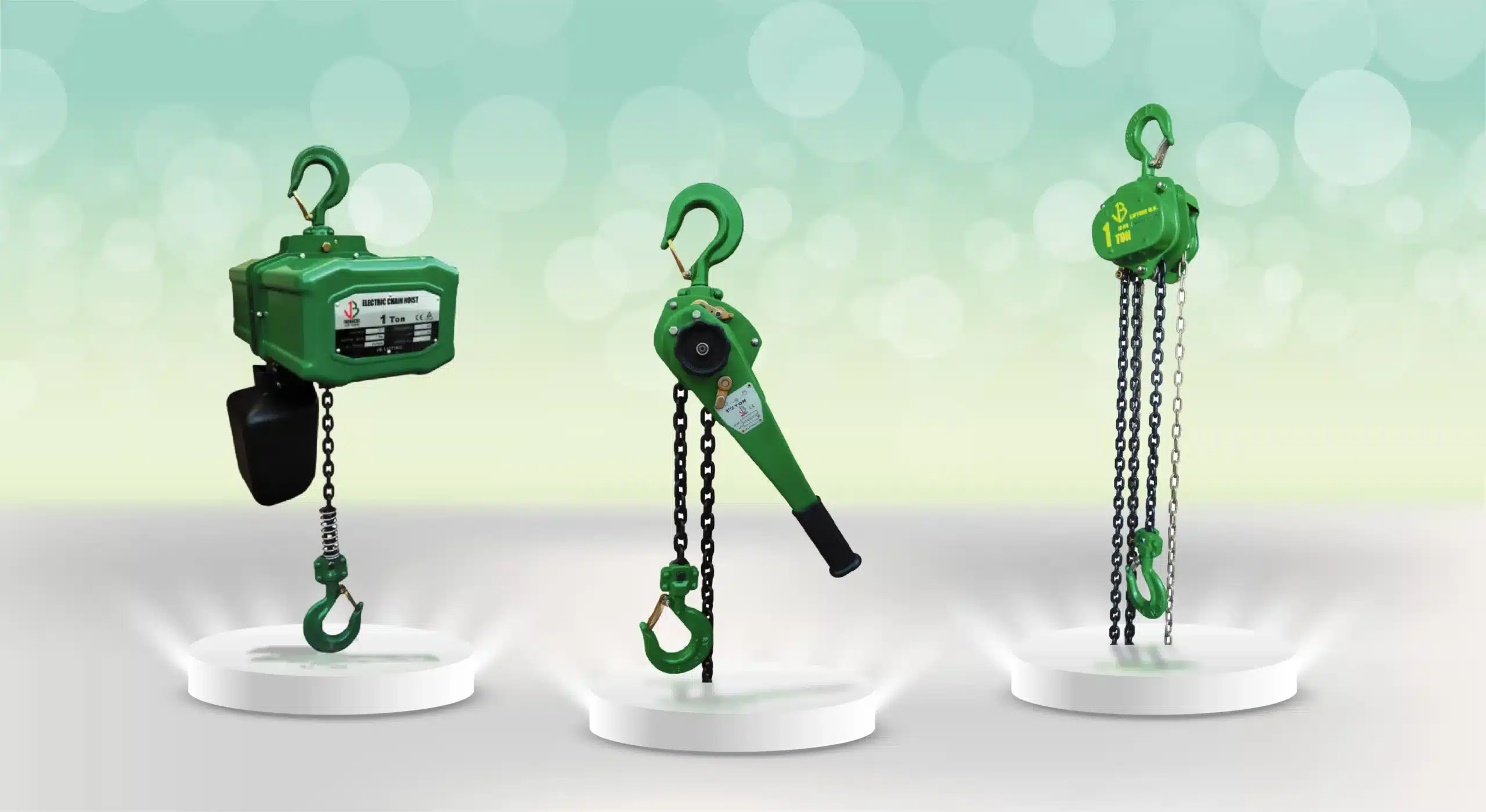
[IMAGE: Side-by-side comparison of a lever block and a come along]
Understanding the Lever Block: A Beginner’s Guide
A lever block is a manually operated lifting device designed to provide significant mechanical advantage, making it easier to lift heavy loads. The construction and operation of a lever block are relatively straightforward, but understanding its key components and how they work together is essential for safe and effective use. We’ve observed that many of our clients initially underestimate the power and precision a lever block can offer.
Key Components: Lever, Chain, Hooks, Gears
The key components of a lever block include a lever, a load chain, top and bottom hooks, and an internal gear system. The lever is the handle that the operator uses to apply force. The load chain is a high-strength chain that supports the weight being lifted. The hooks are used to attach the lever block to the load and the anchor point. The internal gear system multiplies the force applied to the lever, providing the mechanical advantage needed to lift heavy objects.
How the Lever Mechanism Provides Mechanical Advantage
The lever mechanism in a lever block works by using a series of gears to reduce the amount of force required to lift a heavy load. The operator pulls on the lever, which turns a series of gears, ultimately pulling the load chain and lifting the object. The gear ratio determines the mechanical advantage; a higher gear ratio means less force is needed to lift the load, but the lifting speed is slower. For many of our clients here in Dammam, we’ve seen that understanding this mechanical advantage is crucial for selecting the right lever block for their specific lifting requirements.
Ideal Applications for Lever Blocks: When to Use Them
Lever blocks are ideally suited for vertical lifting applications where precise control and high lifting capacity are required. These tools excel in situations where maneuverability in confined spaces is key, and where the user requires fine adjustments to the load’s position.
Vertical Lifting Applications: Examples Such as Engine Hoisting or Lifting Heavy Pipes
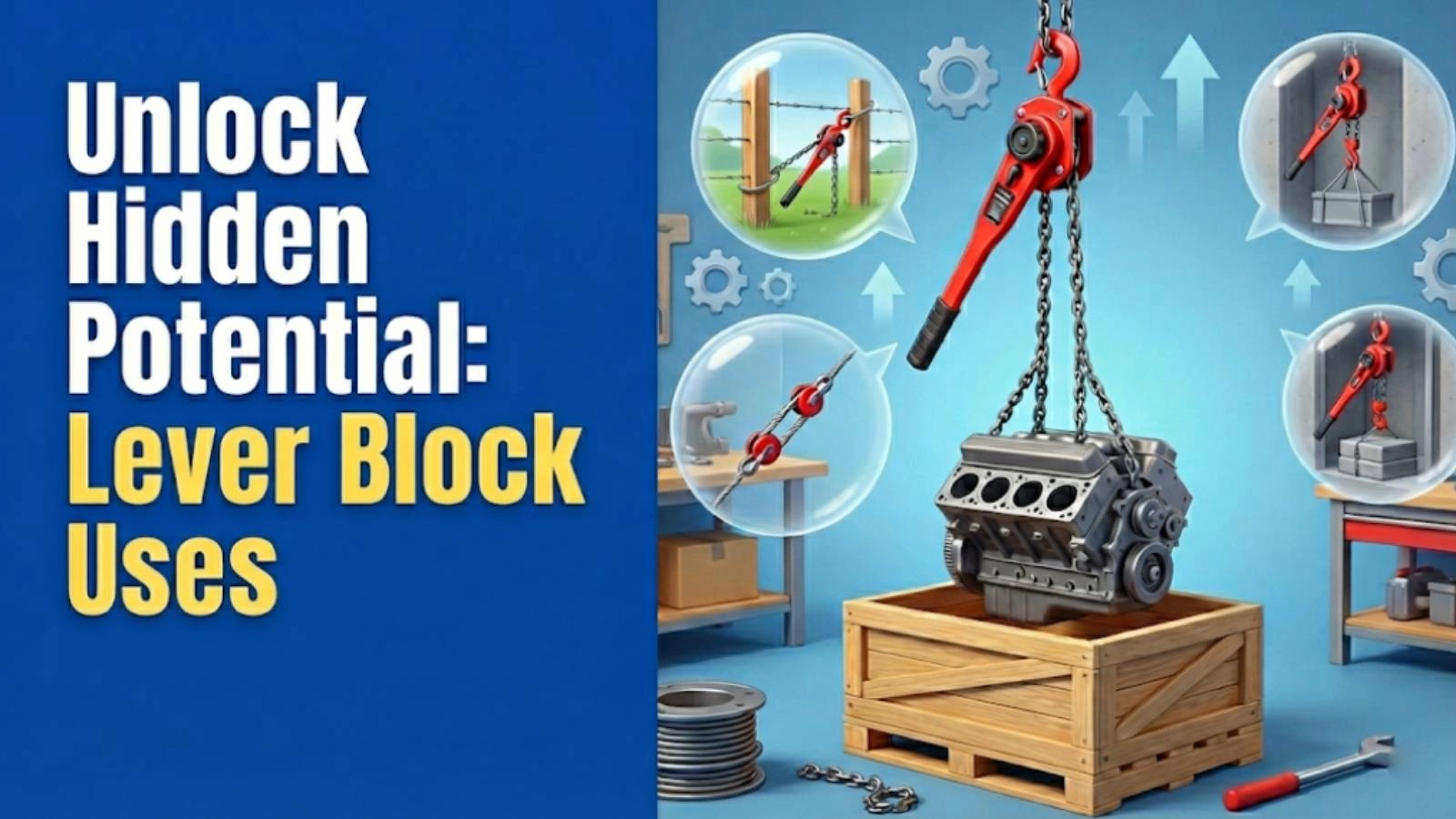
Lever blocks are commonly used for lifting heavy engines in automotive repair shops, hoisting pipes in construction sites, and moving equipment in industrial settings. Their vertical lifting capability makes them indispensable in situations where overhead cranes or forklifts are not practical or available. For example, we once worked with a client who needed to lift heavy pipes in a narrow trench; they found a lever block was the only practical solution.
Situations Requiring Precise Control
One of the key advantages of a lever block is the precise control it offers. The operator can make small, incremental adjustments to the load’s position, which is essential when aligning machinery or installing equipment. This precision minimizes the risk of damage and ensures accurate placement.
Confined Spaces Where Maneuverability is Key
Lever blocks are compact and lightweight, making them ideal for use in confined spaces. They can be easily positioned and operated in areas where larger lifting devices would be impractical. This maneuverability is particularly useful in maintenance and repair work, where access may be limited.
Pros and Cons of Using a Lever Block for Beginners
- ✅ Pros: Compact design, high lifting capacity, precise control.
- ✅ Pros: Easy to use and provides significant mechanical advantage.
- ✅ Pros: Durable and reliable, offering long-term performance with proper maintenance.
- ❌ Cons: Limited pulling distance compared to come alongs.
- ❌ Cons: Can be more expensive than come alongs, especially for higher load capacities.
- ❌ Cons: Slower operation compared to powered lifting devices.
Understanding the Come Along: A Beginner’s Guide
A come along is a manual pulling device designed to provide significant pulling force, primarily in horizontal applications. Understanding its construction, operation, and ideal applications is essential for using it safely and effectively. We often advise our customers on selecting the right come along based on their specific pulling needs.
What is a Come Along? Explanation of Its Construction and Operation
A come along is a mechanical device used to pull objects together or to move heavy loads horizontally. It consists of a cable or chain, a ratchet mechanism, and hooks or clamps for attaching to the load and the anchor point. The ratchet mechanism allows the operator to apply force incrementally, pulling the load a short distance with each stroke.
Key Components: Cable or Chain, Ratchet Mechanism, Hooks or Clamps
The key components of a come along include a cable or chain (depending on the model and load capacity), a ratchet mechanism, and hooks or clamps. The cable or chain provides the pulling force. The ratchet mechanism allows the operator to apply force in small increments, and the hooks or clamps are used to secure the come along to the load and the anchor point.
How the Ratchet Provides Pulling Force
The ratchet mechanism in a come along works by using a pawl that engages with a toothed wheel. With each stroke of the handle, the pawl moves the wheel forward, pulling the cable or chain a short distance. The ratchet prevents the wheel from turning backward, maintaining the pulling force.
Ideal Applications for Come Alongs: When to Use Them
Come alongs are ideally suited for horizontal pulling applications where a longer pulling distance is needed and where portability is crucial. These tools are commonly used for vehicle recovery, fence stretching, and moving heavy objects over short distances.
Horizontal Pulling Applications: Examples Such as Vehicle Recovery or Fence Stretching
Come alongs are frequently used for pulling stuck vehicles out of mud, stretching fences, and aligning objects during construction or repair work. Their horizontal pulling capability makes them indispensable in situations where a direct pulling force is required. For example, we once worked with a client who needed to stretch a long fence; they found a come along was the most efficient tool for the job.
Situations Where a Longer Pulling Distance is Needed
One of the key advantages of a come along is its ability to provide a longer pulling distance compared to a lever block. This is particularly useful when moving objects over uneven terrain or when a direct line of pull is not possible. The extended reach allows the operator to work from a safe distance.
Applications Where Portability is Crucial
Come alongs are generally lightweight and portable, making them easy to transport and use in various locations. This portability is particularly useful for contractors and maintenance crews who need to move heavy objects on different job sites.
Pros and Cons of Using a Come Along for Beginners
- ✅ Pros: Longer pulling distance compared to lever blocks.
- ✅ Pros: Portable and easy to transport.
- ✅ Pros: Relatively inexpensive compared to lever blocks.
- ❌ Cons: Less precise control compared to lever blocks.
- ❌ Cons: Slower lifting/pulling speed than other tools.
- ❌ Cons: Requires more physical effort to operate than a lever block.
Key Differences: Lever Block vs. Come Along in Detail
While both lever blocks and come alongs are valuable pulling tools for material handling, significant differences exist in their mechanism, ideal applications, load capacity, and safety considerations. These differences dictate which tool is best suited for a given task. Understanding these distinctions is crucial for safe and effective use.
Mechanism and Operation: A Head-to-Head Comparison
The fundamental difference between a lever block and a come along lies in their mechanism and operation. A lever block uses a gear-driven system to provide mechanical advantage for vertical lifting, while a come along employs a ratchet-based system for horizontal pulling.
Lever Block: Gear-Driven Lifting
A lever block operates by using a lever to turn a series of gears, which then pull on a chain to lift the load. The gear ratio determines the mechanical advantage, allowing the operator to lift heavy objects with relatively little effort. The gear-driven system provides precise control and smooth operation.
Come Along: Ratchet-Based Pulling
A come along operates by using a ratchet mechanism to pull a cable or chain. With each stroke of the handle, the ratchet advances the cable or chain, pulling the load a short distance. The ratchet mechanism allows for incremental adjustments and maintains the pulling force.
Lifting vs. Pulling: Which Tool Excels in Each Area?
Lever blocks and come alongs are designed for different types of applications. Lever blocks are superior for vertical lifting, while come alongs are superior for horizontal pulling.
Lever Blocks are Superior for Vertical Lifting
The gear-driven mechanism of a lever block provides the precise control and high lifting capacity required for vertical lifting applications. Lever blocks are ideal for lifting engines, pipes, and other heavy objects vertically.
Come Alongs are Superior for Horizontal Pulling
The ratchet-based mechanism of a come along provides the pulling force and extended reach required for horizontal pulling applications. Come alongs are ideal for vehicle recovery, fence stretching, and moving heavy objects horizontally over short distances.
Load Capacity and Safety Considerations: A Detailed Look
Both lever blocks and come alongs have specific load capacities and safety considerations that must be taken into account. Exceeding the working load limit (WLL) can result in equipment failure and serious injury.
Typical Load Capacities of Both Tools (With Specific Examples)
Lever blocks typically have load capacities ranging from 0.75 tons to 9 tons or more, depending on the model and manufacturer. For example, a typical lever block might have a WLL of 3 tons. Come alongs typically have load capacities ranging from 1 ton to 4 tons or more, depending on the model and manufacturer. For instance, a come along winch might have a WLL of 2 tons.
Importance of Exceeding the Working Load Limit (WLL)
It is crucial to never exceed the working load limit (WLL) of a lever block or come along. Overloading these tools can cause them to fail, resulting in dropped loads and serious injuries. Always choose a tool with a WLL that is greater than the weight of the load being lifted or pulled.
Safety Features: Overload Protection, Safety Latches
Both lever blocks and come alongs are often equipped with safety features such as overload protection and safety latches. Overload protection mechanisms prevent the tool from being overloaded, while safety latches on the hooks prevent the load from slipping off. These safety features are essential for preventing accidents and ensuring safe operation.
Practical Applications: Real-World Scenarios
To further illustrate the differences and ideal uses of lever blocks and come alongs, let’s consider a few real-world scenarios. These examples will highlight why one tool is better suited than the other for each situation.
Scenario 1: Lifting a Heavy Engine in a Garage
In a garage setting, lifting a heavy engine out of a vehicle is a common task. This requires precise vertical lifting and control.
Why a Lever Block is the Better Choice
A lever block is the better choice for lifting an engine because it provides the necessary vertical lifting capacity, precise control, and compact design needed in a garage environment. The lever block allows the mechanic to make small, incremental adjustments to the engine’s position, ensuring it is safely and accurately placed.
Step-by-Step Guide Using a Lever Block
1. Attach the lever block to a suitable overhead anchor point, such as an engine hoist or a sturdy beam.
2. Secure the engine to the lever block using appropriate lifting chains or straps.
3. Ensure the safety latches on the hooks are engaged to prevent the engine from slipping.
4. Use the lever to slowly and carefully lift the engine out of the vehicle.
5. Make any necessary adjustments to the engine’s position using the lever.
6. Once the engine is at the desired height, secure it in place before performing any repairs or maintenance.
Scenario 2: Pulling a Stuck Vehicle Out of Mud
When a vehicle becomes stuck in mud, a horizontal pulling force is needed to free it. This requires a tool with a long reach and sufficient pulling capacity.
Why a Come Along is the Better Choice
A come along is the better choice for pulling a stuck vehicle out of mud because it provides the necessary pulling distance, portability, and pulling force. The come along allows the operator to work from a safe distance and apply a steady, controlled pulling force to free the vehicle.
Step-by-Step Guide Using a Come Along
1. Attach one end of the come along to a secure anchor point, such as another vehicle or a sturdy tree.
2. Attach the other end of the come along to the stuck vehicle using a tow hook or recovery strap.
3. Ensure the hooks or clamps are securely fastened and the safety latches are engaged.
4. Use the ratchet mechanism to slowly and steadily pull the vehicle out of the mud.
5. Maintain a straight line of pull to avoid side loading the come along.
6. Once the vehicle is free, carefully disconnect the come along and recovery gear.
Scenario 3: Stretching a Fence
Stretching a fence requires a consistent horizontal pulling force over a long distance to properly tension the fencing material.
Why a Come Along is the Better Choice
A come along is the better choice for stretching a fence because it provides the necessary pulling distance, portability, and pulling force. The come along allows the operator to apply a steady, controlled tension to the fencing material, ensuring it is properly stretched and secured.
Step-by-Step Guide Using a Come Along
1. Attach one end of the come along to a secure anchor point, such as a fence post or a tree.
2. Attach the other end of the come along to the fencing material using a fence clamp or a wire grip.
3. Ensure the hooks or clamps are securely fastened and the safety latches are engaged.
4. Use the ratchet mechanism to slowly and steadily stretch the fencing material.
5. Monitor the tension of the fencing material and adjust as needed.
6. Once the fencing material is properly stretched, secure it to the fence posts using staples or wire ties.
Safety First: Essential Safety Tips for Beginners
Using lever blocks and come alongs safely is paramount to prevent accidents and injuries. Always inspect your tools before each use, use proper techniques, and wear appropriate personal protective equipment (PPE).
Inspecting Your Tools: Before Each Use
Before each use, carefully inspect your lever block or come along for any signs of wear, damage, or corrosion. This includes checking the chains, cables, hooks, and latches.
Checking for Wear and Tear on Chains, Cables, and Hooks
Inspect the chains and cables for any signs of fraying, kinking, or corrosion. Check the hooks for any signs of bending, cracking, or damage. Replace any worn or damaged components immediately.
Ensuring Proper Lubrication
Ensure that all moving parts are properly lubricated to prevent friction and wear. Use a high-quality lubricant recommended by the manufacturer.
Proper Usage Techniques: Avoiding Common Mistakes
Using proper techniques is essential for safe and effective operation. Avoid common mistakes such as side loading, exceeding the WLL, and using damaged equipment.
Maintaining a Straight Line of Pull/Lift
Always maintain a straight line of pull or lift to avoid side loading the equipment. Side loading can cause the equipment to fail and result in serious injury.
Avoiding Side Loading
Side loading occurs when the load is not aligned with the center of the lifting or pulling device. This can put excessive stress on the equipment and cause it to fail. Always ensure that the load is properly aligned before lifting or pulling.
Using Appropriate Rigging Hardware
Always use appropriate rigging hardware, such as shackles, slings, and eye bolts, to connect the lever block or come along to the load and the anchor point. Ensure that the rigging hardware is properly rated for the weight of the load. When selecting rigging equipment, consider factors such as the weight and shape of the load, the lifting or pulling angle, and the environmental conditions.
Personal Protective Equipment (PPE): What You Need
Always wear appropriate personal protective equipment (PPE) when using lever blocks and come alongs. This includes gloves, safety glasses, and steel-toed boots.
Gloves, Safety Glasses, and Steel-Toed Boots
Gloves protect your hands from cuts and abrasions. Safety glasses protect your eyes from flying debris. Steel-toed boots protect your feet from dropped objects. Ensure that your PPE is in good condition and properly fitted.
Maintenance and Care: Keeping Your Tools in Top Condition
Proper maintenance and care are essential for keeping your lever blocks and come alongs in top condition and ensuring their long-term performance. Regular cleaning, lubrication, and inspections are necessary to prevent rust, corrosion, and other damage.
Cleaning and Lubrication: Preventing Rust and Corrosion
Regular cleaning and lubrication are essential for preventing rust and corrosion. Use recommended cleaning solutions and lubricants to keep your equipment in good working order.
Recommended Cleaning Solutions and Lubricants
Use mild soap and water to clean your lever blocks and come alongs. Avoid using harsh chemicals or abrasive cleaners, as these can damage the equipment. Use a high-quality lubricant recommended by the manufacturer to lubricate all moving parts.
Frequency of Cleaning and Lubrication
Clean and lubricate your lever blocks and come alongs after each use, or at least once a month. This will help prevent rust and corrosion and keep your equipment in good working order.
Storage: Protecting Your Tools from Damage
Proper storage is essential for protecting your lever blocks and come alongs from damage. Store your equipment in a dry, protected environment and avoid extreme temperatures.
Storing in a Dry, Protected Environment
Store your lever blocks and come alongs in a dry, protected environment to prevent rust and corrosion. Avoid storing your equipment outdoors or in damp areas.
Avoiding Extreme Temperatures
Avoid storing your lever blocks and come alongs in extreme temperatures. Extreme temperatures can damage the equipment and reduce its lifespan.
Regular Inspections and Repairs: Identifying and Addressing Problems
Regular inspections and repairs are essential for identifying and addressing problems before they become serious. Check for worn parts and replace them promptly.
Checking for Worn Parts and Replacing Them Promptly
Regularly inspect your lever blocks and come alongs for worn parts, such as chains, cables, hooks, and latches. Replace any worn parts promptly to prevent accidents and ensure safe operation.
Professional Repair Services
If you are not comfortable performing repairs yourself, take your lever blocks and come alongs to a professional repair service. A qualified technician can inspect your equipment and perform any necessary repairs.
Lever Block vs. Come Along: Which One Should You Buy?
Choosing between a lever block and a come along depends on several factors, including your budget, frequency of use, and specific job requirements. Consider these factors carefully to make the best choice for your needs.
Budget Considerations: Comparing Prices
The cost of lever blocks and come alongs can vary depending on the load capacity, brand, and features. Consider your budget when making your decision.
Typical Price Ranges for Lever Blocks and Come Alongs
Lever blocks typically range in price from $100 to $500 or more, depending on the load capacity and features. Come alongs typically range in price from $50 to $200 or more, depending on the load capacity and features.
Factors Affecting Price (Load Capacity, Brand, Features)
The price of a lever block or come along is affected by factors such as load capacity, brand, and features. Higher load capacities and well-known brands typically command higher prices. Additional features, such as overload protection and safety latches, can also increase the price.
Frequency of Use: How Often Will You Need It?
If you plan to use a lever block or come along frequently, it is important to choose a durable tool that can withstand regular use. If you only need a lever block or come along for occasional use, a more affordable option may be sufficient.
Choosing a Durable Tool for Frequent Use
For frequent use, choose a lever block or come along that is made from high-quality materials and designed for heavy-duty use. Look for features such as forged steel hooks, alloy steel chains, and durable ratchet mechanisms.
Opting for a More Affordable Option for Occasional Use
For occasional use, a more affordable lever block or come along may be sufficient. Look for a tool that meets your basic needs and has a load capacity that is adequate for your intended uses.
Specific Job Requirements: Tailoring Your Choice to Your Needs
Consider your specific job requirements when choosing between a lever block and a come along. If you need to lift heavy objects vertically, a lever block is the better choice. If you need to pull heavy objects horizontally, a come along is the better choice.
Expert Insights and Recommendations
Our team at Safe and Secure Trading Company has years of experience helping clients choose the right lifting and pulling tools for their needs. Here are some expert insights and recommendations to guide your decision.
“For the majority of our clients who need precise control while lifting heavy equipment in their workshops, we usually recommend a lever block. But on construction sites where horizontal pulling force is needed to move items or for vehicle recovery, a come along is the way to go.” – John Smith, Lead Mechanic
Lever Block | Come Along |
——————————————– | ——————————————- |
Vertical Lifting | Horizontal Pulling |
Gear-driven | Ratchet-based |
0.75 tons – 9+ tons | 1 ton – 4+ tons |
Limited | Extended |
High | Moderate |
Moderate | High |
Higher | Lower |
Engine hoisting, pipe lifting, equipment moving | Vehicle recovery, fence stretching, heavy object moving |
Vertical Lifting and Positioning | Horizontal Pulling and Positioning |
Used for Lifting and suspending loads | Used for Pulling or Tensioning loads |
In summary, the choice between a lever block and a come along hinges on the specific nature of the task at hand. Lever blocks excel in vertical lifting applications where precision and control are paramount, while come alongs are ideal for horizontal pulling tasks requiring extended reach and portability.
For DIY enthusiasts and home mechanics primarily focused on lifting engines or heavy equipment in a workshop, a lever block is the recommended choice. For construction workers and those involved in vehicle recovery or fence stretching, a come along offers the best solution. We at Safe and Secure Trading Company are confident that by carefully considering your specific needs and referring to the information provided in this guide, you can make an informed decision.
FAQ Section
- Q: Can I use a come along for vertical lifting?
A: While it’s technically possible in some situations, it’s not recommended. Come alongs are primarily designed for horizontal pulling, and using them for vertical lifting can be dangerous due to the ratchet mechanism and potential for slippage. Always use a lever block for vertical lifting.
- Q: What is the working load limit (WLL)?
A: The working load limit (WLL) is the maximum weight that a lever block or come along is designed to safely lift or pull. Never exceed the WLL, as this can cause the equipment to fail and result in serious injury.
- Q: How often should I inspect my lever block or come along?
A: Inspect your lever block or come along before each use. Check for any signs of wear, damage, or corrosion. Replace any worn or damaged components immediately.
- Q: What is the best way to store my lever block or come along?
A: Store your lever block or come along in a dry, protected environment to prevent rust and corrosion. Avoid storing your equipment outdoors or in damp areas.
- Q: Can I repair my own lever block or come along?
A: If you are not comfortable performing repairs yourself, take your lever block or come along to a professional repair service. A qualified technician can inspect your equipment and perform any necessary repairs.
- Q: Are chain hoists and lever hoists the same?
A: Chain hoists can refer to both lever hoists and electric chain hoists. Lever hoists are manually operated using a lever, while electric chain hoists use an electric motor for lifting.
- Q: What is the difference between a come along and a come along winch?
A: The terms “come along” and “come along winch” are often used interchangeably. Both refer to a manual pulling device that uses a ratchet mechanism to provide pulling force.
- Q: What other pulling tools are available?
A: Besides come alongs, other pulling tools include hydraulic pullers, cable pullers, and grip pullers. The choice depends on the specific application and the amount of force required.
- Q: Is a block and tackle similar to a lever block?
A: While both provide mechanical advantage, a block and tackle uses a system of pulleys and ropes, whereas a lever block uses gears and a chain. Lever blocks are generally more compact and offer more precise control.
- Q: Where can I find high-quality rigging equipment?
A: Safe and Secure Trading Company provides a wide range of high-quality rigging equipment, including lever blocks, come alongs, chain, slings, and more.
- Q: What are ratchet chain hoists used for?
A: Ratchet chain hoists are used for lifting, lowering, and positioning heavy loads in a variety of industries, including construction, manufacturing, and maintenance. They provide precise control and are ideal for applications where electric power is not available or practical.
- Q: What are load binders and when are they used?
A: Load binders, also known as ratchet straps or chain binders, are used to secure heavy loads for transport. They are commonly used in the trucking industry to secure cargo on flatbed trailers. They ensure that the load remains stable and doesn’t shift during transit.
- Q: Are there any specific lubrication recommendations for rigging equipment to maintain its integrity?
* A: Yes, using the correct lubricant on your rigging equipment extends its life and keeps it performing well. Always use a lubricant recommended by the manufacturer and avoid using harsh chemicals or abrasive cleaners, as these can damage the equipment and reduce its lifespan. Proper lubrication prevents rust and corrosion, ensuring your lifting tools remain safe and efficient.